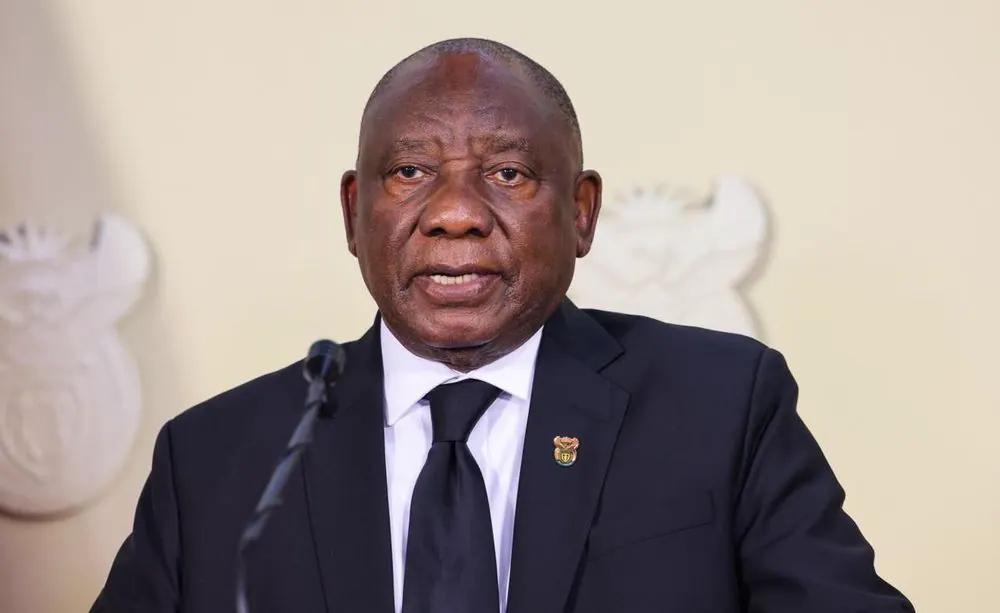
President Cyril Ramaphosa's latest efforts to address gender-based violence and femicide in South Africa have been met with skepticism from civil society and political leaders. Ramaphosa recently announced a series of measures aimed at reducing the prevalence of GBVF, including municipal safety audits, fixing broken streetlights, clearing overgrown public spaces, and addressing other hazards. However, critics argue that these measures are not new and have been proposed before without yielding significant results.
Amnesty International South Africa Executive Director Shenilla Mohamed expressed concerns that the latest measures are too similar to previous commitments. She noted that seven years ago, women took to the streets demanding action on the crisis, and yet, the same issues persist. Mohamed emphasized that the timelines for implementation would only carry weight if they resulted in concrete action and consequences for failure. She called for the audits ordered by the president to be made public and for municipalities to be held responsible for unsafe public spaces.
The Kwanele Foundation, an organization that works with victims of GBVF, also expressed disappointment with Ramaphosa's address. Founder Sihle Sibisi argued that the speech did not adequately respond to the resource shortages facing communities and organizations dealing directly with victims. Sibisi questioned why the government continued to hold high-level meetings while organizations working on the ground struggled for resources. She called for greater support for civil society groups already assisting communities.
The International Women's Forum South Africa, GBVF Response Fund, and Graça Machel Trust welcomed the president's address but emphasized that the announcements could not be treated as the end of the response. They stressed that the measures would have to be backed by capacity, resources, and accountability, with sustainable funding across prevention, policing, forensic services, justice, survivor support, and community organizations. The organizations called for every sphere of government to take responsibility and for progress to be publicly tracked.
The criticism of Ramaphosa's measures was not limited to civil society organizations. African Transformation Movement leader Vuyo Zungula questioned whether the latest commitments would produce results when previous government plans and funding announcements had yet to satisfy the public. He pointed to the approximately R21 billion previously announced over three years for various components of the National Strategic Plan on GBVF, as well as a further R1.6 billion announced in 2026 for GBVF-related policing activities and R50 million in provincial baselines.
The Democratic Alliance leader, Geordin Hill-Lewis, also challenged the gap between government announcements and what women experience in their communities. He pointed to years of emergency plans, legislation, funding commitments, summits, and the classification of GBV and femicide as a national disaster. Hill-Lewis argued that the focus should be on detection, arrests, and successful prosecutions, while calling for stronger municipal law-enforcement capacity and greater visibility in crime hotspots.
Ramaphosa acknowledged that the government's response had not been enough, stating that it had not been enough to prevent women from being killed. He ordered a national case-recovery operation targeting unresolved murders, attempted murders, rapes, and serious sexual offences involving women and children. An audit must be completed within 60 days. He also ordered a funded plan to address forensic backlogs, municipal women's safety audits, and a coordinated legislative and enforcement package aimed at reducing alcohol-related violence. Progress on the measures is expected to be reported publicly every quarter.
Key points
- Critics question the effectiveness of President Ramaphosa's new measures to tackle GBVF.
- Civil society organizations and political leaders demand accountability, resources, and concrete action.
- Ramaphosa's measures include municipal safety audits, fixing broken streetlights, and addressing other hazards.