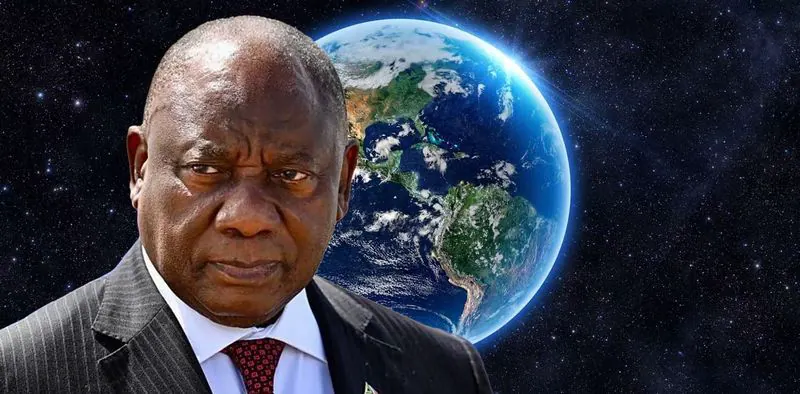
South African President Cyril Ramaphosa has been absent from public events due to illness, including a leave of absence following the escalation of diplomatic tensions with the United States. His absence comes as the country faces criticism from the US over issues such as land seizures and human rights concerns. Ramaphosa's illness also led to his withdrawal from the 81st session of the UN General Assembly's general debate week, which starts on September 22.
The diplomatic tensions between South Africa and the US began when US Secretary of State Marco Rubio announced targeted visa restrictions aimed at South African officials and individuals alleged to be complicit in "race-based discrimination and uncompensated land seizures". The move was seen as a response to South Africa's leading role in the BRICS+ expansion and de-dollarisation, as well as its non-aligned foreign policy regarding Russia and Ukraine.
The US's diplomatic moves have been welcomed by some South African groups, including Ernst Roets' BackaBuddy, Lex Libertas, which has been lobbying US lawmakers and conservative think-tanks to take action against South Africa. The group received a $1-million grant from the US State Department's Bureau of Democracy, Human Rights and Labour to research minority crime in South Africa.
Ramaphosa had recently spoken out at the BRICS Summit, criticising the use of unilateral actions and violations of the UN Charter. He also highlighted the importance of multilateralism and the need for countries to work together to address global challenges. His comments were seen as a subtle jab at the US and its allies.
The BRICS Summit also saw Ramaphosa promote the idea of a more equitable international order, saying that the grouping represents a world with many centres of power but a common commitment to development, dignity, and a more equitable international order. He also noted that BRICS countries can cooperate without surrendering their sovereignty.
The strained diplomatic relations between South Africa and the US have raised concerns about the potential impact on the country's economy and international relationships. The US has already barred South Africa from December's G20 meetings, and the diplomatic tensions may have further implications for the country's global standing.
Ramaphosa's illness and absence from public events have also raised questions about the country's leadership and its ability to navigate complex diplomatic relationships. The President's deputy, Paul Mashatile, is also reportedly afflicted by some condition and unable to travel, adding to concerns about the country's leadership.
Key points
- The US has imposed targeted visa restrictions on South African officials and individuals over human rights concerns.
- Ramaphosa has been absent from public events due to illness, including the UN General Assembly's general debate week.
- The diplomatic tensions between South Africa and the US have raised concerns about the potential impact on the country's economy and international relationships.