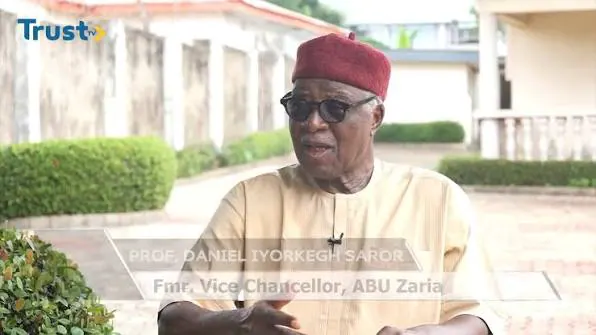
Former Vice-Chancellor of Ahmadu Bello University (ABU), Prof Daniel Iyorkegh Saror, has stated that the North's wealthy elite are investing their wealth in the South, rather than in their home region. This, he believes, is hindering economic growth and job creation in the North. Saror made these comments on a Trust TV programme, Reminiscences. He noted that despite the North having the people and resources to build a thriving economy, much of the wealth generated by its elite is being invested outside the region.
Saror pointed to the stark contrast between the North and other parts of Nigeria, where industries have created opportunities for people to work and earn a living. He cited a drive from Sokoto to Adamawa, which revealed little industrial activity along the route, despite the large population. In contrast, a drive between Lagos and Ogun State showed numerous industries and employment opportunities. Saror expressed concern that the North's economic landscape is dominated by government employment, with few private industries capable of absorbing the growing population.
The former ABU vice-chancellor also highlighted the shortage of private-sector opportunities in his home state, Benue. He asked, "Here in Benue State, where are the places of employment? We have only government." Saror linked this shortage to the intense attraction of politics among young and old people, with many seeking to become politicians rather than entrepreneurs. He argued that reversing this trend requires the North to invest directly in its large population, particularly through agriculture, education, healthcare, and productive enterprises.
Saror identified the growing influence of ethnic and religious considerations in the North as another obstacle to development. He stated that people are often judged based on their ethnicity and religion, rather than their skills and contributions. This, he believes, has hindered the North's development. Saror also expressed concern over banditry in parts of the North-West, which has made rural life increasingly difficult and undermined economic activity.
Despite these challenges, Saror remains optimistic about the North's potential. He believes that if its human and material resources are deliberately converted into productive economic activity, the region can develop. Saror emphasized the need for collective action, saying, "We need to do something. We need to be our brothers' keepers." His comments come against the background of renewed efforts to promote investment and industrial development in northern Nigeria.
Agriculture remains a major economic base in the North, and investors have identified opportunities around processing, logistics, and other parts of the agricultural value chain. In Benue, recent efforts have focused on processing agricultural produce locally, rather than exporting raw materials. The state government has highlighted factories and agro-processing as part of its economic strategy. These initiatives aim to create jobs and stimulate economic growth in the region.
Saror's comments have sparked renewed debate about the North's economic development. His call for wealthy individuals to invest in the region's development has resonated with many. As the North seeks to address its development challenges, Saror's words serve as a reminder of the need for collective action and investment in the region's human and material resources. The former ABU vice-chancellor's concerns and suggestions are expected to contribute to ongoing discussions about the North's economic future.
Key points
- Former ABU VC Prof Daniel Iyorkegh Saror says wealthy northerners invest in the South, limiting job creation and economic growth in the North.
- Saror identifies ethnic and religious considerations, as well as banditry, as obstacles to the North's development.
- The North has enormous potential for development if its human and material resources are converted into productive economic activity.