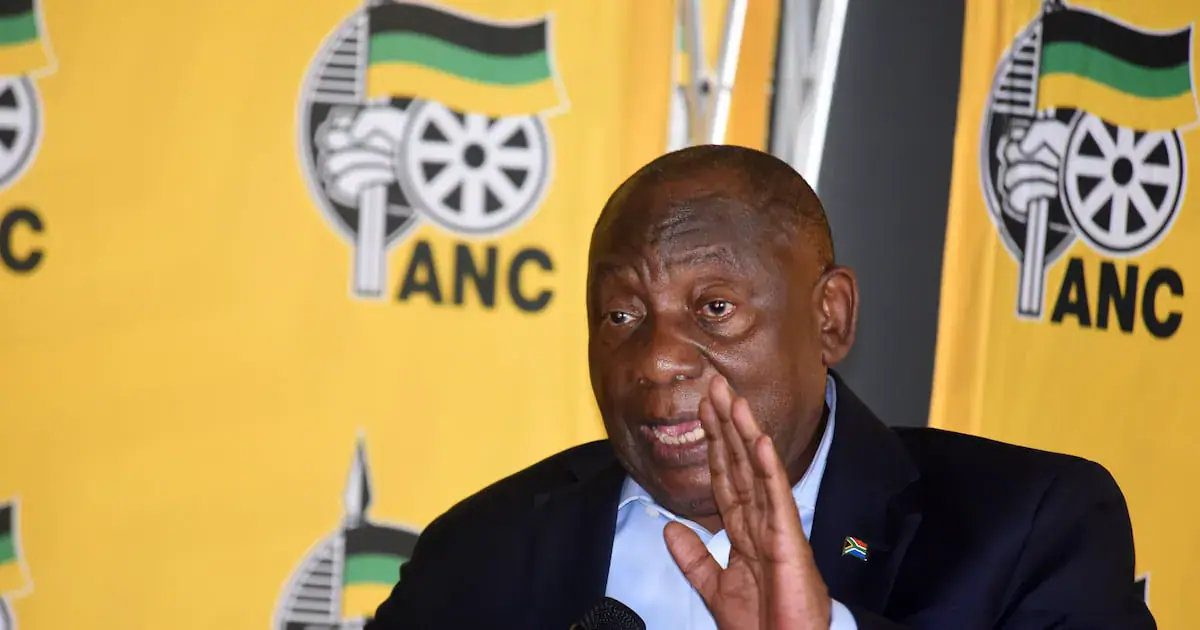
President Cyril Ramaphosa of South Africa has explained his decision not to launch an inquiry into alleged political interference that hindered the prosecution of apartheid-era crimes. In an affidavit submitted to the Khampepe commission, Ramaphosa stated that he believed the justice ministry and the National Prosecuting Authority (NPA) were already addressing the delays. This commission, led by retired Constitutional Court justice Sisi Khampepe, is investigating claims of political interference that prevented the prosecution of apartheid-era atrocities.
Ramaphosa's affidavit was a response to a February 2019 letter from former Truth and Reconciliation Commission (TRC) commissioners Yasmin Sooka and Adv Dumisa Ntsebeza, endorsed by the late Archbishop Desmond Tutu. They urged him to establish an inquiry into what they described as a "shameful story of terrible neglect" regarding the failure to prosecute apartheid-era cases. Ramaphosa acknowledged receiving the letter but stated that the justice ministry was already engaging with the NPA to address the delays.
The president argued that directly intervening in the NPA's work to speed up prosecutions could have compromised its independence. He stated that if he had tried to influence the NPA, it would have been seen as executive interference with the prosecutorial independence and work of the NPA. Ramaphosa also disputed the suggestion that his lack of response to earlier letters meant nothing had been done to address the concerns.
Ramaphosa denied that he had ignored pleas from victims of apartheid-era atrocities and their families, arguing that this allegation fell outside the commission's terms of reference. He also stated that he was not aware of any allegations that he had attempted to pressure the police or the NPA to stop investigating or prosecuting TRC cases. The commission is examining allegations of political interference during the tenures of former presidents Thabo Mbeki and Jacob Zuma.
The Khampepe commission is investigating claims that ANC leaders held secret talks with former South African Defence Force and police generals to find ways to avoid prosecutions for apartheid-era human rights violations. Former president Thabo Mbeki has denied allegations that he attended secret meetings aimed at preventing prosecutions. Ramaphosa denied knowledge of any agreement between ANC leaders and former operatives of the pre-1994 government to halt prosecutions.
Ramaphosa established the Khampepe commission in May 2025, five years after the 2019 request. The TRC had referred about 300 cases to the NPA for prosecution after its work concluded, but only a few have reached court. The commission's spokesperson, Lionel Adendorff, stated that Ramaphosa has not been summoned to testify before the commission, as the evidence leaders do not think it is necessary after reviewing his affidavit.
The president's decision not to establish an inquiry into alleged political interference has been met with scrutiny. The commission's investigation aims to uncover the truth behind the delayed prosecutions of apartheid-era crimes. Ramaphosa's affidavit provides insight into his decision-making process, but the commission's findings will ultimately determine whether his actions were justified.
Key points
- Ramaphosa defended his decision not to establish an inquiry into alleged political interference that stalled prosecutions of apartheid-era crimes.
- The Khampepe commission is investigating claims of political interference during the tenures of former presidents Thabo Mbeki and Jacob Zuma.
- Ramaphosa established the Khampepe commission in May 2025, five years after the 2019 request.