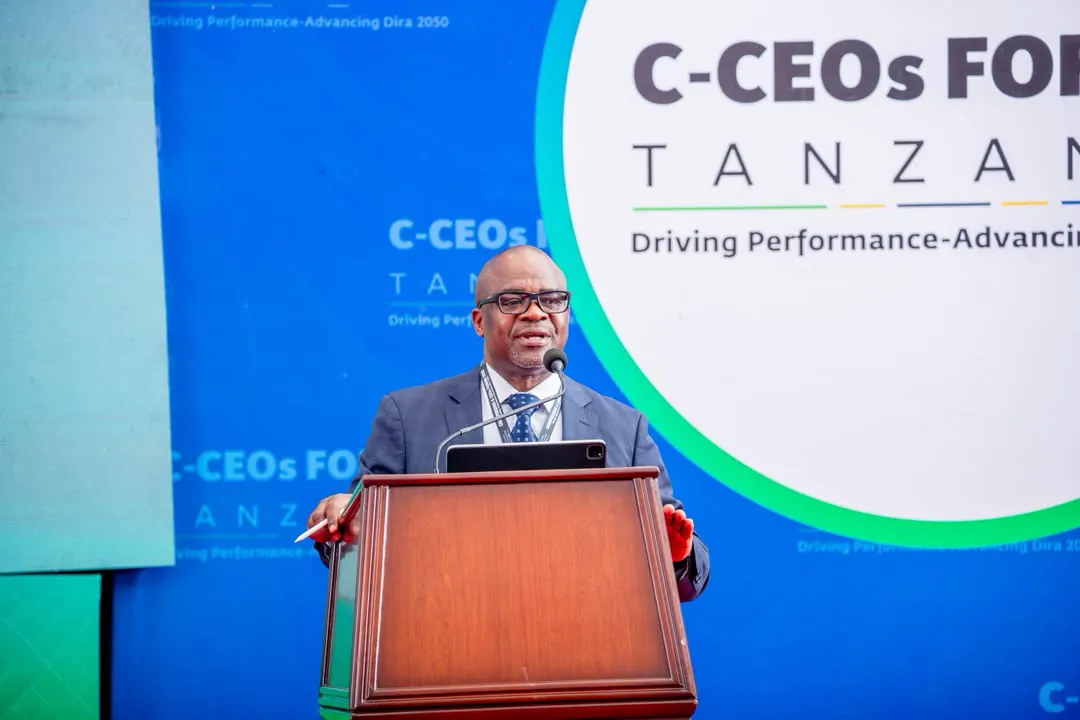
The Tanzanian government has announced a new approach to evaluating public institutions, shifting the focus from dividends alone to productivity, service quality, and contribution to the economy. This change aligns with the National Development Vision 2050, aiming to maximize the impact of state investments. Treasury Registrar, Nehemiah Mchechu, revealed this shift during the 2026 Chairpersons and Chief Executive Officers of Public Institutions Forum in Arusha.
The value of government investments in public institutions and companies has significantly increased from 67.95 trillion Tanzanian shillings in the 2020/21 financial year to 92.28 trillion shillings in 2024/25. Non-tax revenue generated from these investments also rose from 637.7 billion shillings to 1.327 trillion shillings over the same period. This growth places greater responsibility on public entities to manage resources efficiently and generate broader economic value.
Mchechu emphasized that public institutions should no longer be judged solely by the dividends they remit to the Treasury. Instead, their performance will be evaluated based on productivity, quality of services, efficient use of resources, financial resilience, innovation, adoption of technology, and competitiveness. This change reflects the growing scale of government investments and the need for public institutions to create value for the economy and society.
The 2026 Chairpersons and Chief Executive Officers of Public Institutions Forum, opened by Vice-President Deogratius Ndejembi on behalf of President Samia Suluhu Hassan, provides a platform for discussing how public institutions can increase their contribution to national development. Mchechu urged state entities to align their plans and operations with Dira 2050, the country's development vision.
Chairperson of the Parliamentary Standing Committee on Public Investments, Masanja Kadogosa, welcomed the progress recorded in public investments but emphasized the need for stronger returns and tangible benefits for Tanzanians. He stressed that Parliament would continue to monitor public corporations to ensure greater efficiency, accountability, and measurable results.
Minister of State in the President's Office for Planning and Investment, Prof Kitila Mkumbo, highlighted the critical role of stronger-performing public institutions in expanding Tanzania's economy over the next five years under Dira 2050. The Fourth Five-Year Development Plan requires an estimated 477 trillion shillings in investment, with the private sector expected to contribute 70 percent and the public sector 30 percent.
The government aims to create a conducive environment for business and investment through public corporations, Local Government Authorities, and Central Government. Prof Mkumbo emphasized that even for the private sector to contribute 70 percent, the public sector must play a crucial role in infrastructure development and improving the business environment.
Key points
- The Tanzanian government has shifted its focus from evaluating public institutions based on dividends alone to assessing their productivity, service quality, and contribution to the economy.
- The value of government investments in public institutions has increased significantly, from 67.95 trillion shillings in 2020/21 to 92.28 trillion shillings in 2024/25.
- The growth in government investments places greater responsibility on public entities to manage resources efficiently and generate broader economic value.