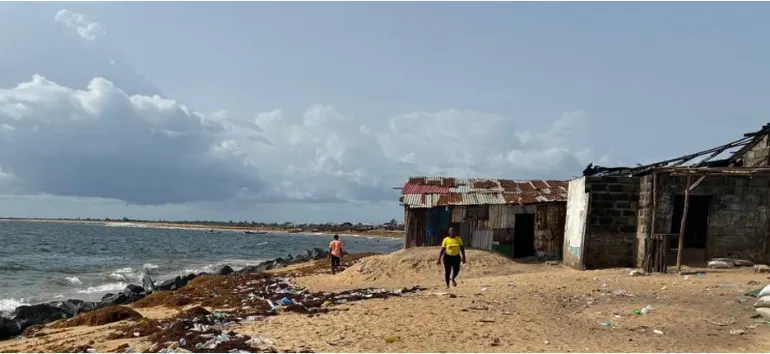
A severe El Niño climate pattern is expected to hit Liberia in the coming months, bringing erratic rainfall, severe flooding, extreme heat, and disruptions to fishing and agriculture. Experts warn that the country's weak weather warning system, which relies heavily on global models and lacks adequate weather stations, may not be able to issue accurate, community-specific warnings, leaving millions of Liberians vulnerable. The El Niño pattern is expected to be one of the strongest in at least 1,000 years, layered on top of human-caused climate change.
The impact of El Niño on Liberia could be devastating, with changes in the timing and intensity of rainfall threatening crops, worsening flooding, and increasing pressure on already vulnerable communities. Farmers could face unreliable rainfall, while hotter, drier conditions threaten crops, water supplies, hydropower, and increase the risk of bushfires. According to Isaac Nyaneyon Kannah Teah, a Liberian climate expert, the full impact of the developing El Niño on the country's current rainy season remains uncertain, but changes in weather conditions in coming months appear certain.
The El Niño pattern occurs when waters in the Pacific Ocean become unusually warm, disrupting weather patterns across the world. It can shift rainfall, intensify heat, and bring drought to some regions while causing heavy rains and flooding in others. Temperatures in the Pacific at the heart of El Niño reached a record 3.05C in September, with forecasts projecting the warming could peak at about 4C in November and December. A rise above 2C is classified as a very strong, or "super," El Niño.
Liberia's Meteorological Service is watching the signal build, but is severely limited by a lack of sophisticated equipment. The service operates under the Ministry of Transport and relies on global models, with no marine weather station to provide actual sea surface temperature readings. According to Albert Momolu Sherman, director of Liberia's Meteorological Service, the lack of equipment makes it difficult to issue accurate warnings, and the service must rely on partnerships with other agencies to disseminate information to communities.
The Liberian government does not have a mechanism for warning Liberians about coming heatwaves and heavy rains. The Meteorological Service publishes a ten-day agricultural bulletin, but reaching people in communities without reliable radio, internet, or electricity depends on partnerships that have yet to fully materialize. International donors made a fund of $10 million available to establish a warning system six years ago, but the project has faced delays and corruption.
The impact of El Niño on Liberia's food security could also be significant, with 80% of food imported and El Niño reducing agricultural production in countries from which Liberia imports rice and other foods. Excessive heat will add another dimension, making it harder for people to work and earn a living. According to Nathaniel Blama, Liberia's former chief environmental regulator, the country needs to invest in preparedness strategies now to protect people from extreme heat and weather.
Experts warn that the El Niño pattern could have a significant impact on global food security, with over 450,000 people projected to die globally from the additional heat brought by the super El Niño by February. In West Africa, where millions rely on rain-fed agriculture, the shifts in weather patterns can be especially damaging. The Liberian government and international community must work together to support the development of a robust weather warning system and prepare for the impacts of El Niño.
Key points
- The El Niño pattern is expected to be one of the strongest in at least 1,000 years, layered on top of human-caused climate change.
- Liberia's weak weather warning system may not be able to issue accurate, community-specific warnings, leaving millions of Liberians vulnerable.
- The impact of El Niño on Liberia's food security could be significant, with 80% of food imported and El Niño reducing agricultural production in countries from which Liberia imports rice and other foods.