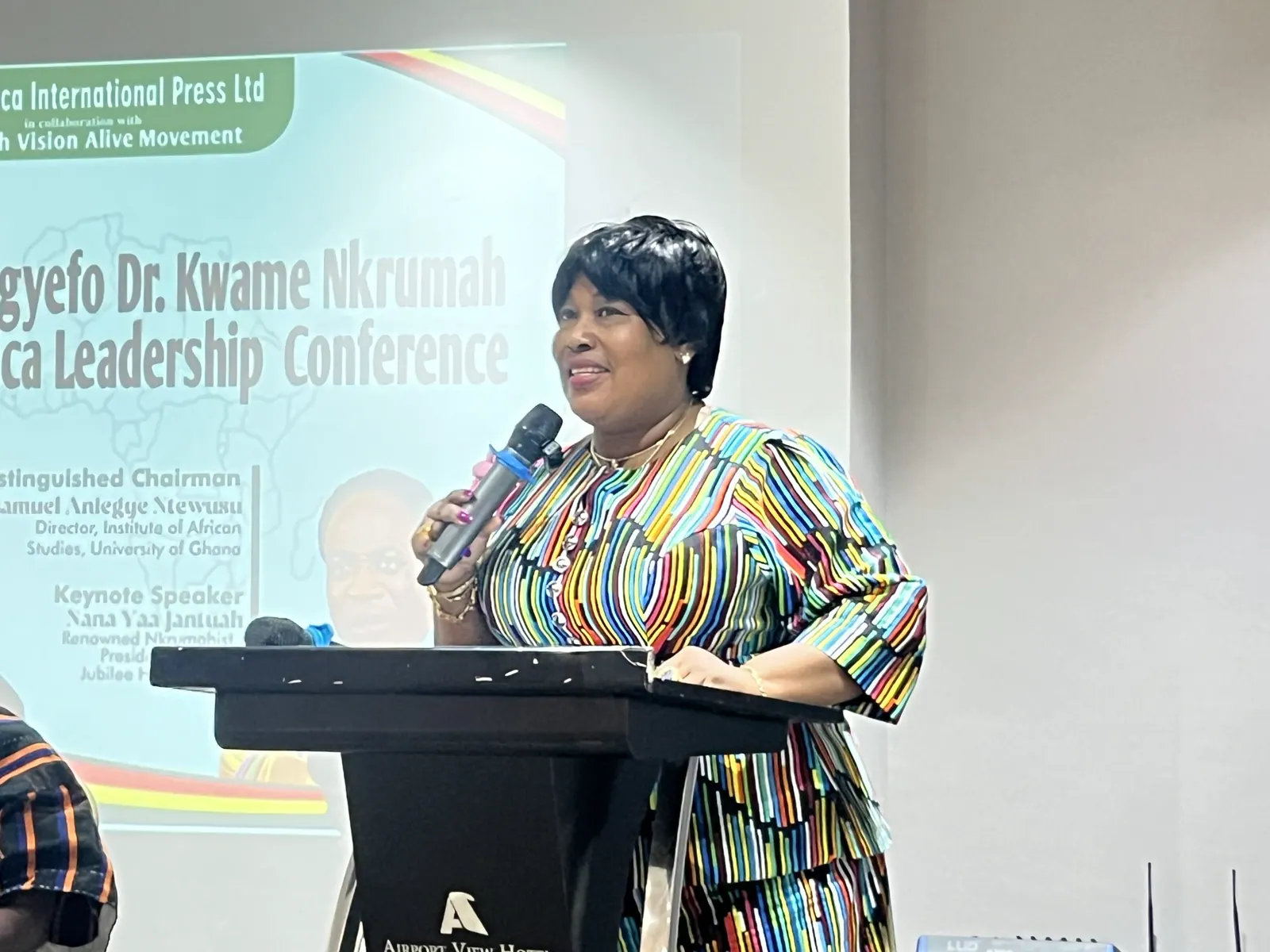
Nana Yaa Jantuah, a Presidential Staffer in Ghana, has urged Ghanaians and Africans to recommit to the vision of Dr. Kwame Nkrumah, the country's first President. She made the call at a program in Accra to commemorate Dr. Nkrumah's legacy, organized by the West Africa International Press Limited and the Nkrumah Vision Alive Movement. Dr. Nkrumah's vision, she said, went beyond political freedom to include economic liberation and Pan-African unity.
According to Nana Yaa Jantuah, Dr. Nkrumah's declaration that Ghana's freedom would be meaningless unless linked to Africa's total liberation remains relevant today. Despite achieving political independence, Ghana still faces economic dependence on international financial institutions and foreign influence. She cited the need for Ghana to develop greater confidence in African institutions, resources, and productive capacity. The Presidential Staffer also highlighted Dr. Nkrumah's industrialization program, which included the establishment of factories and infrastructure.
Nana Yaa Jantuah pointed to the Akosombo Dam as a major example of Dr. Nkrumah's efforts to support industrial development. The dam, she said, was a crucial step towards providing reliable electricity for industries. Other examples of Dr. Nkrumah's industrialization efforts include the Kumasi Pencil Factory and meat-processing facilities. These initiatives, she noted, aimed to create employment and link production with supporting economic activities.
The Presidential Staffer proposed that Ghana adopt a long-term national economic development plan that would transcend changes in government. Such a plan, she suggested, should be treated as a national agenda rather than a program of a particular political party. Dr. Nkrumah's development plans, she noted, were designed to benefit the country as a whole. Nana Yaa Jantuah also linked the current administration's investments in infrastructure, healthcare, and education to Dr. Nkrumah's development philosophy.
Nana Yaa Jantuah also touched on the issue of reparations for Africans and people of African descent. She argued that historical exploitation through slavery and colonialism had created an enduring economic injustice that required redress. The issue of reparations, she noted, was an important aspect of Dr. Nkrumah's vision for Africa's economic liberation.
Other speakers at the program, including Dr. Dee Otibu-Asare, Executive Director of West Africa International Press Limited, and Professor Samuel Aniegye Ntewusu, Director of the Institute of African Studies, University of Ghana, also emphasized the importance of preserving and promoting Dr. Nkrumah's legacy. They proposed initiatives such as the revival of state farms and the restoration of Dr. Nkrumah's portrait on Ghana's currency.
The program also saw the launch of a book, "Osagyefo Dr Kwame Nkrumah: 20 Questions and Answers," which highlights Dr. Nkrumah's philosophy and ideology. Certificates and plaques were presented to Ghanaian leaders who had contributed to the country's development. The event was organized to keep Dr. Nkrumah's ideas and historical contributions alive.
Key points
- Nana Yaa Jantuah calls for renewed commitment to Dr. Nkrumah's vision of economic independence and industrialization.
- Dr. Nkrumah's vision remains relevant to Ghana and Africa today.
- The Presidential Staffer proposes a long-term national economic development plan for Ghana.