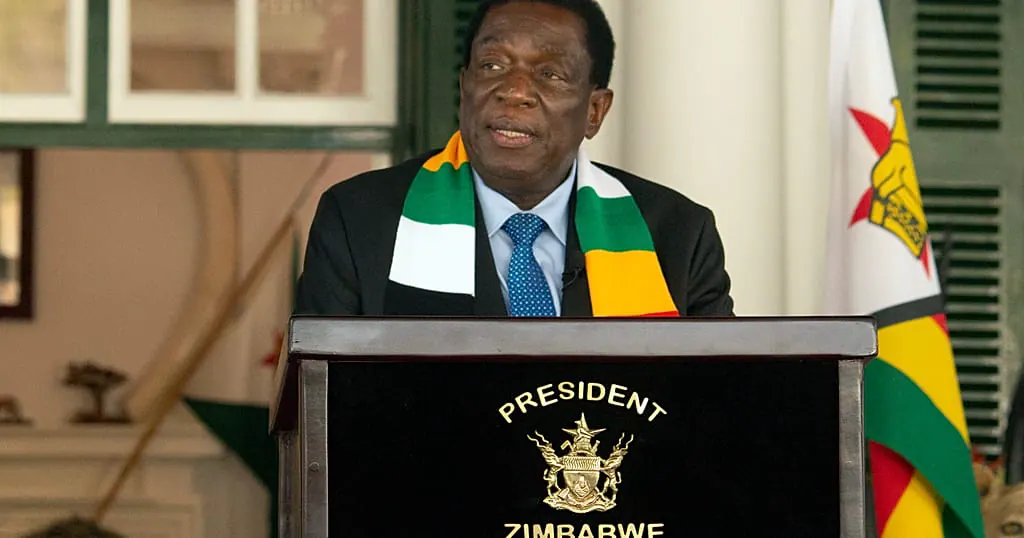
Zimbabwean President Emmerson Mnangagwa officially opened the fourth session of the country's 10th Parliament with his State of the Nation Address. Speaking at Parliament in Mount Hampden, around 19 kilometres from the capital Harare, Mnangagwa outlined the government's achievements and challenges. He highlighted the consolidation of gains in currency and exchange-rate stability, backed by strong foreign-currency inflows. This stability is attributed to a stronger financial-sector framework.
According to Mnangagwa, the stronger financial-sector framework has helped maintain confidence in Zimbabwe's economy. The President reported that agriculture grew by 27.9 percent and contributed 2.2 percentage points to Zimbabwe's 8.3 percent GDP growth in 2025. This growth is a significant indicator of the country's economic progress. Mnangagwa expressed optimism about the future of Zimbabwe's economy, citing the government's efforts to maintain stability.
Despite the economic gains, Mnangagwa warned that the 2026-2027 agricultural season could see below-normal rainfall across the region. This warning is based on climate forecasts and the potential impact of drought on Zimbabwe's agriculture. To mitigate the effects of drought, the government has introduced a six-pillar resilience plan. The plan includes measures to support farmers and ensure food security.
The six-pillar resilience plan includes a larger strategic grain reserve, climate-smart farming, integrated financing, livestock support, early-warning systems, and capacity building. This comprehensive plan aims to reduce the impact of drought on Zimbabwe's agriculture and economy. Mnangagwa emphasized the importance of implementing these measures to ensure the country's resilience in the face of climate-related challenges.
Mnangagwa also highlighted the significance of the mining sector to Zimbabwe's economy. He encouraged more exploration and local processing of minerals, citing the country's first locally produced lithium sulphate as an example. The President reported that more plants are being built to increase local production of lithium and other minerals.
In addition to lithium, Mnangagwa mentioned the expansion of gold, platinum, and iron and steel production. He stated that this expansion is transforming Zimbabwe's industrial base and driving economic growth. The mining sector is expected to continue playing a central role in Zimbabwe's economy.
The President's address emphasized the government's efforts to drive economic growth and address potential challenges. Mnangagwa's State of the Nation Address provided an overview of Zimbabwe's economic progress and outlined the government's plans to address drought risk and promote sustainable growth.
Key points
- Zimbabwe's economy grew by 8.3 percent in 2025, driven by a 27.9 percent growth in agriculture.
- The government has introduced a six-pillar resilience plan to mitigate the impact of drought on Zimbabwe's agriculture.
- Mining remains central to Zimbabwe's economy, with the government encouraging more exploration and local processing of minerals.