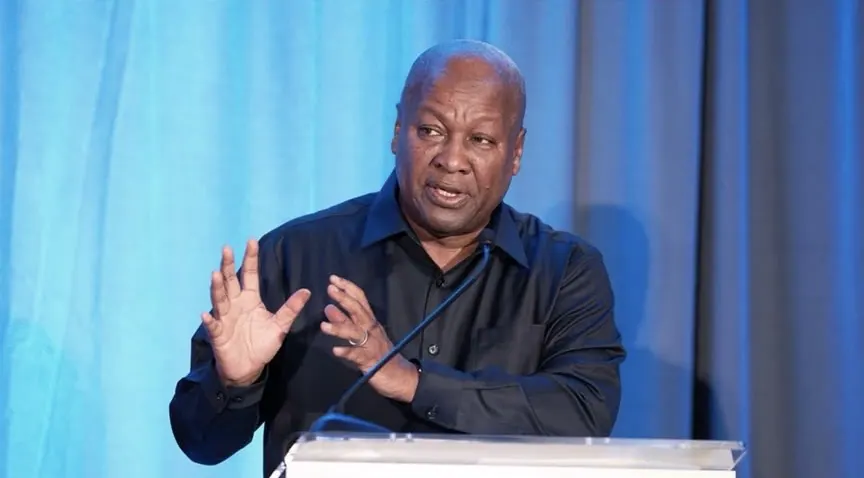
Ghana's President John Dramani Mahama has outlined a comprehensive plan to revamp the country's health sector, focusing on building domestic capacity to manufacture essential medicines. Speaking at a high-level side event on the Accra Reset in New York, President Mahama emphasized the need for self-reliance in the health sector. He stated that Ghana's approach involves strengthening domestic industrial capacity and encouraging local pharmaceutical companies to produce essential medicines.
The President's vision for Ghana's health sector reset goes beyond constructing hospitals and medical facilities. He aims to create an environment that supports local pharmaceutical companies in producing essential medicines, with guaranteed state purchasing and access to regional markets. This approach is part of a broader strategy to reduce Ghana's vulnerability to external funding and supply chains. President Mahama made these remarks on the sidelines of the 81st United Nations General Assembly.
President Mahama's domestic agenda for Ghana is built around several key priorities, including economic self-reliance, local value addition, robust public health infrastructure, transparent governance, and the 24-Hour Economy initiative. These priorities align with the objectives of the Accra Reset, which seeks to promote self-reliance in developing countries. The Accra Reset aims to reduce the vulnerability of these countries to external factors and promote a more equitable global health architecture.
The President highlighted the connection between domestic transformation and the global health reform agenda. He argued that a national reset without a global reset would leave countries vulnerable to weaknesses in the international system. Ghana has already begun establishing the necessary institutional machinery to implement the Accra Reset philosophy, including a Presidential Council, a Guardians' Circle, and a High-Level Panel on Reform of the Global Health Architecture and Governance.
The next phase of Ghana's health sector reset involves translating the High-Level Panel's recommendations into country-level compacts. These compacts will involve governments, global health bodies, development finance institutions, philanthropies, and the private sector. President Mahama also called for partnerships that connect research, regulatory oversight, local manufacturing, and reliable distribution networks across the Global South.
President Mahama's push for local pharmaceutical manufacturing is a key aspect of Ghana's health sector reset. He believes that developing local industrial capacity will enable Ghanaian pharmaceutical companies to manufacture essential medicines domestically. This approach will be supported through guaranteed state purchasing and regional market access. The President is optimistic that Ghana's experience will demonstrate the effectiveness of this approach.
The Accra Reset philosophy has the potential to transform the global health architecture. President Mahama's leadership on this issue has been seen as a positive step towards promoting self-reliance in developing countries. The success of Ghana's health sector reset will depend on the effective implementation of the Accra Reset philosophy and the involvement of various stakeholders.
Key points
- President Mahama pushes for local pharmaceutical manufacturing in Ghana's health sector reset.
- The Accra Reset aims to reduce the vulnerability of developing countries to external funding and supply chains.
- Ghana has established institutional machinery to implement the Accra Reset philosophy, including a Presidential Council and a High-Level Panel.