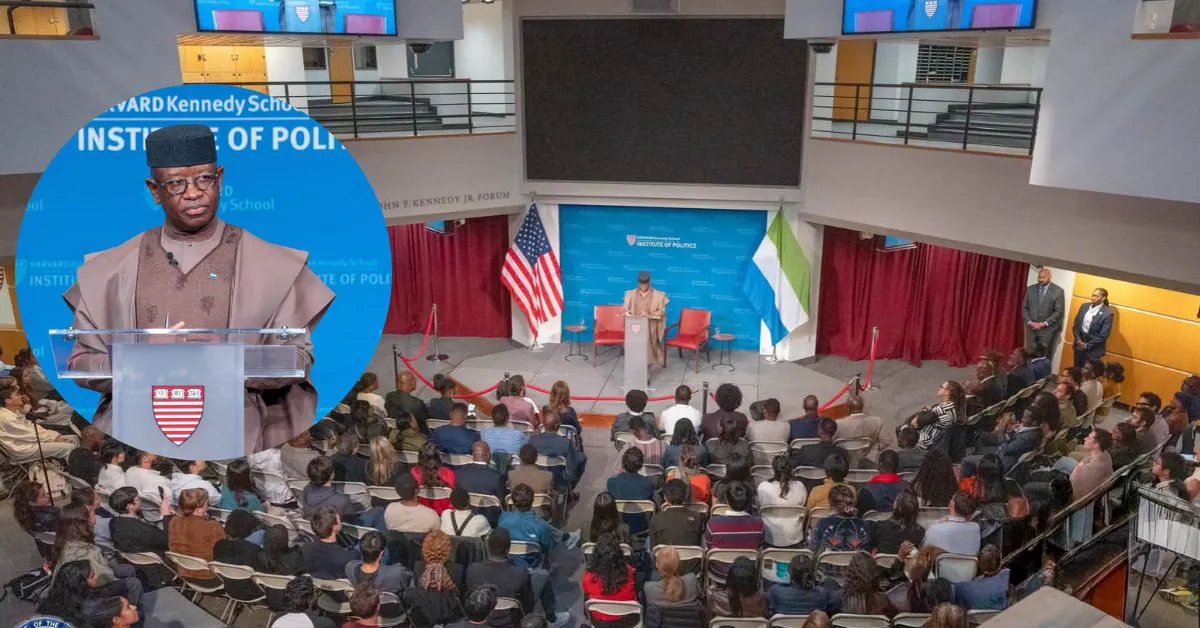
On September 29, 2026, Sierra Leone's President Julius Maada Bio addressed a gathering at Harvard Kennedy School's John F. Kennedy Jr. Forum, where he emphasized the need for African countries to reassess international partnerships. The event, hosted by Dr. Zoe Marks, focused on "Africa and the Shifting Geopolitical Landscape." President Bio's speech highlighted the importance of evaluating partnerships based on their ability to build local skills, create jobs, strengthen domestic businesses, and develop industries across the continent.
During his engagement at Harvard, President Bio outlined a framework for international cooperation, suggesting that African countries should ask four key questions when considering partnerships or projects with international actors. These questions center on whether partnerships build skills, create jobs and strengthen local businesses, support industrial development, and enhance countries' capacity to make independent decisions. This approach prioritizes skills development, employment, local enterprise, and industrialization in evaluating external cooperation.
The President stressed the importance of maintaining the capacity to make strategic decisions while engaging international partners. This remark comes as African countries navigate changing global relationships involving trade, investment, security, and diplomacy. President Bio's emphasis on jobs and local businesses highlighted the need for international projects to generate tangible economic opportunities within African countries.
President Bio's focus on industrial development pointed to the importance of building stronger domestic production capacity. He has previously called for greater value addition, local processing, and investment in domestic productive capacity as part of Africa's economic transformation. This approach aims to promote economic growth and self-sufficiency within African nations.
The Harvard Kennedy School event focused on the leadership, democratic resilience, and strategic choices facing Sierra Leone and the African continent amid a shifting geopolitical landscape. The discussion included an examination of the challenges and opportunities arising from changing global relationships. President Bio's speech provided valuable insights into Sierra Leone's approach to international cooperation and economic development.
President Bio's call for jobs, skills, and industrial growth in Africa aligns with his administration's efforts to promote economic transformation. His engagement at Harvard University provided a platform for sharing Sierra Leone's experiences and perspectives on international cooperation and economic development. The event offered a valuable opportunity for dialogue and knowledge sharing among scholars, policymakers, and stakeholders.
The Harvard engagement has sparked renewed discussions on the importance of reevaluating international partnerships to prioritize African countries' needs and goals. As African nations continue to navigate the complexities of global relationships, President Bio's remarks serve as a timely reminder of the need for strategic and sustainable cooperation that promotes economic growth, job creation, and industrial development.
Key points
- President Bio calls for African countries to prioritize skills development, job creation, and industrial growth in international partnerships.
- The President outlines a framework for international cooperation, emphasizing the need for partnerships to build local skills, create jobs, and support industrial development.
- President Bio stresses the importance of maintaining strategic decision-making capacity while engaging international partners.