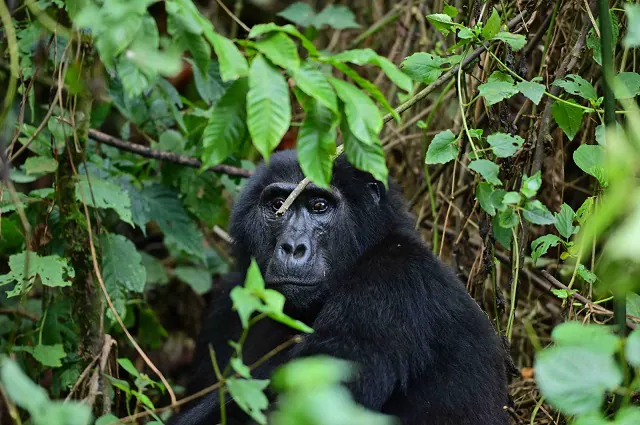
Deep in the misty forests of south-western Uganda, mountain gorillas play a vital role in supporting local communities. For people living around Bwindi Impenetrable and Mgahinga Gorilla National Parks, the animals generate jobs, businesses, and tourism revenue. As the world marks World Gorilla Day, Uganda is celebrating a species that has become one of the country's most valuable tourism products and an important economic driver for communities around the forests.
In Kanungu District, communities in Mpungu Sub-County marked World Gorilla Day through activities organised by Change a Life-Bwindi, a community organisation based in Ruhija. Residents participated in tree planting, community cleaning, dialogue sessions, a free medical camp, and sports activities aimed at promoting conservation. More than 120 residents received free medical services from Rugarama Hospital. These activities reflect a broader approach to conservation, where communities living around protected areas benefit from the tourism economy generated by the animals.
Christine Katushabe, founder of Change a Life-Bwindi, highlighted the transformation taking place around Bwindi Impenetrable National Park. High-end lodges have emerged across the park's tourism sectors, creating employment opportunities and markets for locally produced goods and services. She also emphasised ongoing efforts to integrate Batwa communities into the predominantly Bakiga communities surrounding the park.
Uganda is home to more than half of the world's remaining mountain gorillas, found only in Uganda, Rwanda, and the Democratic Republic of Congo. Visitor numbers to Bwindi and Mgahinga Gorilla National Parks show the growing popularity of the two parks. According to Bashir Hangi, Uganda Wildlife Authority spokesperson, Mgahinga received 3,601 international and domestic visitors in the 2021/22 financial year, increasing to 6,222 in 2024/25. Bwindi recorded 20,367 visitors in 2021/22, rising to 43,716 in 2024/25.
The financial contribution of gorilla tourism remains substantial, with Bwindi and Mgahinga generating a combined Sh584.3 billion in tourism revenue between the 2022/23 and 2025/26 financial years. Gorilla tourism alone accounted for more than Sh398.8 billion of that total. In 2022/23, gorilla tourism contributed more than Sh109.8 billion of the Sh147.9 billion collected from the two parks.
The economic benefits of gorilla tourism extend beyond national tourism figures, with UWA giving Sh2.97 billion to communities surrounding the Bwindi-Mgahinga Conservation Area for community projects, social enterprises, and business funds in the financial year ending June 2025. Beneficiaries include porters, guides, drivers, lodge workers, farmers, and small businesses supplying the tourism industry.
Juliana Kagwa, Chief Executive Officer of the Uganda Tourism Board, emphasised that gorillas remain central to Uganda's tourism appeal, with a large share of the country's tourism arrivals directly attributed to the animals. She called for sustainable tourism practices in Bwindi and Mgahinga as Uganda seeks to diversify its tourism portfolio. For Change a Life-Bwindi and communities, the economic argument for conservation is closely tied to the survival of the gorillas and their habitat.
Key points
- Communities around Bwindi Impenetrable and Mgahinga Gorilla National Parks benefit from gorilla tourism through jobs, businesses, and community projects.
- Uganda is home to more than half of the world's remaining mountain gorillas, found only in Uganda, Rwanda, and the Democratic Republic of Congo.
- Bwindi and Mgahinga generated a combined Sh584.3 billion in tourism revenue between the 2022/23 and 2025/26 financial years.