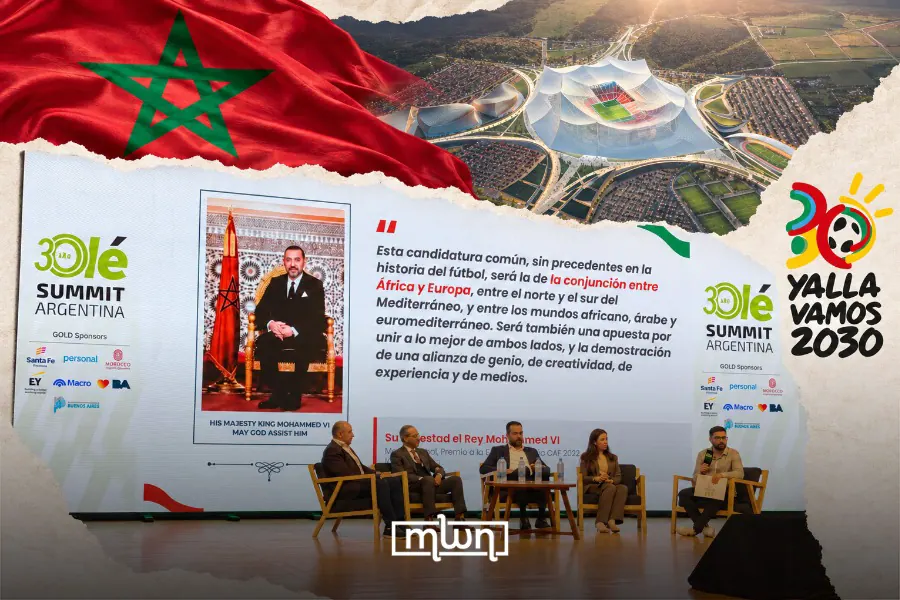
Morocco presented its vision for the 2030 FIFA World Cup at the fifth edition of the Olé Summit in Buenos Aires. The North African kingdom's vision was presented by Morocco's Ambassador to Argentina Fares Yasser, alongside Othmane Badssi, a mission officer at the Morocco 2030 Foundation, and Jihane Bijjou, who oversees customer experience at the foundation. The presentation highlighted Morocco's long-term ambitions for the tournament, which extends beyond the competition itself.
The 2030 World Cup will be a unique event, taking place across three continents: Africa, Europe, and South America. Morocco and its European co-hosts Spain and Portugal will stage the main competition, while Argentina, Uruguay, and Paraguay are expected to host commemorative matches marking the centenary of the World Cup. This distinctive geographical dimension was emphasized by Yasser, who noted the potential for the tournament to contribute to a longer-term transformation of Morocco.
According to Yasser, the objective of Morocco's preparations is to leave a lasting legacy that continues to benefit the country beyond the tournament. This includes investments in infrastructure and other sectors connected to the event. The Moroccan ambassador emphasized that the tournament should drive economic and territorial development, with a focus on strengthening infrastructure, tourism, and transport, as well as developing renewable energy and expanding opportunities for young people.
Preparations for the 2030 World Cup are part of a broader development process that began well before Morocco secured the right to co-host the tournament. Badssi pointed to the 2008 National Sport Conference and the establishment of the Mohammed VI Football Academy in 2009 as milestones in Morocco's efforts to strengthen its sporting infrastructure and develop football talent. The current preparations include the modernization and construction of stadiums, the expansion of training facilities, and improvements to airports, railways, and hotels.
The Morocco 2030 Foundation is also focused on the relationship between football and society. Bijjou noted that football extends well beyond professional clubs and academies in Morocco, forming part of everyday life in neighborhoods, public squares, and beaches. The foundation aims to expand access to football and encourage more young people to participate in the sport, measuring the tournament's legacy by its impact on Moroccan society.
The Olé Summit brings together figures from sport, media, technology, innovation, and the entertainment industry. The event is taking place at the Usina del Arte in Buenos Aires and continues through Wednesday. Organized by Argentine sports newspaper Olé, part of the Clarín media group, this year's summit also coincides with the publication's 30th anniversary.
The presentation at the Olé Summit reflects Morocco's commitment to using the 2030 World Cup as a catalyst for long-term development. The country's vision for the tournament emphasizes the importance of legacy, sustainability, and social impact. As the co-host of the 2030 World Cup, Morocco is poised to play a significant role in shaping the future of international football.
Key points
- Morocco presents its vision for the 2030 FIFA World Cup at the Olé Summit in Buenos Aires.
- The 2030 World Cup will be hosted across three continents: Africa, Europe, and South America.
- Morocco aims to leave a lasting legacy beyond the tournament, driving economic and territorial development.