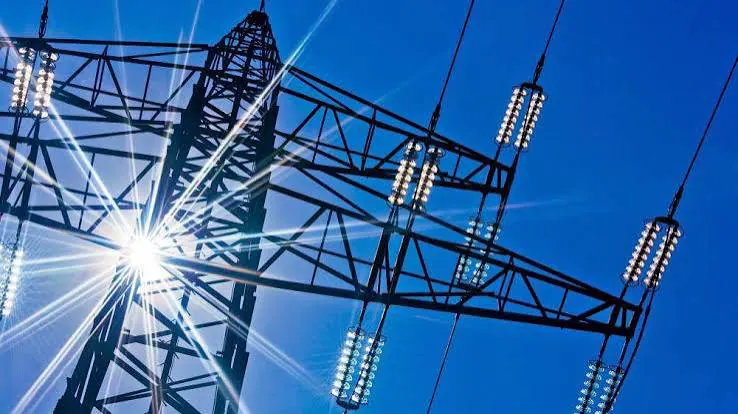
Global power demand is experiencing a significant surge, rising at the fastest pace in 15 years. This increase is driven by factors such as data centers, electrification, and industrialization, marking the beginning of what the International Energy Agency (IEA) terms "The Age of Electricity." As a result, long-term assumptions and forecasts about power markets are changing, posing new challenges for policymakers, power generators, and grid operators worldwide.
In the United States, electricity consumption reached a new record high last year and is expected to continue growing, driven primarily by the increasing demand from data centers. The U.S. Energy Information Administration (EIA) forecasts that the West South Central region will account for the largest share of growth in total electricity sales, with data centers emerging as the dominant driver of long-term U.S. electricity growth. Wood Mackenzie analysts predict 3.2% annual electricity sales growth in the U.S. through 2035, with gas meeting 52% of the increased power generation.
The Asia-Pacific region is expected to see the biggest power demand growth, driven by industrialization, economic expansion, and urbanization in countries such as China, India, and Southeast Asia. According to Wood Mackenzie, the APAC region will account for nearly three-quarters of overall global demand growth to 2035. In contrast, Europe's power demand is rising due to the European Union's decarbonization policies and efforts to boost the share of renewables.
Despite the varying pathways to meeting rising power demand across regions, a common challenge has emerged: grids are not ready to handle the surge in electricity loads. The IEA reports that global power demand is expected to grow by more than 3.5% per year on average through the end of the decade. To meet this growth, developers of new capacity, especially renewables and natural gas, face constraints in connecting to the grids.
The need for rapid and efficient expansion of grids is a pressing global issue. The IEA emphasizes that without increased system flexibility and rapid grid expansion, the Age of Electricity could roll out at a slower pace than expected. Currently, global investments in grids are about $400 billion per year, but the world needs to boost annual grid investment by about 50% from $400 billion to meet the expected growth in power demand through 2030.
Keisuke Sadamori, IEA Director of Energy Markets and Security, stresses that meeting this demand will require annual investment in grids to rise by 50% by 2030. He also highlights the importance of expanding flexibility and focusing on security and resilience as power networks continue to evolve. The IEA notes that grid connection queues have reached record levels worldwide, indicating a critical bottleneck in many regions.
In Nigeria, the Anambra State Government is taking steps to develop its gas processing and petroleum sector by establishing a modular refinery. The Commissioner for Petroleum and Mineral Resources, Prof. Charles Ofoegbu, disclosed that the proposed modular refinery will eventually lead to the establishment of a Liquefied Petroleum Gas processing plant. The state government is committed to sanitizing the petroleum sector and creating an enabling environment for investors.
Key points
- Global power demand is rising at the fastest pace in 15 years driven by data centers, electrification, and industrialization.
- The Asia-Pacific region is expected to see the biggest power demand growth, driven by industrialization, economic expansion, and urbanization.
- Grids are not ready to handle the surge in electricity loads, with global investments in grids needing to increase by 50% to meet the expected growth in power demand through 2030.