Journalism across Africa is facing a deepening crisis as poor pay, job insecurity, threats, and censorship continue to undermine journalists' ability to report freely. A new continental survey by the Federation of African Journalists (FAJ) paints a grim picture of journalism across Africa. The survey highlights deteriorating working conditions, shrinking media freedom, and growing safety concerns facing media practitioners across the continent.
The survey, which drew responses from 1,586 journalists in 45 countries, reveals that 61 per cent of journalists earn incomes that cannot meet their basic living needs, while only four per cent said their salaries adequately cover essential expenses. Additionally, 58 per cent reported delayed salaries, 62 per cent worked without written contracts, and 71 per cent lacked social protection.
FAJ President Omar Faruk Osman said the survey exposed a profession whose practitioners were increasingly struggling to survive while fulfilling their responsibility to inform the public. “The findings of this report expose a profession in deep crisis. Journalists are expected to inform the public while struggling to survive. These are not separate problems, poverty, insecure work and threats are pushing journalism towards silence,” Osman said.
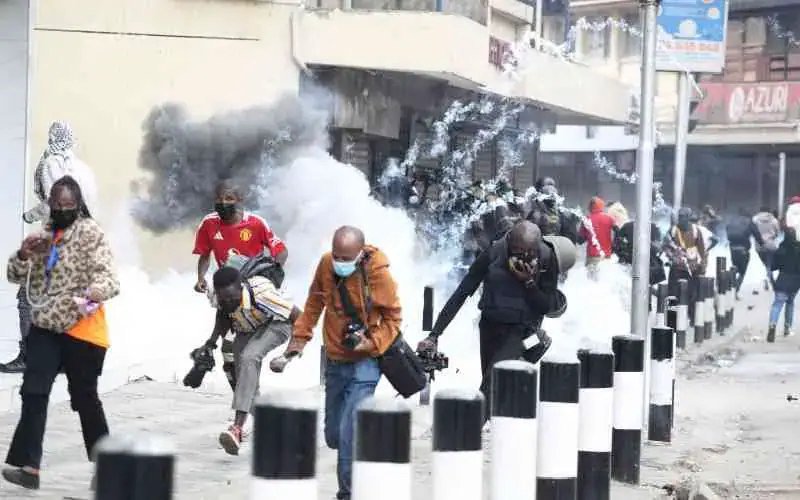
The report also highlights growing threats to journalists, with 65 per cent saying they had experienced intimidation or threats linked to their work in the previous three years. Only 17 per cent always felt safe while reporting, while 55 per cent rarely or never felt safe. Censorship and political interference have also affected editorial independence.
According to the survey, 84 per cent of respondents practised self-censorship either frequently or occasionally, while 69 per cent said threats had forced them to avoid certain stories. Political interference, violence against journalists, and restrictive laws were identified as major threats to media freedom. “The pressure on journalism is not confined to physical attacks. It also comes through legal intimidation, censorship and barriers to information,” Osman added.
Women journalists face additional challenges, including sexual harassment, online abuse, unequal pay, and workplace discrimination. Meanwhile, 44 per cent of respondents reported frequent burnout, while 47 per cent had considered leaving the profession. The FAJ has called on governments and media organisations to improve journalists' wages, provide written contracts, strengthen safety mechanisms, and protect editorial independence.
The FAJ's findings and recommendations come at a time when the role of journalism in promoting democracy and accountability is increasingly being recognised. The organisation hopes that the report will contribute to a renewed focus on the welfare of journalists and the importance of a free and independent press in Africa.
Key points
- 61 per cent of journalists earn incomes that cannot meet their basic living needs.
- 65 per cent of journalists have experienced intimidation or threats linked to their work.
- The FAJ has called on governments and media organisations to improve journalists' wages and protect editorial independence.