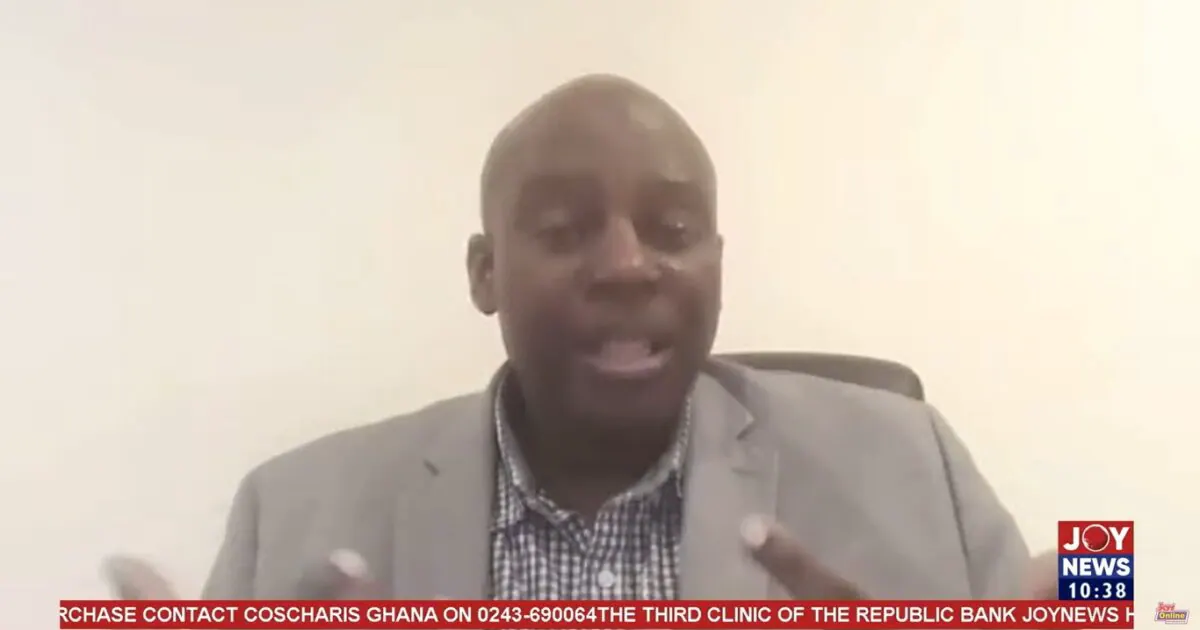
A fellow at the Centre for Democratic Development (CDD-Ghana), Dr. John Osae-Kwapong, has expressed concerns that a parliamentary inquiry into the recent cocaine seizure linked to Ghana may not produce meaningful results. He cited the highly politicized nature of the issue, with the New Patriotic Party (NPP) and the National Democratic Congress (NDC) already engaging in exchanges over the matter. This has raised questions about the ability of Members of Parliament (MPs) to examine the case impartially.
Dr. Osae-Kwapong made these comments on JoyNews' Newsfile on Saturday, following the Minority's call for a parliamentary probe into the cocaine busts. The Minority argues that the interception by French authorities of a large consignment of suspected cocaine believed to have originated from Ghana raises serious national security concerns. The issue has sparked a heated debate, with various stakeholders weighing in on the potential implications for Ghana's reputation and national security.
Dr. Osae-Kwapong is not optimistic about the prospects of a successful parliamentary inquiry, given the current political atmosphere. He pointed out that Parliament has considered serious issues in the past without producing visible results. He argued that the current political climate gives him little confidence that MPs will set aside party positions to establish what happened and ensure appropriate action is taken.
The Centre for Democratic Development (CDD-Ghana) fellow is not alone in his skepticism. Some MPs have also expressed doubts about the effectiveness of a parliamentary probe. For instance, Inusah Fuseini, a member of the NPP, has stated that a parliamentary probe into the cocaine seizure would be a waste of time. This sentiment is likely to be echoed by other MPs who may be influenced by party loyalty rather than a desire to uncover the truth.
The cocaine seizure has significant implications for Ghana's reputation and national security. Repeated cocaine seizures could hurt Ghana's trade reputation, according to the Centre for Democratic Development (CDM). Furthermore, the issue has sparked concerns about the country's ability to combat drug trafficking. The National Anti-Corruption Coalition (NACOC) has been working to address inherited gaps in the fight against drug trafficking.
The parliamentary probe is expected to examine the circumstances surrounding the cocaine seizure and identify potential weaknesses in Ghana's anti-drug trafficking efforts. However, with the issue already highly politicized, it remains to be seen whether MPs will be able to conduct a thorough and impartial investigation. The outcome of the probe will likely have significant implications for Ghana's anti-drug trafficking efforts and its reputation on the international stage.
The government's response to the cocaine seizure has also been criticized. Ntim Fordjour, a former Deputy Minister of Defence, has accused the government of dismissing his intelligence on cocaine trafficking, which he believes has emboldened traffickers. The government's handling of the issue has raised questions about its commitment to combating drug trafficking and protecting Ghana's national security.
Key points
- Dr. John Osae-Kwapong expresses doubts about the effectiveness of a parliamentary inquiry into the cocaine seizure due to politicization.
- The parliamentary probe is expected to examine the circumstances surrounding the cocaine seizure and identify potential weaknesses in Ghana's anti-drug trafficking efforts.
- The outcome of the probe will likely have significant implications for Ghana's anti-drug trafficking efforts and its reputation on the international stage.