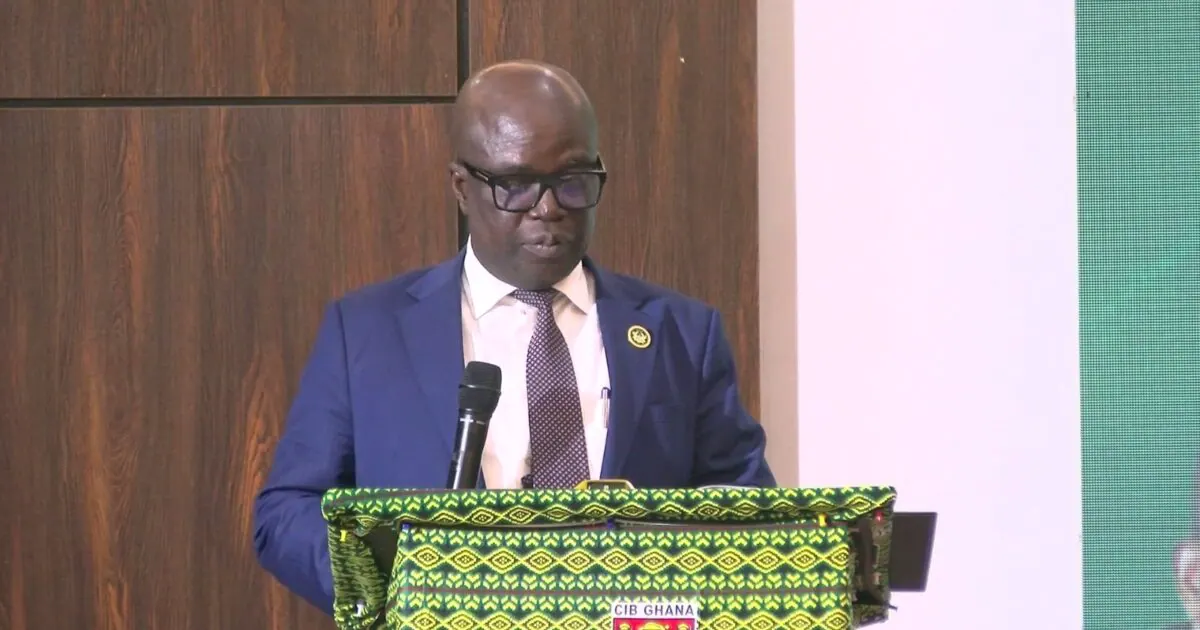
The Bank of Ghana (BoG) has warned that reductions in the monetary policy rate do not immediately result in lower lending rates. This statement was made by Director of Research at the Bank of Ghana, Dr Simon Harvey, on behalf of Governor Dr Johnson Asiama at the Chartered Institute of Bankers Ghana’s third Post-MPC Policy Seminar. The seminar aimed to discuss the implications of the latest Monetary Policy Committee (MPC) decision and measures to improve monetary policy transmission.
The Monetary Policy Committee (MPC) recently maintained the policy rate at 14% following its 132nd regular meeting held on September 23 and 24, 2026. According to Dr Harvey, monetary policy transmission is neither automatic nor instantaneous. A change in the policy rate does not necessarily result in an immediate or proportional adjustment in the cost of borrowing. Banks consider several factors, including their cost of funds, credit risk, operating costs, capital requirements, expected losses, and the overall risk environment when pricing loans.
Dr Harvey emphasized that the effectiveness of monetary policy should not be measured solely by changes in the benchmark rate. Instead, its impact on lending and deposit rates, credit availability, investment, consumption, employment, and broader economic activity should be considered. The ultimate objective is to ensure that monetary policy decisions translate into outcomes that support price stability and sustainable economic growth. A credible and predictable monetary policy framework, supported by fiscal discipline and an efficient banking sector, is essential to strengthening the transmission process.
Dr Harvey also stressed that banks must improve their credit assessment and risk management practices, while borrowers must demonstrate discipline in meeting their repayment obligations. The banking sector’s ability to extend credit at affordable rates is closely linked to the quality of its loan portfolio and the broader economic environment. Furthermore, credit expansion must be productive and sustainable rather than driven solely by the desire to increase lending volumes.
Rapid credit growth without proper risk assessment can lead to defaults, impairment charges, and ultimately weaken the banking system. The Governor’s remarks cautioned that this could have severe consequences for the financial sector. The seminar brought together banking professionals to examine the implications of the latest MPC decision and discuss measures to improve monetary policy transmission and support sustainable credit growth.
The Bank of Ghana’s warning highlights the complexities of monetary policy transmission in Ghana. The central bank’s ability to influence lending rates is limited by various factors, including the banking sector’s risk management practices and the overall economic environment. As a result, the BoG is emphasizing the need for a comprehensive approach to support sustainable credit growth and price stability.
The discussion on monetary policy transmission and sustainable credit growth is ongoing in Ghana. The Bank of Ghana is expected to continue working with banking professionals and other stakeholders to improve the transmission process and support economic growth. Key to this effort is ensuring that monetary policy decisions have a positive impact on the broader economy.
Key points
- The Bank of Ghana has cautioned that reductions in the monetary policy rate do not automatically translate into lower lending rates.
- The effectiveness of monetary policy depends largely on how decisions are transmitted through the banking system to businesses and households.
- A credible and predictable monetary policy framework, supported by fiscal discipline and an efficient banking sector, is essential to strengthening the transmission process.