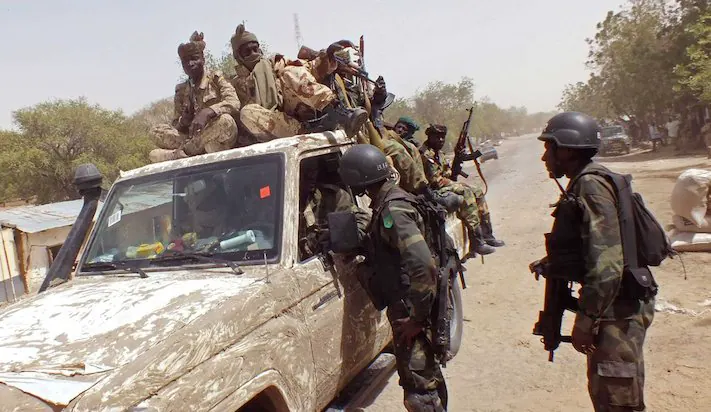
Fresh violence has erupted in Plateau State's Mangu and Barkin Ladi Local Government Areas, underscoring the persistent security challenges in the region. Despite a state-imposed curfew, deadly attacks continue to occur, sparking concerns about the effectiveness of local security enforcement. The violence is attributed to a complex interplay of factors, including ethno-religious tensions, land grabbing, cattle rustling, crop destruction, and competition over illegal mining resources.
Retired Major General Nicholas Rogers, former chairman of Plateau state's fact-finding committee on the recurrent crisis, has provided insight into the drivers of the conflict. Speaking on Channels Television's Sunrise Daily program, Rogers noted that the region is trapped in a cycle of reprisal attacks, which are often fueled by long-standing tensions. He emphasized that the recent attacks in Mangu and other local communities are also a result of reprisal attacks, highlighting the need for a comprehensive approach to address the root causes of the violence.
Rogers explained that implementing a total lockdown or curfew is a challenging task, often taking 24 to 48 hours for security agencies to fully secure an area. During this transitional period, assailants often exploit the lag or infiltrate communities before restrictions take effect. The vast and rugged topography of the region further complicates efforts to detect and apprehend perpetrators. Rogers emphasized that a traditional military presence alone is insufficient to stem the violence, and a multi-pronged intervention strategy is needed.
Rogers identified several structural and technical gaps hindering rapid response, including delayed reporting from remote areas and geographical impediments that slow troop deployment. To address these vulnerabilities, he advocated for a multi-pronged intervention strategy, including the use of real-time technology, statewide CCTV architecture, and federal government intervention. Additionally, Rogers called for legal reforms to tackle issues such as lenient fine options for laws governing illegal arms possession, land grabbing, and cattle rustling.
The fact-finding committee, chaired by Rogers six months ago, recommended long-term solutions, including strengthening state-owned security outfits like Operation Rainbow, expanding forward military bases, and establishing state police forces. The committee also proposed targeted federal interventions to manage the growing burden on Internally Displaced Persons (IDP) camps. These recommendations aim to address the root causes of the violence and provide sustainable solutions to the security challenges in the region.
Despite the ongoing tactical challenges, security forces have maintained active measures across volatile corridors, while state leaders have relied on grassroots town hall engagements to rebuild public trust and gather actionable intelligence. These efforts aim to enhance community policing and improve the flow of information between security agencies and local communities. The state government's initiatives seek to address the immediate security concerns and foster a more collaborative approach to peacebuilding.
The persistent violence in Plateau State has resulted in significant humanitarian challenges, with many residents displaced and communities affected. The situation underscores the need for sustained efforts to address the root causes of the conflict and develop effective security strategies. Key initiatives, such as the proposed multi-pronged intervention strategy and the expansion of forward military bases, aim to enhance security and stability in the region.
Key points
- A cycle of reprisal attacks fueled by ethno-religious tensions, land grabbing, and competition over resources drives the violence.
- Security gaps, including delayed reporting and geographical impediments, hinder rapid response to attacks.
- A multi-pronged intervention strategy, including technology and legal reforms, is needed to address the security challenges.