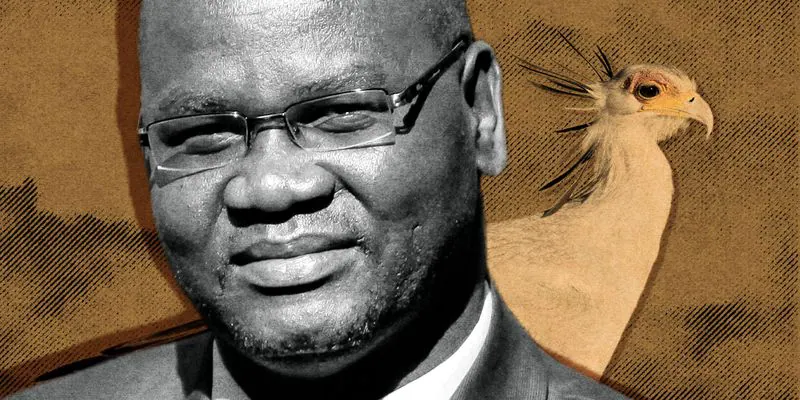
Public Investment Corporation (PIC) CEO Patrick Dlamini has presented an optimistic outlook for the institution, highlighting a 20% increase in client assets under management to R3.657-trillion for the 12 months ending March 31, 2026. Dlamini attributed this growth to pure investment returns, despite outflows of R172-billion to clients' portfolios. He invoked the PIC's emblem, the secretary bird, to describe the institution's approach to safeguarding public wealth.
A review of the PIC's 2026 Integrated Annual Report and Annual Financial Statement (AFS) reveals a different story. While assets under management (AuM) increased from R3.049-trillion to R3.657-trillion, this growth was largely driven by strong local stock market rallies. The PIC suffered R172-billion in net capital outflows, including R160-billion withdrawn by the Government Employees' Pension Fund (GEPF). Operating expenses escalated by 15% to R1.427-billion, driven by surging employee costs and IT implementations.
Dlamini's claims of "disciplined cost management" and "institutional alignment and internal harmony" are contradicted by the AFS disclosures. The unlisted investment portfolio, which has been problematic, generated a negative internal rate of return (IRR) of -0.2% due to lower deployment rates and debt repayments. The PIC's governance and oversight have been under scrutiny, with the Financial Sector Conduct Authority (FSCA) launching a formal investigation into whistleblower allegations.
The PIC has faced significant challenges, including the suspension of CEO Patrick Dlamini and the resignation of the entire board. Cabinet intervention was required to reconstitute a new board. Despite these challenges, Dlamini has expressed confidence in the institution's ability to execute its mandate. He highlighted the PIC's long-term track record of growing assets and beating CPI benchmarks.
However, the PIC's ability to act as an ethical, self-governing developmental investor has been questioned. The Auditor-General of South Africa referred a material irregularity involving insufficient due diligence in approving and disbursing an investment to the Special Investigating Unit. Dlamini's narrative has been criticized as a calculated public relations campaign designed to emphasize market-driven asset figures while concealing deep governance turmoil.
Daily Maverick has requested an interview with Dlamini to discuss the PIC's performance and governance challenges. The institution's legacy and future growth will depend on its ability to address these challenges and demonstrate effective governance and oversight. The PIC's role in managing public pension funds and promoting economic development in South Africa is critical.
The PIC's growth over the past 20 years, from R585-billion in 2006 to R3.657-trillion by March 31, 2026, reflects a compound annual growth rate of 9.6% per annum. The institution's ability to beat CPI benchmarks over the long term has helped keep the public pension fund solvent. However, the PIC must address its governance challenges and demonstrate a commitment to transparency and accountability.
Key points
- The PIC's assets under management grew by 20% to R3.657-trillion for the 12 months ending March 31, 2026.
- The institution faced significant governance challenges, including the suspension of CEO Patrick Dlamini and the resignation of the entire board.
- The PIC's ability to act as an ethical, self-governing developmental investor has been questioned due to governance and oversight concerns.