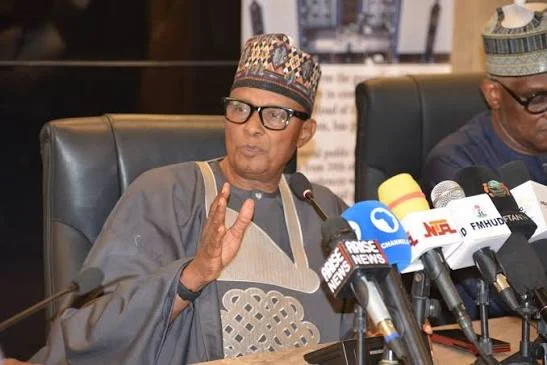
The issue of abandoned building projects in Nigeria has been attributed to poor funding and project viability by stakeholders in the building sector. According to them, the problem is not simply a housing issue, but a complex one with various factors contributing to it. With approximately 250,000 housing units in abandoned projects, the government is taking steps to recover and make them available to Nigerians, including civil servants. This was disclosed by the Minister of Housing and Urban Development, Dr. Muttaqha Darma, during the presentation of houses to 430 staff members of the Nigerian Midstream and Downstream Petroleum Regulatory Authority in Abuja.
Dr. Darma stated that the government is taking stock of abandoned housing projects across the country as part of efforts to increase the nation's housing stock. He disclosed that about 250,000 housing units in abandoned projects could potentially be recovered and made available to Nigerians. The government is currently taking statistics and moving to each state where these abandoned properties are located. This move is aimed at addressing the housing deficit in the country and providing affordable housing options for Nigerians.
However, estate surveyors and valuers have argued that the high rate of abandoned buildings in Nigeria is largely a financing and project viability problem. Olalekan Akinwumi, Principal Partner of Lekan Akinwumi & Co, stated that it is not proper to say that there are 250,000 abandoned housing units without understanding the circumstances behind each one. He emphasized that the cause of abandonment matters, and the government also abandons housing projects, making the issue not peculiar to private property owners.
Akinwumi identified inadequate or interrupted funding as one of the major causes of the high rate of abandoned buildings. He stressed that developers often commence projects without securing the funding required for completion. Rising costs of cement, steel, labor, and other inputs can make an initially viable project financially unviable. Akinwumi suggested that some projects commence without adequate market analysis, cash-flow projections, net present value, internal rate of return, and sensitivity analysis.
Jatto Isah, a former National Chairman of the Association of Estate Agents in Nigeria, argued that the government does not have the right to take over privately owned abandoned buildings. He stated that if the government wants to take over the abandoned buildings, it must be for the interest of the general public. Isah attributed the high rate of abandoned buildings to the rising cost of building materials, which is above the reach of an average Nigerian.
Isah explained that when the cost of building materials increases, it becomes difficult for individuals to complete their projects. He suggested that in such cases, individuals may abandon their buildings, hoping to continue when funds become available. However, Isah emphasized that the government taking over privately owned abandoned buildings is not possible without revoking the ownership of the property.
The issue of abandoned building projects in Nigeria requires a comprehensive approach to address the various factors contributing to it. The government's efforts to recover and make available abandoned housing units are a step in the right direction. However, stakeholders in the building sector must work together to address the root causes of the problem, including poor funding and project viability.
Key points
- The Nigerian government is taking stock of abandoned housing projects across the country to increase the nation's housing stock.
- Poor funding and project viability are major causes of abandoned building projects in Nigeria.
- The government does not have the right to take over privately owned abandoned buildings without revoking the ownership of the property.