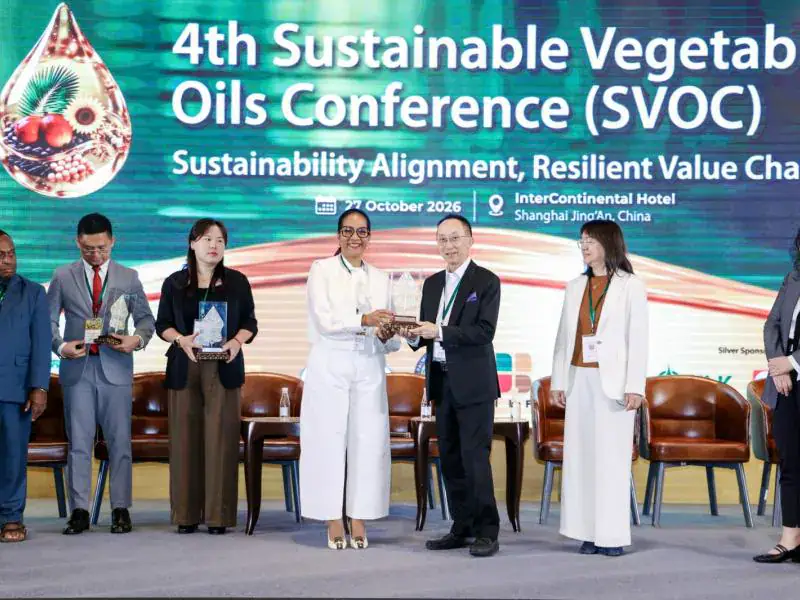
Plantations et Huileries du Congo (PHC), the Democratic Republic of Congo's largest industrial palm oil producer, recently participated in the 4th Sustainable Vegetable Oils Conference (SVOC 2026) in Shanghai, China. The conference, organized by the Council of Palm Oil Producing Countries (CPOPC), brought together public decision-makers, agro-industry leaders, technical experts, researchers, and international organization representatives. PHC attended as a Platinum Sponsor, reaffirming its commitment to sustainable palm oil production and responsible vegetable oil chain transformation.
The SVOC conference serves as a platform for discussing key issues shaping the future of the vegetable oil sector, including sustainability, innovation, value chain resilience, and competitiveness. This year's edition highlighted technological and regulatory developments transforming the sector, such as agricultural technologies, digital traceability, artificial intelligence, and low-carbon solutions. PHC shared the DRC's experience and contributed to the collective reflection on conditions for sustainable, responsible, and value-creating vegetable oil production.
PHC's development model prioritizes sustainability, focusing on palm oil production without deforestation. The company concentrates agricultural activities on already exploited land and rehabilitates old plantations rather than opening new areas at the expense of forests. Of the over 100,000 hectares of concessions managed by PHC, approximately 30% are dedicated to oil palm plantations, while the remaining 70% consist of preserved forests and land used by local communities for agricultural activities.
PHC implements sustainable and regenerative agricultural practices, improves soil management, and reduces its environmental footprint through increased use of renewable energy and industrial by-product valorization. According to Monique Gieskes, PHC's General Director, sustainable palm oil development is crucial, particularly in the Congo Basin, which hosts one of the world's most important tropical forest masses. Preserving these forests and their biodiversity is a major responsibility for PHC.
For PHC, sustainability extends beyond environmental protection to include local economic development, support for producers, and improved living conditions for rural communities. Through its "Partner Growers" program, PHC provides technical assistance to producers to enhance productivity, quality, and adoption of sustainable practices. The PHC Foundation, established in 2023, has contributed to the creation of 96 agricultural producer organizations (OPA) in the provinces of Tshopo, Mongala, and Équateur.
These organizations, comprising nearly 2,000 members, including 20% women, benefit from support including seed supply, technical assistance, and marketing support. This initiative illustrates PHC's commitment to more structured and inclusive agricultural value chains. Gieskes emphasizes that training alone is insufficient; producers also need access to processing units and reliable buyers for their harvests, highlighting the importance of partnerships between small-scale growers and industrial operators.
PHC's participation in SVOC is part of a broader dynamic of strengthened cooperation between the DRC and CPOPC. As a member of the organization since March 2025, the DRC is increasingly engaging in exchanges with producing countries on sustainability, productivity, value chain development, and sector competitiveness. Several initiatives have been launched to support the development of a more sustainable and competitive palm oil sector, including a three-day training on good agricultural practices (GAP) organized by CPOPC with PHC's support in October 2025.
Key points
- PHC participates in Sustainable Vegetable Oils Conference (SVOC 2026) in Shanghai, China, as a Platinum Sponsor.
- The company prioritizes sustainable palm oil production without deforestation.
- PHC supports local economic development and improved living conditions for rural communities through its "Partner Growers" program.