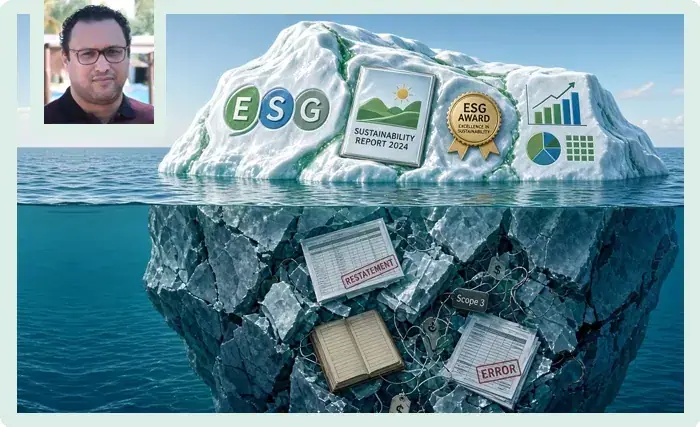
In recent years, Tunisia has seen a surge in ESG-related activities, with many companies publishing sustainability reports and participating in social and environmental initiatives. However, experts argue that this visible aspect of ESG is only the tip of the iceberg, and that the real work is being done beneath the surface. According to Ahmed Guidara, an expert in public finances, the ESG landscape in Tunisia is evolving rapidly, with regulators and European clients demanding more transparency and accountability.
The Tunisian government has set ambitious targets to reduce the country's carbon intensity, with a goal of cutting emissions by 62% by 2035 compared to 2010 levels. The country's Nationally Determined Contribution (NDC) 3.0, published in 2026, outlines a plan to achieve this goal, with 31% of the effort being unconditional and the remaining 31% dependent on international support. This move is seen as a significant step towards integrating ESG considerations into the country's economic strategy.
Despite the progress made, experts warn that the current state of ESG in Tunisia is still fragile and may not be sustainable in the long term. The law on corporate social responsibility, for example, has been criticized for being a declaration of good intentions rather than a binding obligation. As a result, many companies are still struggling to implement meaningful ESG practices, and regulators are stepping in to fill the gap.
The Conseil du Marché Financier (CMF), Tunisia's financial regulator, has taken steps to integrate ESG into the country's financial reporting framework. For companies with financial years ending on December 31, 2025, the CMF requires an ESG section in the notes annexes, which must include information on governance, strategy, risks, and indicators. This move is seen as a significant step towards increasing transparency and accountability in the country's business sector.
European clients are also driving change, with many companies demanding more ESG-related information from their suppliers. The European Union's Carbon Border Adjustment Mechanism, which came into effect in 2026, requires importers to declare and pay for the emissions contained in their imports. This has created a new level of urgency for Tunisian companies, which must now demonstrate their ability to measure and report on their ESG performance.
To succeed in this new landscape, Tunisian companies will need to focus on building a robust ESG foundation. This includes conducting a materiality analysis, designating a responsible ESG lead, and implementing a system for collecting and reporting ESG data. Companies will also need to engage with their stakeholders, including investors, customers, and suppliers, to demonstrate their commitment to ESG.
As the ESG landscape in Tunisia continues to evolve, companies that fail to adapt risk being left behind. With regulators and European clients demanding more transparency and accountability, the hidden world of ESG is becoming increasingly important. By building a robust ESG foundation, Tunisian companies can not only meet these demands but also drive long-term sustainability and growth.
Key points
- The ESG landscape in Tunisia is evolving rapidly, with regulators and European clients demanding more transparency and accountability.
- The country's Nationally Determined Contribution (NDC) 3.0 outlines a plan to reduce carbon intensity by 62% by 2035.
- Tunisian companies must focus on building a robust ESG foundation to succeed in the new landscape.