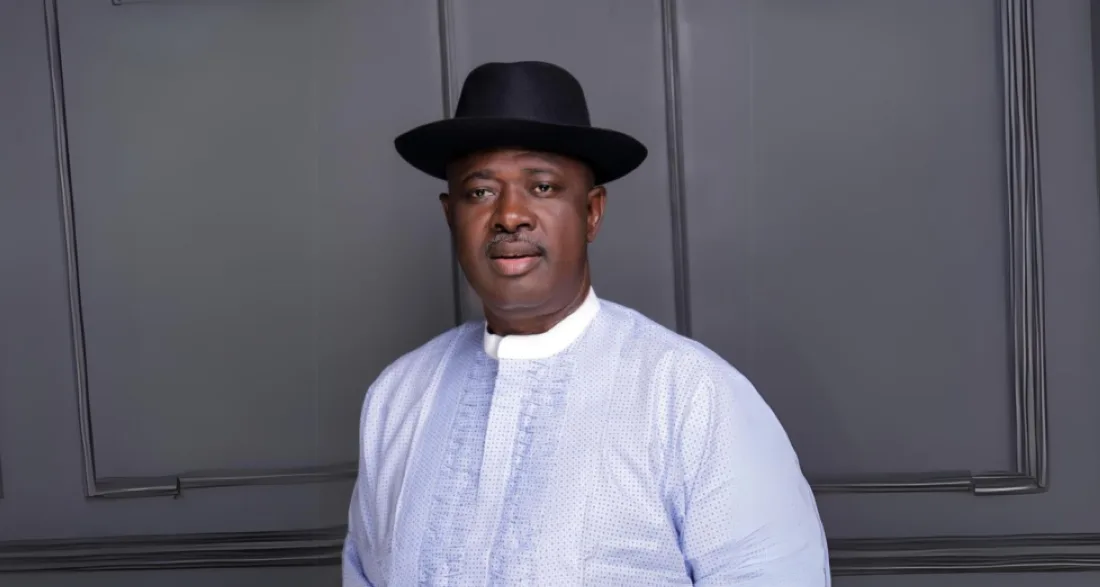
The Minister of State for Petroleum Resources (Oil), Heineken Lokpobiri, has stated that the average price of petrol in Nigeria remains lower than in the United States and some African countries, despite the removal of subsidy. Lokpobiri made this statement on Channels Television's Politics Today, defending the Federal Government's deregulation of the downstream petroleum sector amid concerns over high petrol prices. His comments come as the Dangote Petroleum Refinery and other marketers began reducing their depot prices following a decline in international crude oil prices.
According to Lokpobiri, the average price of petrol in Nigeria is N1,430 per liter, compared to N1,633 in the US, N1,959 in Cameroon, N2,070 in Ghana, and N2,070 in South Africa. He argued that Nigeria's status as an oil-producing country and the presence of the Dangote Refinery do not automatically translate to lower petrol prices. The minister emphasized that the regulation has created a new economy, encouraging private investment in the oil and gas sector.
Lokpobiri defended the removal of petrol subsidy, stating that the savings are being distributed to the three tiers of government through the Federation Account Allocation Committee. He noted that the impact of high energy prices is not peculiar to Nigeria, as consumers in the US and Europe are also affected. The minister cited the global nature of the oil and gas commodity, stating that prices in New York are similar to those in Nigeria.
The minister argued that deregulation was necessary to encourage investment in the oil and gas sector. He cited the Dangote Refinery's supply of aviation fuel and rising foreign reserves as evidence of gains from the sector. According to Lokpobiri, the Central Bank of Nigeria recently stated that 85% of Nigeria's foreign reserves come from the oil and gas sector.
Despite the reductions in petrol prices, the commodity is still selling at between N1,370 and N1,450 per liter in some locations. The Dangote Refinery cut its petrol depot price from N1,350 to N1,325 per liter, while other marketers also reduced their prices in Lagos, Port Harcourt, Calabar, and Warri. Lokpobiri emphasized that the government will not reverse the deregulation policy despite pressure on consumers.
The minister noted that deregulation has encouraged private investment in the midstream and downstream sectors. He stated that the policy has enabled private sector businesses to thrive, citing the Dangote Refinery as an example. Lokpobiri argued that if the government had continued importing petrol and selling it below the market price, the Dangote Refinery would not have been able to survive.
Lokpobiri concluded that the government's savings from subsidy removal have enabled states to undertake gigantic projects. He noted that 27 states had no capacity to pay salaries before the current government came into power, but today, states are doing well due to the savings made from subsidy removal. The minister emphasized that the government will continue to prioritize investment in the oil and gas sector.
Key points
- Nigeria's petrol prices are lower than in the US and some African countries.
- The government will not reverse the deregulation policy despite pressure on consumers.
- Deregulation has encouraged private investment in the oil and gas sector.