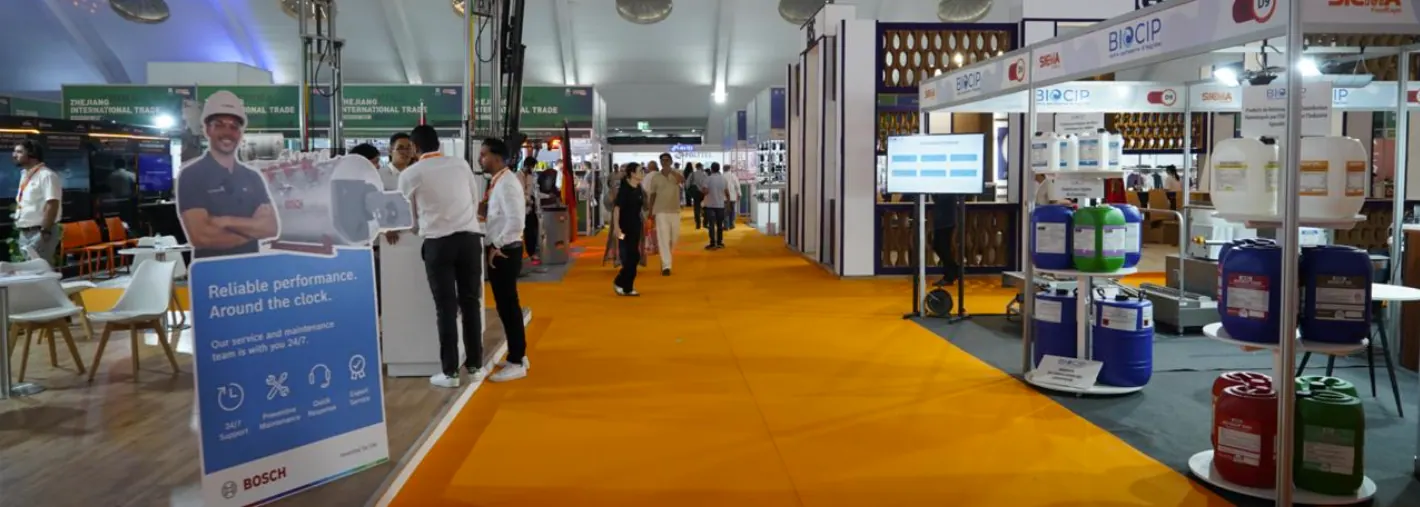
The 9th edition of the International Salon for Packaging, Machines, and Agro-Food (SIEMA) is set to take place from September 22 to 24, 2026, in Casablanca, Morocco. Under the theme "Cap Agro 2030: Sovereignty, Water Resilience, and Competitiveness of Made in Morocco," the event aims to discuss the major transformations in Morocco's agro-food industry. The industry is gathering in Casablanca for three days of exchanges on technological, industrial, and environmental transformations.
SIEMA 2026 is being organized at the exhibition space of the Moroccan Agency for Development of Investments and Exports (AMDIE), formerly known as OFEC. The event brings together industrialists, technology providers, and professionals from various segments of the value chain. The program combines conferences, roundtable discussions, expert interventions, industrial experience sharing, and sessions dedicated to innovation. Topics announced include water resource management, local transformation, industrial modernization, artificial intelligence, decarbonization, energy efficiency, skills, traceability, and export.
Water management is a central concern in the program, given the increased pressure on water resources. Discussions will focus on ways to reduce industrial water consumption while maintaining production levels. Participants will examine different models to improve process efficiency, reduce losses, and optimize water use. Case studies are also planned around solutions that combine productivity and resource management. This issue is part of broader reflections on the resilience of the agro-food industry and its ability to adapt production processes to more constrained resource availability.
Another key aspect of the expo is the technological transformation of the industry. Artificial intelligence will be addressed through applications directly related to agro-food business operations. Discussions will focus on data exploitation, quality control, maintenance, production optimization, and resource management. Several technologies associated with agrotech, foodtech, watertech, energytech, packaging, and automation will also be presented. The goal is to bring technological innovations closer to the operational needs of industrialists, as automation and digitization are increasingly important in modernization strategies for production units.
The energy transition is the third major technical aspect of this edition. Discussions will focus on energy efficiency and reducing the industry's carbon footprint. The goal is to identify solutions that can help the agro-food industry adapt to new environmental constraints while maintaining its competitiveness. This involves exploring ways to reduce energy consumption, use renewable energy sources, and implement sustainable production practices.
The SIEMA 2026 event aims to provide a platform for industry stakeholders to share experiences, knowledge, and best practices. By addressing key challenges such as water management, technological innovation, and decarbonization, the event seeks to support the development of Morocco's agro-food industry. The industry plays a crucial role in the country's economy, and its ability to adapt to new challenges will be essential for its future growth and competitiveness.
Key players in the industry will gather to explore solutions and strategies for addressing the challenges facing the sector. The event will provide an opportunity for networking, collaboration, and knowledge sharing among industry professionals. With its focus on water, AI, and decarbonization, SIEMA 2026 is set to be a significant event for Morocco's agro-food industry.
Key points
- The event will address key challenges in water management, technological innovation, and decarbonization.
- SIEMA 2026 aims to support the development of Morocco's agro-food industry by providing a platform for industry stakeholders to share experiences and best practices.
- The event will explore solutions and strategies for reducing industrial water consumption, improving process efficiency, and implementing sustainable production practices.