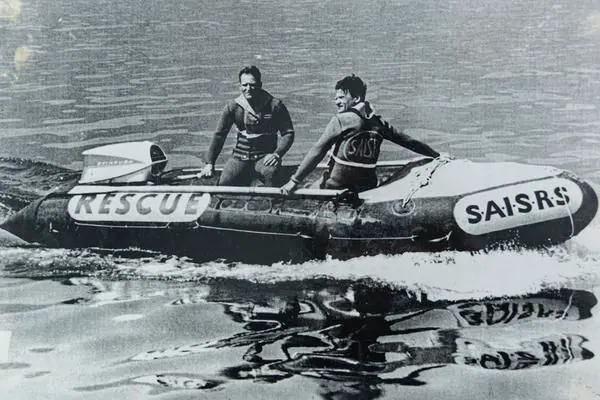
Patti Price's personal experience of being rescued from a wrecked ship in the English Channel as a child inspired her to campaign for a dedicated sea rescue service in South Africa. In 1966, when 17 people died after three fishing boats sank off Stilbaai, Price began writing letters to establish a similar service in South Africa. Her efforts drew support from the Society of Master Mariners of South Africa, which established the South African Inshore Rescue Service in 1967.
The South African Inshore Rescue Service was soon renamed the National Sea Rescue Institute (NSRI). Nearly six decades later, the NSRI has grown to operate 43 active rescue stations across eight provinces, with 1,431 operational volunteers serving in 2025. The organisation responded to 1,069 operations and rescued 1,548 people last year. The NSRI's work extends beyond search and rescue missions to include teaching water safety and survival swimming.
The NSRI's responsibilities have expanded significantly since its inception. Alongside rescue operations, the organisation provides lifeguards and places rescue equipment in accessible locations. In 2025, its water safety education and survival swimming programmes reached over 924,000 people across all nine provinces. The NSRI's lifeguards carried out 531 rescues, and its Pink Rescue Buoys have helped save more than 260 lives since the programme began in late 2017.
NSRI chief executive officer Mike Vonk emphasised that the organisation's history belongs to the people who have sustained it. He stated that heritage is not only what is inherited from those who came before but also what is chosen to be carried forward. Vonk highlighted that the NSRI's story belongs to the thousands of volunteers who have answered calls for help, the donors who have made their work possible, and the communities that continue to support them.
The NSRI's work is crucial, and its impact extends beyond rescue operations. The organisation's efforts to promote water safety and survival skills have contributed significantly to reducing the number of people in distress on the water. Heritage Day, celebrated on September 24, coincides with World Maritime Day, which recognises the maritime sector and the people who keep it operating safely.
Despite its achievements, the NSRI still relies heavily on public support, with over 97% of its funding coming from private individuals and companies. The organisation continues to appeal for donations and support to sustain its vital work. As the NSRI prepares to enter its seventh decade in 2027, it is asking South Africans to help sustain its efforts.
The NSRI's legacy is a testament to the power of volunteerism and community support. From its humble beginnings with a single inflatable boat in 1967 to its current advanced fleet, the organisation has come a long way. As Vonk noted, the spirit of volunteerism and care for one another is an important part of South Africa's national heritage.
Key points
- The National Sea Rescue Institute (NSRI) was established in 1967 thanks to Patti Price's campaign for a dedicated sea rescue service in South Africa.
- The NSRI has grown to operate 43 active rescue stations across eight provinces, with 1,431 operational volunteers serving in 2025.
- The organisation's work extends beyond search and rescue missions to include teaching water safety and survival swimming, providing lifeguards, and placing rescue equipment in accessible locations.