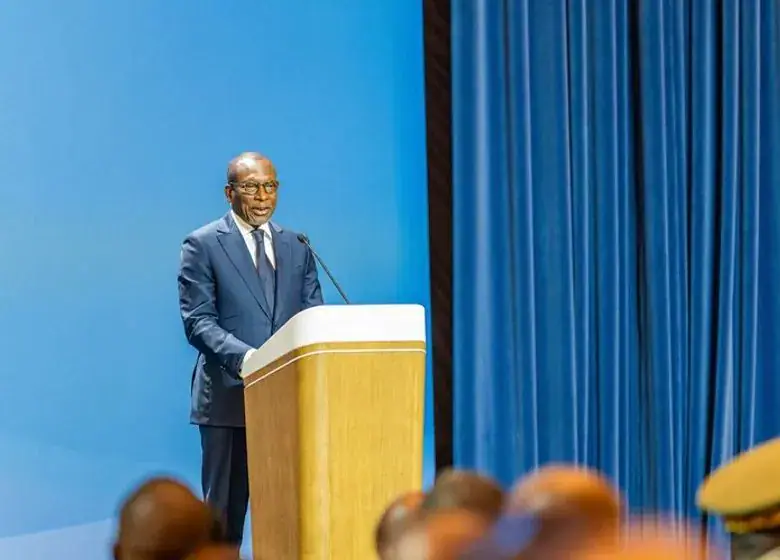
On October 28, Patrice Talon, President of Benin's Senate, officially launched the first ordinary session of the institution in Cotonou. The ceremony brought together several political and administrative personalities. As the head of the new upper house of parliament, Talon took the opportunity to clarify the missions assigned to the Senate, created during the constitutional revision of November-December 2025 and made operational in 2026.
In his address to the senators, Talon detailed the primary responsibilities of the Senate, which are organized around four key missions. He emphasized the institution's role in ensuring the respect of fundamental freedoms, democracy, social cohesion, and political stability. According to Talon, laws modifying the Constitution, laws with a political character, laws organizing the life of political parties, and electoral laws passed by the National Assembly must be submitted to the Senate for non-admission before their promulgation.
The second mission of the Senate concerns potential disagreements between the President of the Republic and the National Assembly on the content of a law. In the event of persistent divergences, the Senate is responsible for arbitration. The upper house can also request a second reading of certain texts to share its observations with the National Assembly. However, this prerogative does not apply to finance laws, regulation laws, and program laws, as specified by Talon.
The Senate's third mission involves monitoring the country's moral and political values. According to Talon, this role complements the institution's responsibility for preventing tensions and preserving political balance. The Senate's fourth mission focuses on exercising vigilance and arbitration in the country's legislative process. By fulfilling these responsibilities, the Senate aims to contribute to the stability and development of Benin.
The first ordinary session of the Senate is scheduled to last 21 days, during which senators will examine the dossiers on their agenda and engage in the initial work of the upper house. This session marks an important milestone in the operationalization of the Senate, created as part of Benin's constitutional reform. The Senate's establishment aims to strengthen the country's parliamentary system and promote more effective governance.
In his address, Talon expressed gratitude to the participants for their presence and emphasized the significance of the Senate's role in Benin's democratic process. He encouraged senators to work collaboratively to fulfill their responsibilities and contribute to the country's progress. The Senate's success will depend on its ability to effectively exercise its prerogatives and work in harmony with other branches of government.
As the Senate begins its work, it is expected to play a crucial role in shaping Benin's legislative agenda and promoting national development. The institution's effectiveness will be closely watched by the public, civil society, and the international community. With Patrice Talon at its helm, the Senate is poised to make a positive impact on Benin's democratic landscape and contribute to the country's growth and stability.
Key points
- The Senate has four key missions, including ensuring respect for fundamental freedoms and democracy, arbitrating disagreements between the President and National Assembly, monitoring moral and political values, and exercising vigilance in the legislative process.