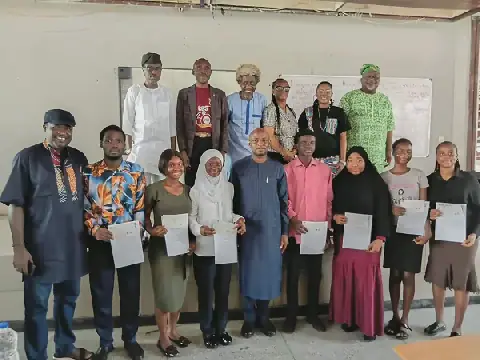
The Democratic Republic of Congo's efforts to restore forest landscapes and savannas have yielded positive results in Dibaya, Kasaï-Central. Over 500 hectares of land have been cultivated under the Programme d'investissement pour la forêt et la restauration des savanes (PIFORES). This development was announced after a four-day monitoring mission led by provincial Minister of Agriculture and Environment, Toto Kabongo.
The mission, which began on October 21, 2026, enabled the team to assess progress on the ground. They visited 350 hectares of acacia plantations, 30 hectares of maize, and 123 hectares of cowpea. Additionally, the program includes 43 nurseries containing over 700,000 seedlings for reforestation purposes. These activities are implemented by the Union des coopératives agro-pastorales au Congo (UCOOA) in collaboration with 27 local development committees.
A total of 1,376 members, comprising 648 men, 467 women, and 261 youths, are involved in the program through the local development committees. According to agricultural experts, the cultivated areas are expected to produce 30,000 kg of maize and 123,000 kg of cowpea. The estimated potential value of these harvests is $444,000, pending actual yields and selling prices.
The UCOOA coordinator, Timothée Ndaye, called for increased support from PIFORES and World Bank officials to sustain community mobilization. Meanwhile, Simon Ntumba Dikebele, head of the provincial program office, clarified that the work done is remunerated. Minister Toto Kabongo expressed satisfaction with the achievements, emphasizing that the cultivated crops belong to the beneficiary communities.
The PIFORES program, financed by the World Bank to the tune of $300 million, is an initiative of the Congolese government aimed at restoring forest landscapes and savannas while improving the livelihoods of local populations. The program's impact is being felt in Dibaya, where communities are actively engaged in agricultural activities.
Key stakeholders, including government officials, UCOOA representatives, and local community members, are working together to ensure the program's success. Their collaborative efforts have resulted in significant progress, with over 500 hectares of land cultivated and substantial production projections.
As the PIFORES program continues to unfold, its potential to drive sustainable development and improve the well-being of communities in Kasaï-Central and beyond will be closely monitored. With its focus on environmental restoration and livelihood enhancement, the initiative holds promise for the region's future.
Key points
- Over 500 hectares of land cultivated under PIFORES in Dibaya, Kasaï-Central.
- Program expected to produce 30,000 kg of maize and 123,000 kg of cowpea.
- PIFORES financed by World Bank to the tune of $300 million.