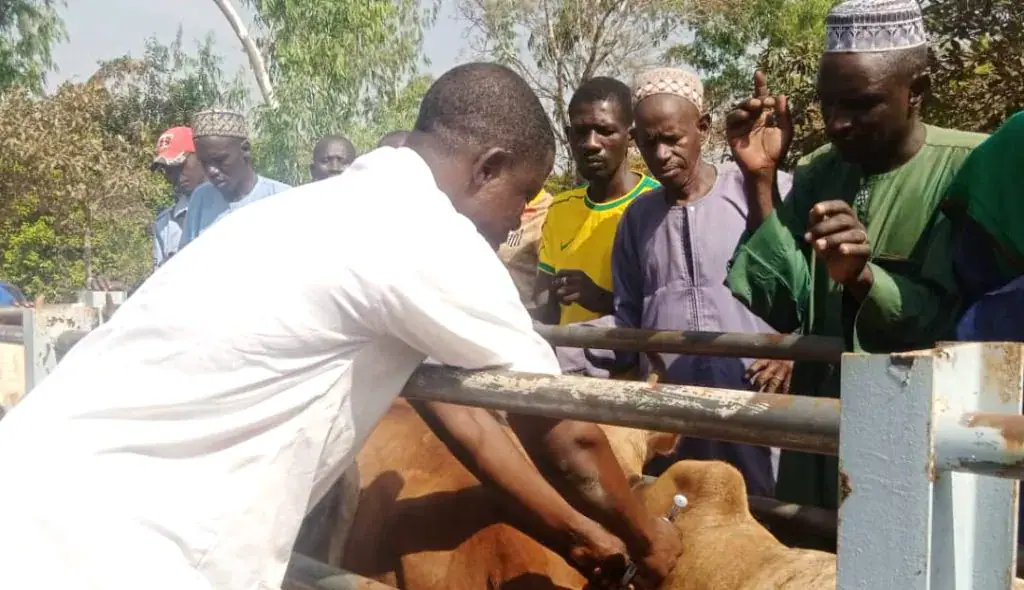
The 2026-2027 animal vaccination campaign in Burkina Faso's Tannounyan region has made significant progress, with over 180,000 cattle vaccinated against the peste des petits ruminants (PPR). This represents nearly 60% of the set target of 250,000 to 300,000 animals. The campaign, supervised by Minister of Animal Resources Dr. Amadou Dicko, aims to protect livestock from diseases and improve their productivity.
Dr. Amadou Dicko visited the Tannounyan region on November 27, 2026, to encourage technical teams and breeders to maintain their efforts to ensure the campaign's success. He was accompanied by regional governor Patrice Yéyé. The delegation visited several intervention sites in the region's provinces, including Toumousseni, Milantiari, and Gouindougouni.
The vaccination campaign targets priority animal diseases, including PPR, as well as zoonoses. In addition to vaccination, the campaign includes deworming, artificial insemination, and digitalization of animal mobility. According to regional agriculture director Souobou Minyemba, the three main interventions - vaccination, artificial insemination, and digital identification of animals - are progressing satisfactorily.
The campaign's progress was assessed as encouraging, with breeders showing increasing adherence to artificial insemination. This technique aims to improve livestock performance, particularly in milk and meat production. Dr. Dicko urged technicians to redouble their efforts, especially in PPR vaccination, and called on breeders to mobilize and vaccinate their herds to protect them from animal diseases.
The minister emphasized that the necessary means have been made available to achieve the campaign's objectives, and success now depends on the commitment of technicians in the field. He also encouraged breeders to adopt artificial insemination, presented as a safe means of improving productivity and profitability.
According to Souobou Minyemba, breeders are beginning to perceive the benefits of artificial insemination, including improved animal genetic potential and increased milk and meat production. This development is expected to contribute to strengthening farm incomes and improving livestock management conditions.
The campaign's success will depend on sustained efforts from technicians and breeders. With over 180,000 cattle vaccinated against PPR, the Tannounyan region is making progress toward its objectives. The government aims to protect livestock and improve the livelihoods of breeders through this campaign.
Key points
- Over 180,000 cattle vaccinated against PPR in Tannounyan region.
- Campaign targets 250,000 to 300,000 animals.
- Artificial insemination adoption increasing among breeders.