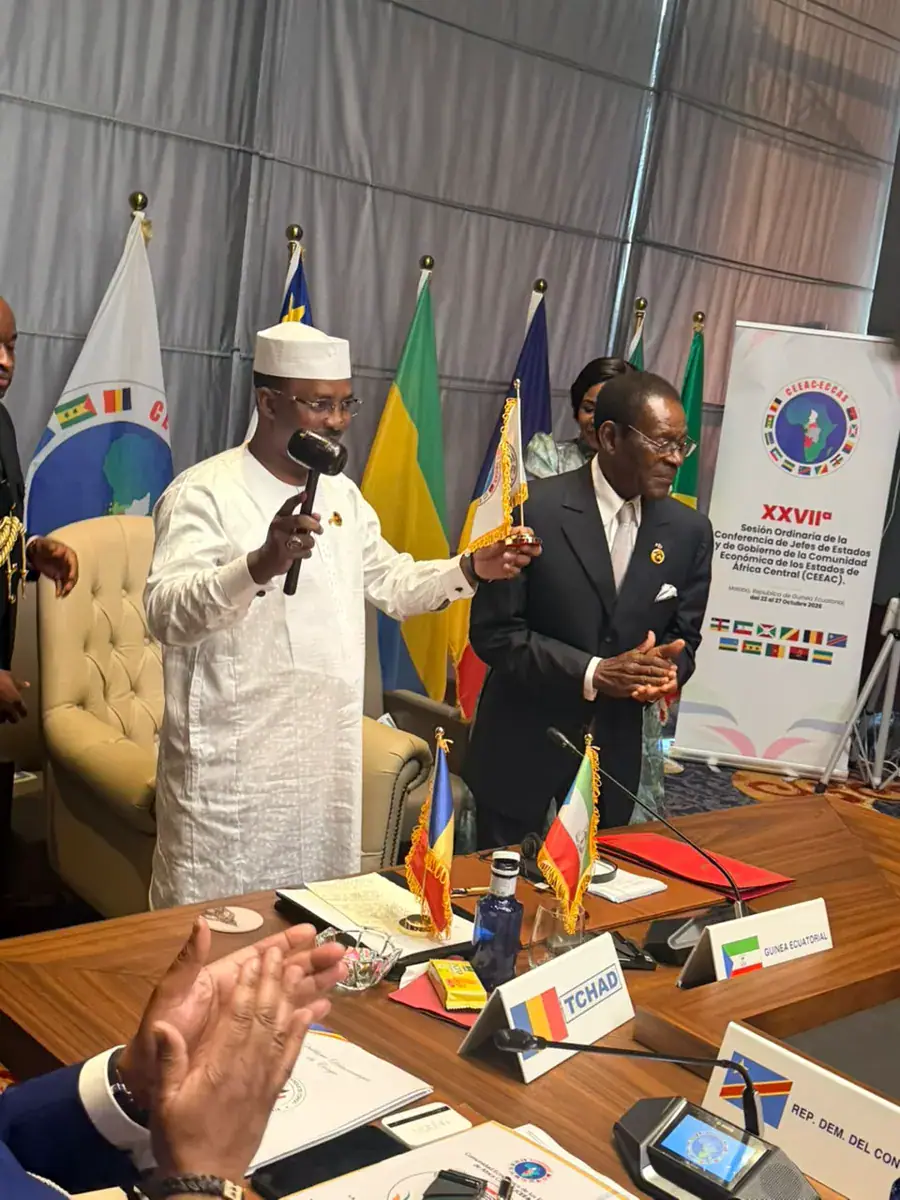
On November 27, 2026, in Malabo, Equatorial Guinea, Mahamat Idriss Déby Itno, President of Chad, was designated as the President-in-Exercise of the Economic Community of Central African States (CEEAC). This appointment came at the end of the 27th ordinary session of the Conference of Heads of State and Government. President Déby Itno has outlined an ambitious agenda for his tenure, focusing on peace, security, economic integration, and infrastructure development in the region.
In his address, President Déby Itno expressed gratitude to his counterparts for the confidence placed in him and his country. He also paid tribute to the outgoing President-in-Exercise, Equatorial Guinea's Obiang Nguema Mbasogo, for his efforts in promoting community cohesion and strengthening regional integration during his three-year term. Déby Itno emphasized that this responsibility is a collective commitment to serving the states and populations of Central Africa.
Despite the region's significant natural, energy, agricultural, forestry, and water resources, Central Africa faces numerous challenges, including conflicts, insecurity, economic and financial difficulties, weak intra-community trade, inadequate infrastructure, and obstacles to the free movement of people and goods. President Déby Itno has identified the effective implementation of community policies and decisions as the primary challenge for CEEAC.
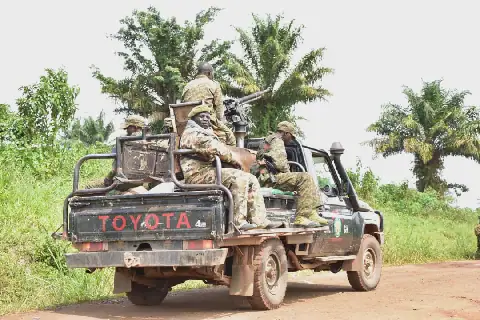
To address these challenges, President Déby Itno has defined five priority areas for his presidency. The first area focuses on peace, security, and stability in the region. He has called for strengthening conflict prevention mechanisms, early warning systems, mediation, and peaceful dispute resolution. Chad will host the next community exercise of the Central African Multinational Force (FOMAC) to test the capabilities of contingents under a common command.
The second priority area concerns accelerating economic and commercial integration. President Déby Itno announced that Chad will abolish entry visas for all African nationals starting January 1, 2027. He also called for the gradual lifting of obstacles to free movement, harmonization of economic policies, and the completion of the rationalization process between CEEAC and the Economic and Monetary Community of Central Africa (CEMAC).
The third priority area involves developing regional infrastructure and connectivity. President Déby Itno stressed the need to accelerate road, rail, air, river, sea, energy, and digital projects to better connect the capitals, cities, and production basins in the region. The fourth area focuses on valorizing natural capital and human development, including better management of natural resources, promoting a green and blue economy, and strengthening resilience to climate change.
President Déby Itno's presidency aims to make CEEAC a more effective organization, capable of meeting the expectations of its 220 million inhabitants. He emphasized the need for a common political will and solidarity among member states to achieve this ambition. With Chad's leadership, the region hopes to make regional integration a daily reality for the people of Central Africa.
Key points
- President Déby Itno outlines five priority areas for his CEEAC presidency, including peace and security, economic integration, and infrastructure development.