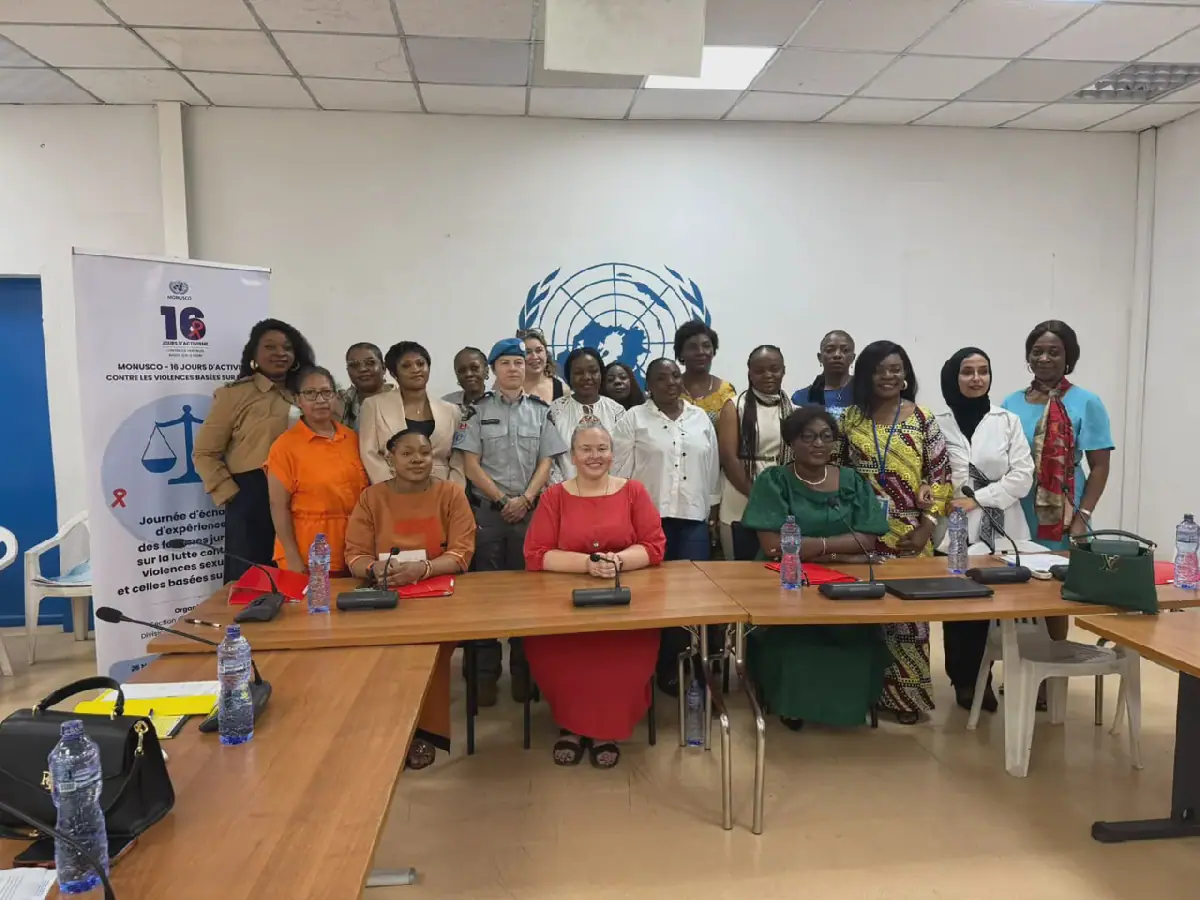
Women jurists gathered in Kinshasa on November 27 to discuss ways to ensure better access to justice for survivors of sexual violence, enhance their protection, and combat impunity. The meeting was part of the 16 Days of Activism Against Gender-Based Violence. Participants shared experiences, exchanged ideas, and formulated recommendations to improve judicial support for survivors. They highlighted the challenges faced by survivors when seeking justice and emphasized the need for protection throughout the judicial process.
The discussions focused on the difficulties encountered by survivors, including stigmatization, which often leads to abandoned proceedings. Catherine More, head of the Justice Support Section at MONUSCO, noted that this year's theme emphasizes access to justice, protection of survivors, and combating impunity for perpetrators of sexual violence. The participants recommended establishing reinforced protection mechanisms for survivors and measures to prevent stigmatization during their judicial journey.
The meeting also reviewed the Congolese legal framework for repressing sexual violence. Marie Chantal Kimanu, president of the Matete Court of Appeal and secretary of the Association of Women Magistrates of the DRC, recalled the provisions of Law No. 018/2006, which modifies the Penal Code and criminalizes several sexual violence-related offenses. She also mentioned Law No. 019/2006 on procedures for handling sexual violence cases and the 2023 innovations aimed at strengthening the fight against these crimes.
The laws address various crimes, including rape and incest. The women jurists aimed to contribute to strengthening actions in favor of protecting survivors, ensuring their effective access to justice, and combating impunity for perpetrators of sexual violence. The participants' recommendations will be crucial in shaping the future of judicial support for survivors of sexual violence in the DRC.
The 16 Days of Activism Against Gender-Based Violence campaign provides a platform for activists and stakeholders to advocate for the rights of survivors and push for policy changes. In the DRC, the campaign has brought together various stakeholders, including women jurists, to address the issue of sexual violence. The gathering in Kinshasa demonstrated the commitment of women jurists to improving the judicial system's response to sexual violence cases.
The issue of sexual violence in the DRC has been a longstanding concern, with many survivors facing significant barriers to accessing justice. The women jurists' initiative seeks to address these challenges and ensure that survivors receive the support and protection they need. By engaging in discussions and formulating recommendations, the participants demonstrated their dedication to creating a more just and supportive environment for survivors.
The outcome of the meeting will be crucial in determining the future of judicial support for survivors of sexual violence in the DRC. The recommendations formulated by the women jurists will likely inform policy changes and guide the development of more effective support systems for survivors. As the DRC continues to grapple with the issue of sexual violence, initiatives like this one will be essential in promoting justice and protecting the rights of survivors.
Key points
- Women jurists in the DRC are pushing for improved access to justice for survivors of sexual violence, amid ongoing efforts to combat impunity and protect victims.