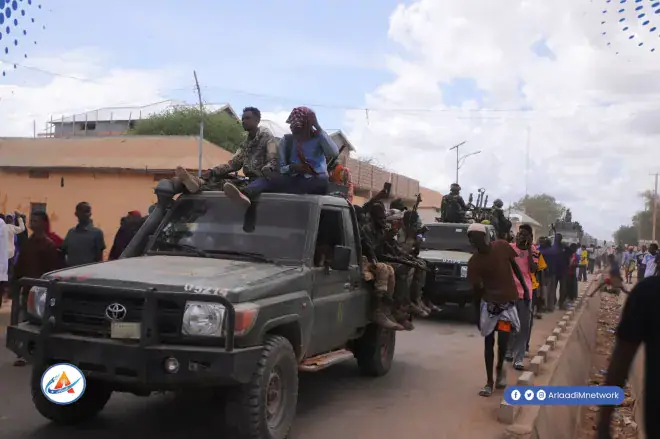
Renewed fighting in and around Baidoa, Somalia's South West State, has displaced more than 18,000 people, exacerbating an already severe humanitarian situation in the Bay and Bakool regions. The International Committee of the Red Cross (ICRC) reported that escalating armed conflict since March has forced thousands of families to flee their homes. This displacement has worsened food shortages and healthcare challenges, with the ICRC warning that anticipated heavy rainfall and flooding could further overwhelm displaced families.
The ICRC stated that conflict and insecurity have been the main drivers of displacement in the Bay region this year. Between July and September, renewed fighting forced thousands of residents to flee, accounting for nearly half of all conflict-related displacement recorded across Somalia during that period. Towns in the Bay region have experienced levels of violence not seen in recent years, placing additional pressure on communities already struggling to recover from drought and economic hardship.
The Bay region currently hosts more than 500,000 displaced people, while nearly 26,000 displaced people in Baidoa could face severe food insecurity by late December, according to food security assessments cited by the ICRC. The humanitarian organization described the situation in Baidoa as a "ghost town" after fighting in September, with families fleeing and streets left empty. Houses were damaged by mortar shells, and the ICRC's head of office in Baidoa, Mayow Mohamed, described the scene as one of utter devastation.
The ICRC and the Somali Red Crescent Society (SRCS) are working together to provide emergency assistance to communities affected by the fighting. SRCS volunteer response teams have transported 527 conflict-related casualties to nearby hospitals, while medical supplies delivered to Bay Regional Hospital have supported the treatment of more than 160 patients. Additional medical assistance to Bayhaw Hospital has helped treat 65 patients, and Red Crescent volunteers have provided first aid to nearly 150 people.
The ICRC and SRCS have also provided cash assistance to nearly 2,000 displaced families in Awdiinle, enabling them to purchase essential supplies, including food. Humanitarian teams have facilitated more than 4,000 free telephone calls for displaced people seeking information about missing relatives. The ICRC has also visited people detained in connection with the fighting at Baidoa Central Prison, as part of efforts to reduce harm to civilians.
To prepare for possible flooding associated with anticipated heavy rainfall, humanitarian organizations have begun distributing 10,500 sandbags to Somali Red Crescent clinics in Berdale, Xudur, and Wajid. Fourteen water points have also been flood-proofed, while emergency supplies, including tarpaulins, mosquito nets, and hygiene materials, have been positioned for distribution. The ICRC warned that continued fighting could further limit humanitarian access and place additional pressure on hospitals and essential services.
The ICRC called on all parties involved in the conflict to take precautions to protect civilians and civilian infrastructure, including homes and shelters used by displaced families. The organization also urged armed groups and security forces to ensure that wounded people can safely reach hospitals and that medical workers and ambulances are protected. With additional rainfall expected, humanitarian organizations warn that continued insecurity, inadequate shelter, and reduced aid funding could leave already vulnerable communities facing further displacement and worsening living conditions.
Key points
- Over 18,000 people displaced by fighting in Southwest State
- ICRC warns of worsening humanitarian situation due to El Niño-related floods
- Humanitarian organizations call for protection of civilians and civilian infrastructure