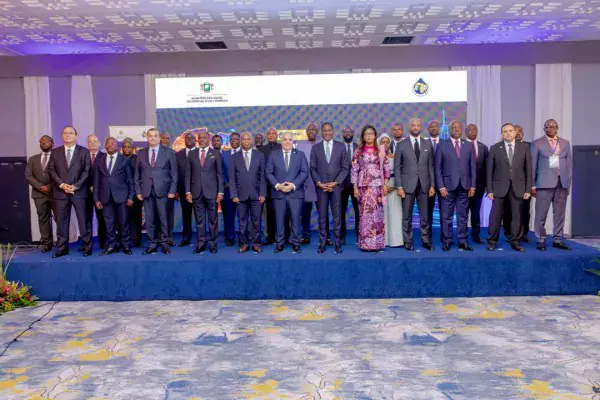
The African Petroleum Producers Organization (APPO) convened in Abidjan on November 17, 2026, for its 50th ordinary session of the Council of Ministers. The meeting brought together ministers and representatives from member states to discuss the future of Africa's energy sector. APPO aims to consolidate financing and cooperation instruments for greater African energy sovereignty. The organization seeks to enhance control over the financing, transformation, and valorization of Africa's energy resources.
The session, presided over by Ivorian Minister of Mines, Oil, and Energy Mamadou Sangafowa-Coulibaly, reviewed the organization's progress and outlined new ambitions. Key priorities include operationalizing the African Energy Bank, restructuring APPO, preparing for a summit of heads of state and government, and enhancing international visibility. Sangafowa-Coulibaly highlighted significant advancements, including the creation of the African Energy Bank, a partnership between APPO and the African Export-Import Bank (Afreximbank).
A decisive step was taken on October 31, 2026, in Nigeria, with the first general assembly of the African Energy Bank. The assembly elected administrators, nominated the bank's first president, and designated the auditor. This marks the establishment of the bank's main governance organs, paving the way for its launch on January 2, 2027, in Abuja, Nigeria. The bank aims to mobilize financial resources for Africa's energy projects, addressing the challenges of accessing financing in the international environment.
APPO Secretary-General Farid Ghezali emphasized the strategic importance of the African Energy Bank. He sees it as a crucial instrument for African countries to finance their energy priorities and reduce dependence on external financing mechanisms. The bank will support the development of Africa's energy sector, enabling countries to exploit their resources while developing solutions adapted to their growth and energy access needs.
In addition to the African Energy Bank, APPO is modernizing its organization. Mamadou Sangafowa-Coulibaly reported that restructuring work on the APPO Secretariat is at an advanced stage. Proposals will be submitted to the Council of Ministers for examination and approval during this session. The goal is to strengthen the organization's institutional effectiveness and adapt its operations to better meet its mission requirements.
The 50th session also focused on evaluating the execution of the 2026 budget, examining the 2027 budget project, and adopting the work program and key performance indicators. President of the Executive Council Karrol Kadiata Leta stressed the importance of rigorous governance, better activity planning, control mechanisms, and transparent resource management. Discipline in budget management, auditing, and accountability mechanisms are essential for building trust among member states and improving organizational performance.
The African energy landscape is evolving, with challenges such as financing infrastructure, changes in the global hydrocarbon market, and energy sovereignty concerns. APPO's ambitions go beyond exploiting and exporting natural resources; the continent must also strengthen its industrial transformation capacities and develop integrated value chains. Farid Ghezali called for increased cooperation between national oil companies, promotion of local content, and investment in research, training, and skills development.
Key points
- The African Energy Bank is set to launch on January 2, 2027, in Abuja, Nigeria.