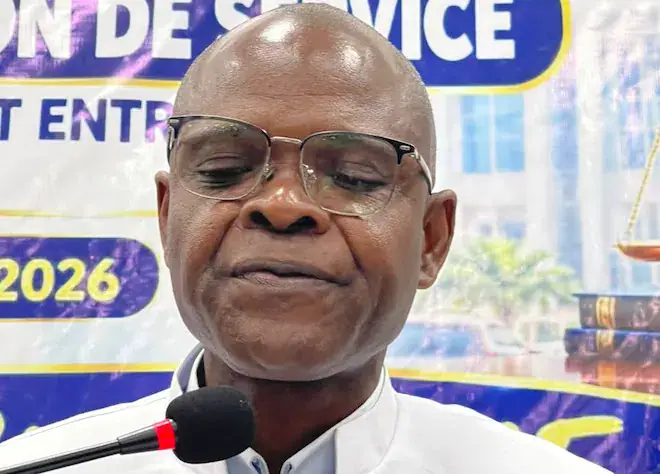
Francis Kova Zoumanigui, the outgoing president of Guinea's Cour de répression des infractions économiques et financières (CRIEF), has emphasized the importance of preserving the institution's achievements and pursuing key initiatives. On October 28, 2026, Zoumanigui passed the baton to his successor, Mamadou Saliou Diakité, after nearly three years at the helm. During his tenure, Zoumanigui focused on strengthening the CRIEF's institutional, material, and professional capacities.
Zoumanigui highlighted the CRIEF's unique role in combating economic and financial crimes, protecting public resources, and promoting trust in the justice system. He noted that the court's work requires competent judges, well-trained staff, suitable infrastructure, and effective institutional cooperation. The CRIEF president also stressed the need for independent, impartial, and rigorous justice that respects the rights of all parties.
The outgoing CRIEF president cited notable achievements, including a May 2025 case that resulted in a five-year prison sentence, a 5 billion Guinean franc fine, and the confiscation of properties worth $10.5 million. These decisions, confirmed on appeal, demonstrate the impact of judicial action in establishing accountability and applying statutory consequences.
Despite progress, Zoumanigui acknowledged that some projects remain incomplete, including the organization of "audiences foraines" (mobile courts). He had advocated for budget allocations for this initiative in 2025, but it was not realized during his term. Zoumanigui expressed regret over this unfinished business.
Zoumanigui outlined four key priorities for his successor: securing CRIEF premises and data, modernizing and digitalizing the institution, organizing mobile courts, and creating a dedicated space for lawyers. He urged his successor to pursue these initiatives, emphasizing that they are essential to protecting judicial assets, improving case management, and enhancing working conditions for justice professionals.
The outgoing president revealed that he had requested exceptional financial support from the Guinean president to bolster the CRIEF's capacities and modernize its operations. He encouraged his successor to follow up on this request, ensuring that it aligns with budgetary and financial procedures.
As Zoumanigui handed over the reins, he emphasized that these priorities are not personal projects but rather institutional imperatives that must be pursued and adapted according to their usefulness and available resources. His successor, Mamadou Saliou Diakité, now faces the task of building on Zoumanigui's accomplishments and addressing the challenges ahead.
Key points
- The CRIEF court has secured significant convictions, including a 5-year prison sentence and $10.5 million in confiscated assets.
- Outgoing President Zoumanigui has identified four key priorities for his successor, including securing CRIEF premises and digitalizing the institution.
- The CRIEF court has played a crucial role in Guinea's efforts to combat economic and financial crimes.