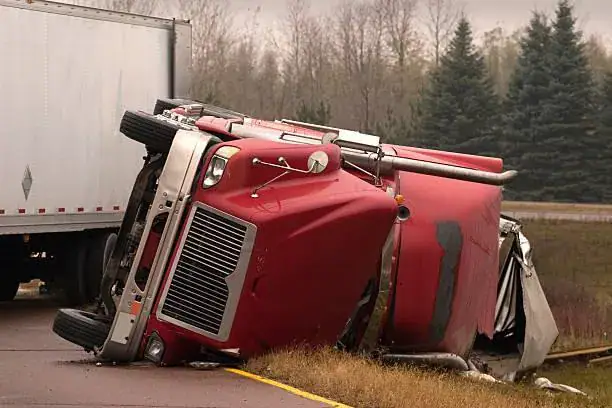
Jackknife accidents, where a commercial truck suddenly folds at the connection between its tractor and trailer, can have devastating consequences in Kenya. These incidents often involve multiple vehicles, serious injuries, and extensive property damage. To determine the cause of such accidents, investigators are relying on electronic braking data, which provides valuable evidence by revealing how the vehicle's braking systems operated before, during, and immediately after the incident.
Modern commercial trucks in Kenya are equipped with electronic control modules, anti-lock braking systems (ABS), and electronic stability control technologies that record or process operational information. This data can help establish whether braking performance, wheel lockup, driver input, or changing road conditions contributed to the accident. Investigators examining jackknife accidents often rely on electronic records to understand the sequence of events leading to the crash.
Electronic braking data includes information generated by a truck's braking and vehicle control systems, such as wheel-speed readings, brake application signals, ABS activation events, and certain fault codes. Some vehicles also store event-related information through electronic control modules or other onboard recording systems. These records help investigators reconstruct the truck's behavior rather than relying exclusively on recollections.
Uneven braking can contribute to a truck losing directional stability, particularly when traction is limited or the vehicle is traveling through a curve. Electronic records may reveal ABS activity, wheel-speed differences, or braking-related faults that warrant further examination. Investigators can compare these findings with physical brake inspections to determine whether a mechanical problem or abnormal braking response may have contributed to the incident.
Braking data can also help clarify how the driver responded to developing hazards. Depending on the systems installed, investigators may identify the timing of brake applications, ABS interventions, or other recorded vehicle events. For example, abrupt braking while traveling on a slippery surface may contribute to instability if available traction is insufficient.
A jackknife incident rarely has a single obvious explanation. Road moisture, loose gravel, steep gradients, excessive speed, uneven cargo distribution, and inadequate vehicle maintenance can all influence stability. Electronic braking records provide one part of the investigation, and experts may compare recorded wheel behavior and system faults with the road environment, tire condition, braking components, and cargo configuration.
Reliable electronic evidence can strengthen an accident reconstruction by providing objective information about vehicle behavior. Investigators should preserve available data promptly because some systems overwrite information or retain only limited event records. Qualified specialists can retrieve and interpret relevant records while documenting their methods and maintaining evidence integrity.
Key points
- Electronic braking data can help establish the sequence of events preceding a jackknife collision.
- ABS activity, wheel-speed information, and fault codes may reveal braking abnormalities or traction-related problems.
- Driver inputs and vehicle responses can help investigators evaluate possible contributing factors.