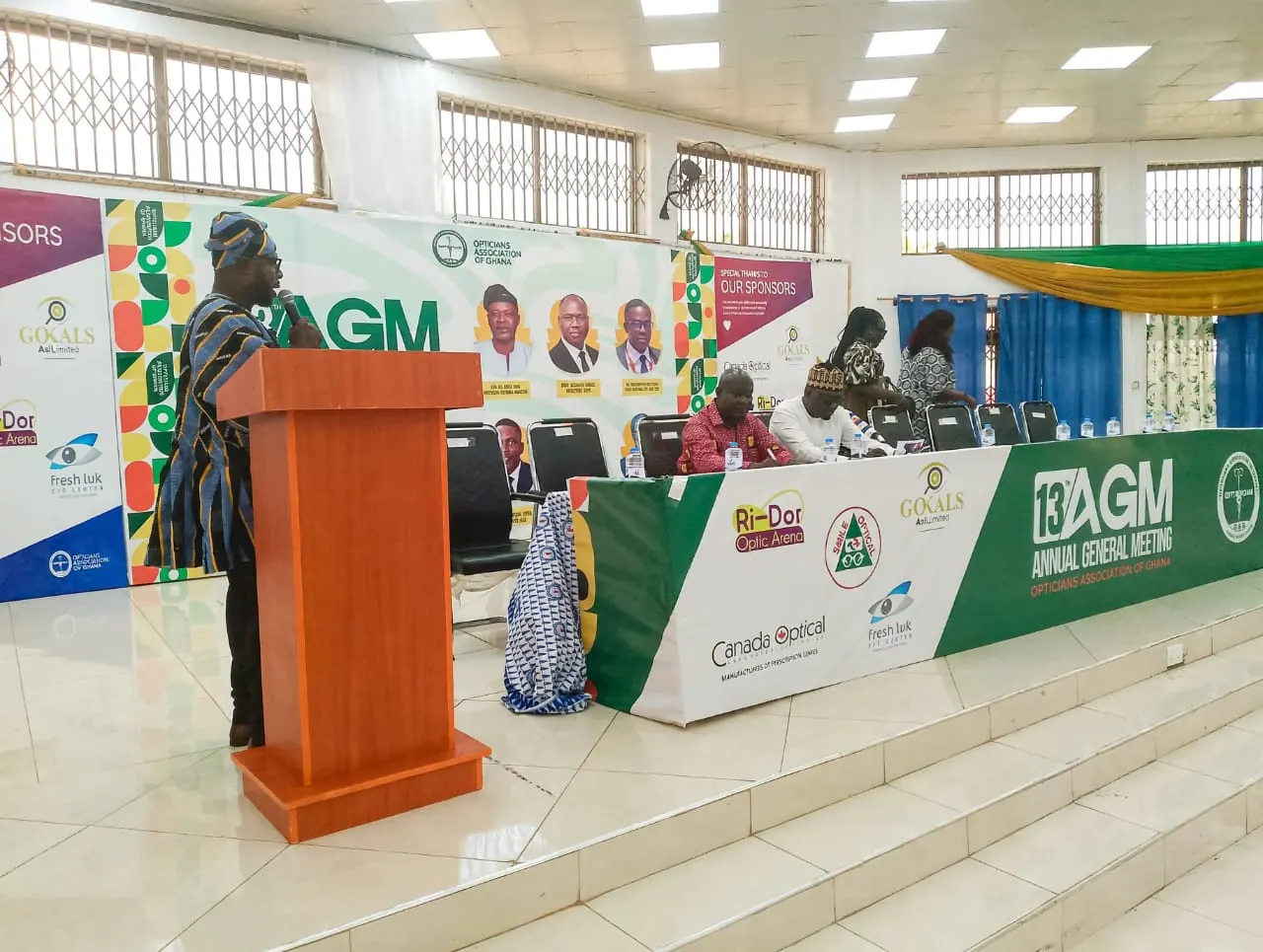
The National President of the Opticians Association of Ghana, Mr Frank Quarshie Ofori, has called on opticians to embrace emerging technologies and strengthen professional standards to improve access to quality optical care services in the country. He made the call at the 13th Annual General Meeting of the Association in Tamale, which brought together opticians, traditional authorities, religious leaders, health professionals, and other stakeholders to deliberate on the future of opticianry practice and strategies to improve eye care delivery.
Mr Ofori stressed that quality optical dispensing services should not be concentrated in major cities such as Accra and Kumasi but should be accessible to all, irrespective of their geographical location. He said rapid technological advancements were transforming opticianry practice, requiring professionals to adapt to emerging innovations while addressing structural challenges affecting the delivery of quality services. The Association is exploring alternative employment arrangements to address the challenges facing trained opticians who are yet to secure jobs.
Professor Issahaku Shirazu, Registrar of the Allied Health Professions Council, urged the media to support efforts to enforce professional standards and protect the public from unqualified practitioners. He cautioned facility owners against engaging unlicensed practitioners, warning that violations could attract legal action. He also urged healthcare facilities to ensure that professionals were assigned duties consistent with their qualifications and scope of practice.
Prof Shirazu explained that assigning duties reserved for higher-level professionals to personnel with lower qualifications could compromise the quality of diagnosis and expose patients to avoidable risks. He said the Council would enforce the relevant regulations to protect the public and ensure that healthcare services were delivered by appropriately qualified personnel. This move aims to promote quality healthcare delivery and prevent quackery in the healthcare sector.
Mr Ali Adolf John, Northern Regional Minister, commended the Association for its contribution to healthcare delivery and called on members to strengthen professional standards, embrace emerging technologies, and prioritize continuous professional development. He said vision was fundamental to education, productivity, safety, and human dignity, adding that access to appropriate optical care enabled people to learn, work, and maintain their independence.
Mr John urged opticians to collaborate with the government and other stakeholders to build an eye care system that ensured that no one was unnecessarily denied the opportunity to see clearly. The government and other stakeholders have a crucial role to play in supporting the efforts of opticians to improve eye care delivery in the country. This collaboration is expected to improve access to quality eye care services, particularly in underserved communities.
The three-day meeting in Tamale provided a platform for stakeholders to discuss the future of opticianry practice and strategies to improve eye care delivery in Ghana. The Opticians Association of Ghana aims to promote quality eye care services and address the challenges facing the sector. The Association's efforts are expected to improve access to quality optical care services and promote eye health in the country.
Key points
- Opticians in Ghana must adopt emerging technologies to improve eye care services.
- Quality optical dispensing services should be accessible to all, irrespective of geographical location.
- The Allied Health Professions Council will enforce regulations to protect the public from unqualified practitioners.