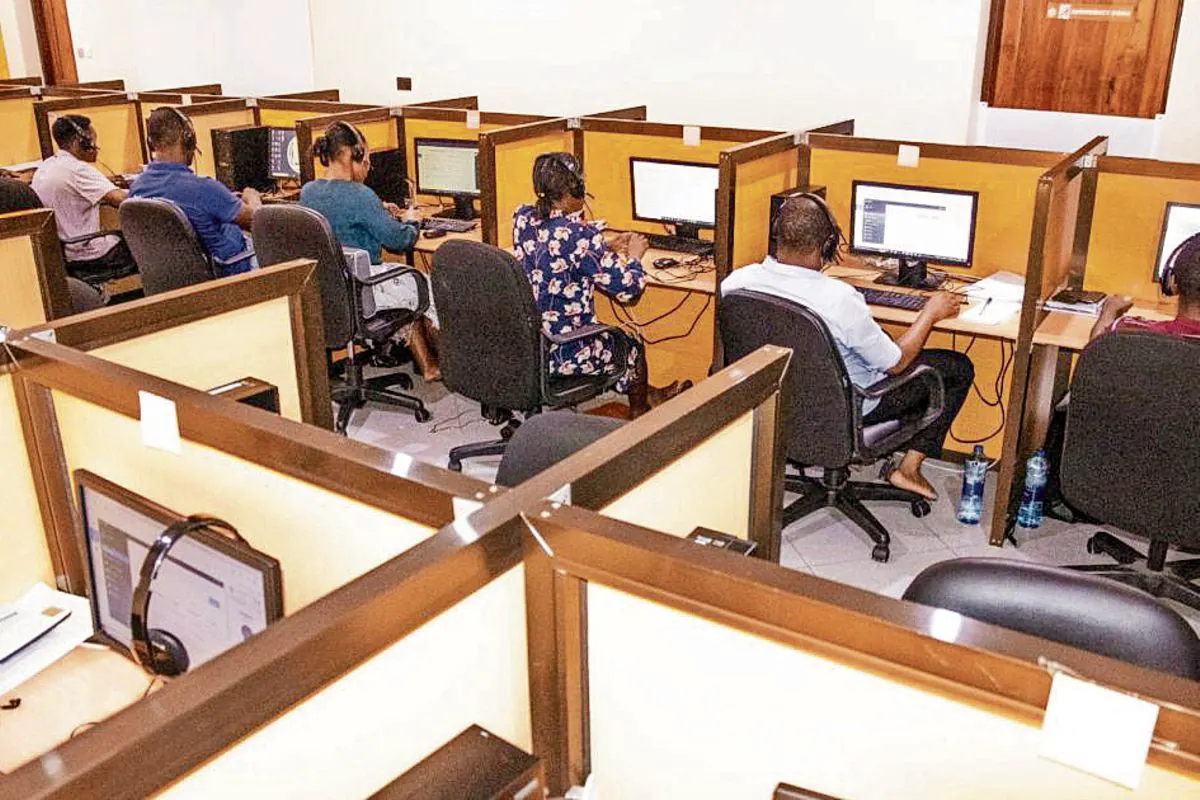
Tanzania is facing a significant challenge in its labor market, with only about 550,000 of its estimated 26 million jobs classified as high quality. According to the World Bank's 2026 Tanzania Economic Update, a high-quality job is one that pays at least Sh3,830 an hour, provides a written employment contract, social security coverage, and reasonable job security. This highlights a major challenge for the economy, which is seeking to translate growth into higher incomes and faster poverty reduction.
The World Bank report defines the threshold for a high-quality job as equivalent to about Sh750,000 a month for a worker on the statutory 45-hour working week. However, median hourly earnings in Tanzania are only Sh1,005, including profits and income received in kind. The report also notes that only about 120,000 of the high-quality jobs are in the private sector. This imbalance highlights the need for the private sector to play a more significant role in creating quality jobs.
Minister for Planning and Investment Prof Kitila Mkumbo emphasized the need for Tanzania to focus more strongly on productivity. He argued that economic growth must translate into better incomes and improved quality of life, stating that "employment without productivity cannot deliver transformation." The World Bank report also notes that Tanzania's employment-to-population ratio of 68.7 percent is among the highest globally, with more than two in three working-age Tanzanians employed in 2024.
However, the nature of employment in Tanzania is a significant concern. Agriculture accounts for 54 percent of jobs, services about one-third, and industry roughly one in 10. About 75 percent of workers are own-account workers, while another 17 percent are contributing family workers. Employees account for only 8 percent of the workforce. Informality has also increased, from about 93 percent of employment in 2020 to around 95 percent in 2024.
The pressure on the labor market is likely to intensify as about two million Tanzanians reach working age each year, while only around 400,000 leave the working-age population through retirement and premature mortality. The World Bank says the scarcity of quality jobs helps explain why strong economic growth has not translated into comparable gains in poverty reduction. Tanzania's economy has expanded by an average of 5.7 percent a year over the past two decades, but growth has been driven largely by accumulation of resources rather than productivity gains.
The report identifies constraints on both workers and businesses. On the labor supply side, only about 15 percent of the workforce has both the readiness and opportunity needed to access better jobs. Learning-adjusted schooling averages just 4.5 years among adults aged 25 and above, while only around 40 percent of secondary school-age children are enrolled. Women and young people face additional barriers, with women accounting for 51 percent of the working-age population but only 32 percent of holders of the highest-quality jobs.
To address these challenges, the World Bank recommends that Tanzania act on both sides of the labor market. For businesses, this means reducing barriers to investment, improving access to land and long-term finance, strengthening insolvency frameworks, and raising productivity. For workers, the World Bank calls for stronger skills development, better job-matching systems, recognition of existing skills, and social protection that helps people move into more productive employment.
Key points
- Only about 550,000 of Tanzania's estimated 26 million jobs are classified as high quality.
- The private sector plays a limited role in creating quality jobs, with only about 120,000 high-quality jobs available.
- Tanzania needs to focus on productivity to translate economic growth into better incomes and improved quality of life.