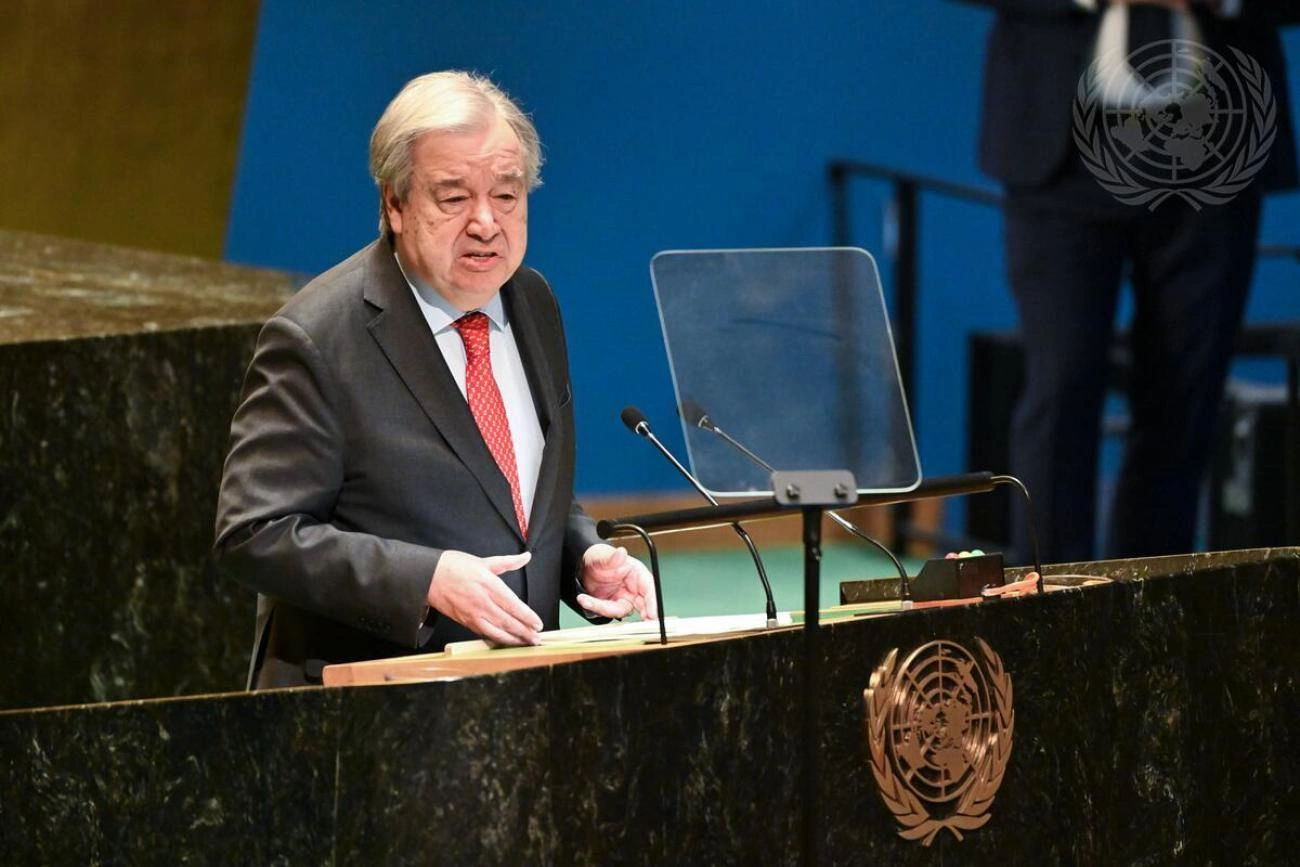
The UN Secretary-General's report on Western Sahara, led by Antonio Guterres, presents a cautious reading of the situation. The report highlights the first three rounds of direct negotiations between Morocco, the Polisario Front, Algeria, and Mauritania in seven years. This development is seen as a positive step towards resolving the conflict. The report also notes the continued efforts of the UN and the US to work with the parties towards a political solution.
The report references a document prepared by the Polisario Front before the UN Security Council's resolution 2797. However, it primarily focuses on Morocco's proposal for autonomy, which was presented in 2007 and re-examined in 2025. The document outlines a detailed plan for autonomy, which was shared with the Personal Envoy and the US, as well as the parties involved in the negotiations. The report describes the Moroccan proposal as a basis for negotiations, not a final agreement.
The report provides new details on the negotiations that took place in Washington and Madrid. The three rounds of negotiations addressed issues such as the role of the international community, guarantees for implementation, and measures for transitional periods. The parties discussed the creation of a transitional council, power-sharing, and the role of the international community. The report also notes that the parties agreed to continue negotiations on a mutually acceptable solution.
The report highlights the significance of the negotiations, with all parties acknowledging the historic progress made. The parties expressed a willingness to continue building trust and working towards a mutually acceptable solution. The report also notes that several countries have clarified or changed their positions on Western Sahara in response to UN Security Council resolution 2797.
The negotiations addressed several key issues, including the role of the transitional council, power-sharing, and the role of the international community. The parties also discussed the possibility of a referendum, which has been a point of contention. However, the report notes that the Moroccan proposal for autonomy, which includes a transitional council and a referendum, has been on the table since 2007.
The report concludes that the parties have made significant progress, but there is still work to be done. The UN and the US will continue to work with the parties to achieve a mutually acceptable solution. The report also notes that the international community has a role to play in supporting the negotiations and ensuring a peaceful resolution to the conflict.
The UN Secretary-General's report offers a cautious reading of the situation, highlighting both the progress made and the challenges ahead. The report emphasizes the need for continued negotiations and international support to achieve a peaceful resolution to the conflict. The parties have expressed a willingness to continue working towards a solution, and the report notes that the momentum gained in the negotiations should be maintained.
Key points
- The UN report on Western Sahara highlights the progress made in negotiations between Morocco, the Polisario Front, Algeria, and Mauritania.
- The report emphasizes the need for continued negotiations and international support to achieve a peaceful resolution to the conflict.
- The Moroccan proposal for autonomy remains a key point of discussion, with the parties working towards a mutually acceptable solution.