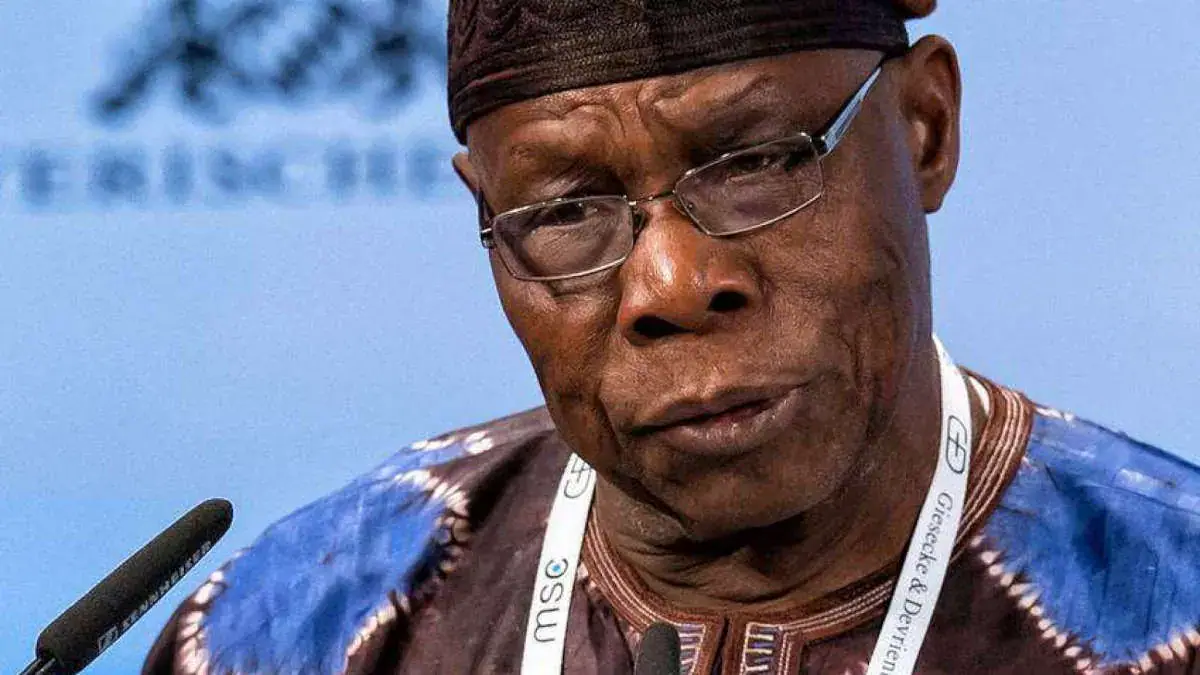
Former Nigerian President Olusegun Obasanjo has rejected President Bola Tinubu's stance on Nigeria's debt, describing it as "absurd". On October 30, 2026, at the Ajibosin Platform in Abeokuta, Ogun State, Obasanjo responded to Tinubu's April statement. Tinubu had defended his borrowing policy, saying "If we must borrow, we borrow. Borrowing is not leprosy, we just have to work hard to repay." Obasanjo countered that debt is worse than leprosy, as it destroys generations, not just individuals.
Obasanjo's comments come as Tinubu seeks approval from the National Assembly for an additional external borrowing plan worth $20.52 billion and €1.04 billion. The former president also criticized international financial institutions, such as the IMF and World Bank, for imposing unrealistic policies on Nigeria. He cited their opposition to agricultural subsidies as an example. Obasanjo's remarks highlight the ongoing debate about Nigeria's debt management and economic policy.
During his presidency, from 1999 to 2007, Obasanjo successfully negotiated a debt relief agreement with the Paris Club, worth $30 billion. He recalled launching his own farm 47 years ago, when one US dollar was equivalent to 1.85 naira. Obasanjo questioned the capacity of current leaders, asking "What do our leaders know? What don't they know? And based on what they know, what can they do for us?"
Tinubu's borrowing policy has sparked controversy, with many Nigerians expressing concerns about the country's growing debt. Obasanjo's criticism is likely to resonate with some Nigerians, given his experience in managing the country's debt. The former president's comments also underscore the challenges facing Nigeria's economic policymakers.
The country's economic woes have been exacerbated by various factors, including fluctuations in global commodity prices and a decline in revenue. As the government seeks to implement new policies to stimulate growth, Obasanjo's remarks are likely to fuel further debate about the best way forward. The Nigerian economy has struggled in recent years, with high inflation and unemployment rates.
Obasanjo's intervention reflects the ongoing discussion about Nigeria's economic policy and debt management. The country's leaders face significant challenges in balancing the need for economic growth with the imperative of managing debt. As the government moves forward with its borrowing plans, Obasanjo's comments are likely to remain a topic of discussion.
The exchange between Obasanjo and Tinubu highlights the complexities of Nigeria's economic policy and the need for effective leadership. The country's future economic prospects depend on finding a sustainable solution to its debt challenges and implementing policies that promote growth and development.
Key points
- Obasanjo criticizes Tinubu's debt policy, calling borrowing "absurd" and worse than leprosy.
- The former president questions the capacity of current leaders to manage the country's debt.
- Obasanjo's comments reflect ongoing concerns about Nigeria's economic policy and debt management.