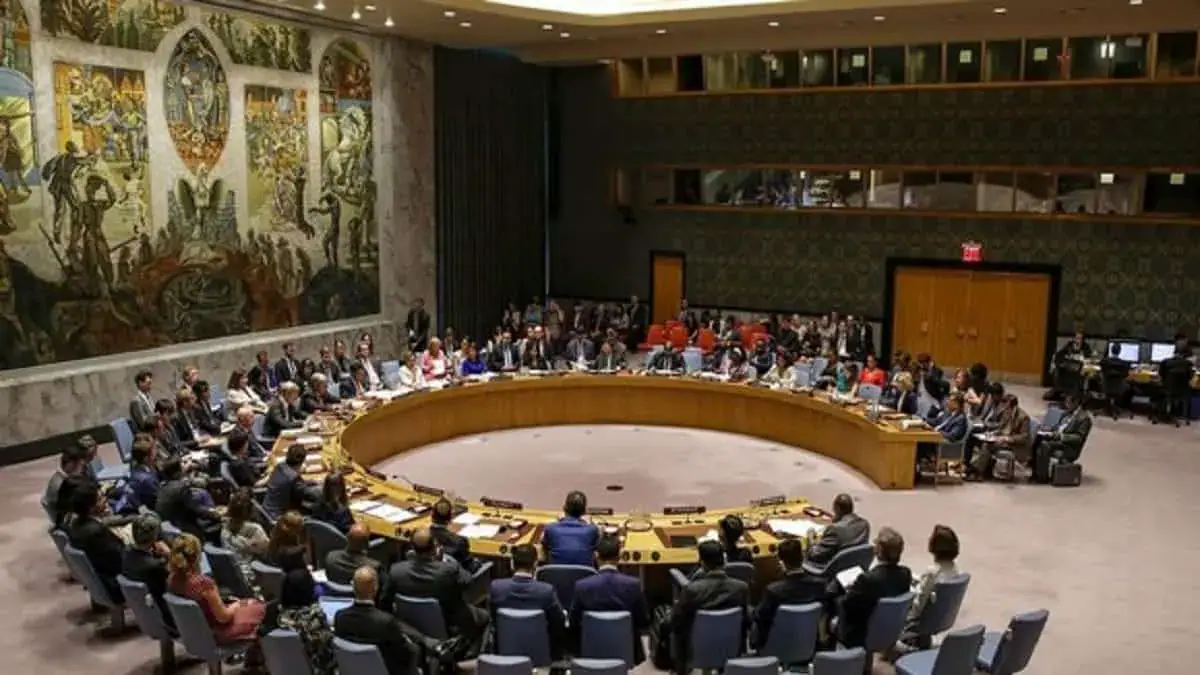
The Algerian government has expressed concerns over the US role in the UN Security Council discussions on Western Sahara. According to Algerian officials, the US administration under President Trump prioritized Moroccan demands over a balanced approach, ultimately leading to an unbalanced resolution. This resolution heavily favored Morocco, making it unacceptable to some council members. The Russian veto highlighted the consequences of this biased approach.
The US actions were driven by a specific political agenda, satisfying Moroccan demands supported by pro-Israeli lobbying groups, such as AIPAC. This strategy aimed to marginalize the MINURSO, a UN mission that has been a witness to the unresolved decolonization conflict. By doing so, the US sought to shift the focus from decolonization to a refugee issue, prioritizing humanitarian concerns over political and territorial dimensions.
The change in approach, disregarding the Sahrawi people's right to self-determination, aimed to legitimize a colonial fait accompli. Instead of seeking a solution based on international law, the US attempted to adapt the UN framework to Morocco's territorial objectives. This involved remodeling the institutional framework to align with Moroccan demands, rather than seeking a compromise between parties.
Algerian officials argue that the US actions led to the current impasse in the Security Council. By pushing for a resolution that favored Morocco, the US created an unbalanced dynamic, making it challenging for the council to reach a consensus. The Russian veto was a direct consequence of this approach, highlighting the need for a more balanced and inclusive solution.
The situation in Western Sahara remains unresolved, with the conflict dating back to the 1970s. The Sahrawi people continue to seek self-determination, while Morocco maintains its claim over the territory. The UN has been involved in efforts to resolve the conflict, but progress has been slow. The current impasse in the Security Council has raised concerns about the effectiveness of the UN in addressing this longstanding issue.
Algerian Ambassador to the UN, Amar Belani, has been vocal about the US role in the impasse. He emphasized that the US actions were driven by a biased approach, which ultimately led to an unbalanced resolution. Belani's comments reflect the Algerian government's concerns about the US approach and its implications for the conflict.
The situation in Western Sahara continues to be a pressing issue, with the international community calling for a peaceful resolution. The UN Security Council must navigate this complex situation, balancing competing demands and interests. The outcome will have significant implications for the Sahrawi people, regional stability, and the effectiveness of the UN in addressing longstanding conflicts.
Key points
- The US has been accused of prioritizing Moroccan demands over a balanced approach in the UN Security Council discussions on Western Sahara.
- The US actions were driven by a specific political agenda, satisfying Moroccan demands supported by pro-Israeli lobbying groups.
- The situation in Western Sahara remains unresolved, with the conflict dating back to the 1970s.