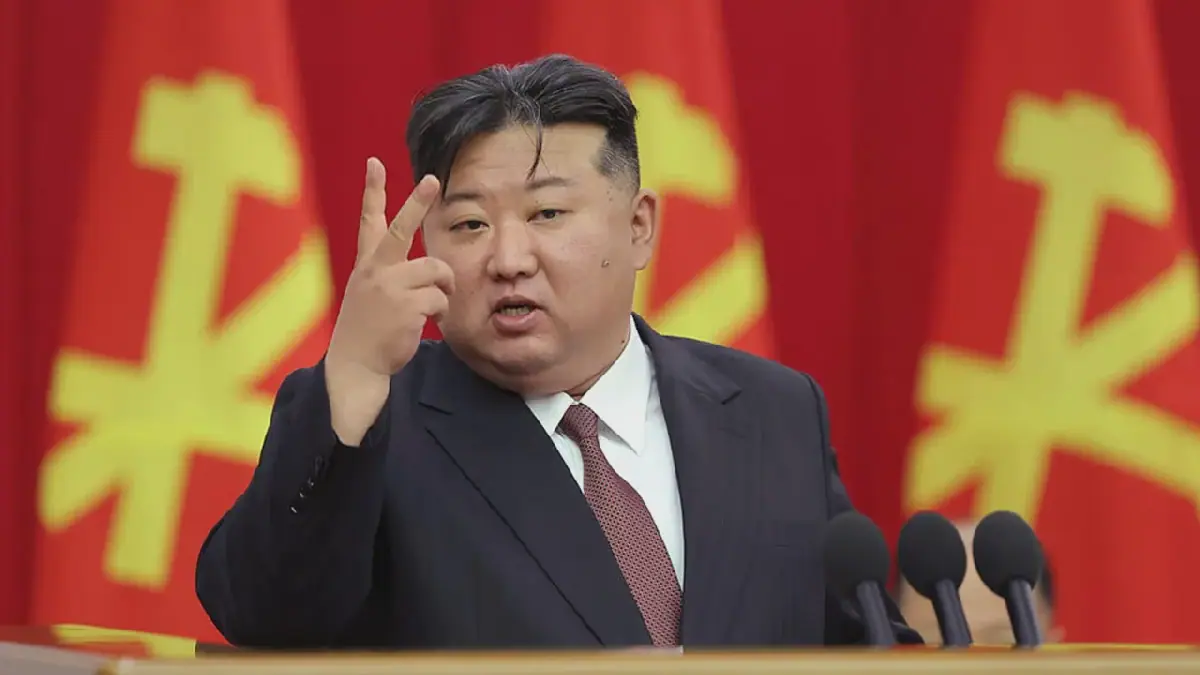
North Korea has amended its constitution, introducing four key changes that solidify leader Kim Jong-un's power, redefine the country's territory, and scrap goals of unification with South Korea. The revised constitution was made public on a government website, marking its return after a two-and-a-half-year absence. According to experts, the changes reflect Pyongyang's hardened stance towards Seoul and its desire to maintain a distinct identity.
The amended constitution redefines North Korea's territory to include its airspace and waters, bordering China, Russia, and South Korea. The document describes South Korea as an independent state, without specifying land or sea borders. Analysts see this as an attempt to maintain a "two-state" approach while avoiding language that explicitly expresses hostility or defines maritime boundaries.
A significant change is the removal of references to peaceful unification and national unity. North Korean leader Kim Jong-un has previously stated that his country has no interest in dealing with South Korea. The move comes as South Korean President Lee Jae-myung seeks to reduce tensions, advocating for negotiations to establish a "peace system" to replace the 1953 armistice agreement.
The revised constitution also strengthens Kim Jong-un's powers, granting him the authority to veto parliamentary decisions and remove lawmakers who lose public trust. The document's preamble has reduced emphasis on Kim's predecessors, Kim Il-sung and Kim Jong-il, in line with efforts to enhance Kim Jong-un's personality cult.
Furthermore, the amended constitution expands Kim's authority over North Korea's nuclear forces, as he assumes the role of chairman of the State Affairs Committee. This development has raised concerns about Pyongyang's nuclear program, which has seen increased activity this year, including tests of ballistic missile systems and hypersonic weapons.
Expert Edward Howell notes that the constitutional changes reflect North Korea's shift in approach over the past three years, effectively abandoning efforts to unify with South Korea. Pyongyang now views Seoul as a primary and permanent enemy, according to Howell.
The amendments have significant implications for the region, as North Korea continues to develop its nuclear capabilities and redefine its relationships with neighboring countries. The international community remains concerned about the country's nuclear program and its impact on regional stability.
Key points
- North Korea's amended constitution solidifies Kim Jong-un's power and redefines national territory.
- The changes reflect Pyongyang's hardened stance towards Seoul and abandonment of unification goals.
- The revised constitution expands Kim's authority over North Korea's nuclear forces.
Reporting sources
- كوريا الشمالية تعدل دستورها وتوسع صلاحيات زعيمها · Assabah News