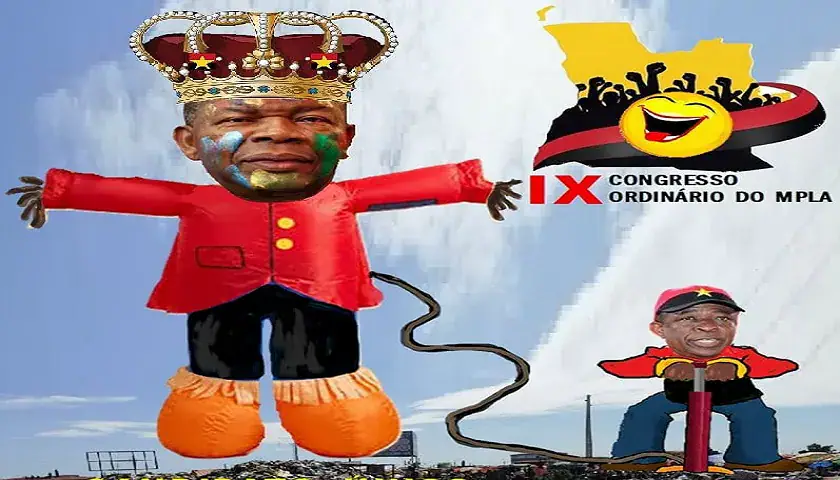
Angolan President João Lourenço has been criticized for his recent comments, in which he referred to individuals who disagree with him as "burro, bandido e lúmpen" (donkey, bandit, and lumpen). This rhetoric has been seen as divisive and has sparked concerns about the country's progress towards democracy and inclusivity. Lourenço's comments have been interpreted as a reflection of the ruling MPLA party's intolerance for dissent and opposition.
The MPLA has been in power in Angola for over 50 years, and critics argue that the party's governance has been marked by corruption, poor democratic practices, and significant social inequalities. Angola is considered one of the most corrupt countries in the world and has one of the worst infant mortality rates globally. The country's economic and social challenges have been exacerbated by the MPLA's authoritarian tendencies and lack of transparency.
Lourenço's leadership style has been compared to that of authoritarian leaders such as Vladimir Putin and Kim Jong-un. His approach has been characterized as relying on force and intimidation rather than engaging in constructive dialogue and debate. This has led to concerns that the country is moving in the wrong direction, with many Angolans feeling excluded and marginalized by the current government.
During the 2017 electoral campaign, Lourenço accused the UNITA party of destroying the country's industrial capacity during the civil war, which ended decades ago. Critics argue that this was an act of cowardice and a diversion from the real issues facing the country. The MPLA's policies have been criticized for creating significant economic and social disparities, with many Angolans living in poverty.
The opposition party, UNITA, has long advocated for a more inclusive and democratic Angola. Adalberto da Costa Júnior, a prominent opposition leader, has emphasized the importance of ideas and reason in shaping the country's future. In contrast, Lourenço's approach has been seen as dismissive of alternative perspectives and focused on maintaining the MPLA's grip on power.
The situation in Angola has been described as dire, with many Angolans feeling that the country is on the brink of collapse. The MPLA's governance has been criticized for prioritizing the interests of the ruling elite over those of the general population. With 20 million people living in poverty, critics argue that the country needs a more inclusive and equitable approach to governance.
The international community has been urged to take a closer look at the situation in Angola and to support efforts to promote democracy and human rights. The country's future is uncertain, with many Angolans hoping for a more democratic and inclusive government. It remains to be seen whether Lourenço's leadership will shift towards a more collaborative and inclusive approach or continue down a path of authoritarianism and division.
Key points
- The MPLA's governance has been marked by corruption, poor democratic practices, and significant social inequalities.
- Lourenço's leadership style has been compared to that of authoritarian leaders such as Vladimir Putin and Kim Jong-un.
- The country's future is uncertain, with many Angolans hoping for a more democratic and inclusive government.
Reporting sources
- ANTES ANGOLANO MATUMBO, DO QUE ANGOLANO DO MPLA · jornalf8.net