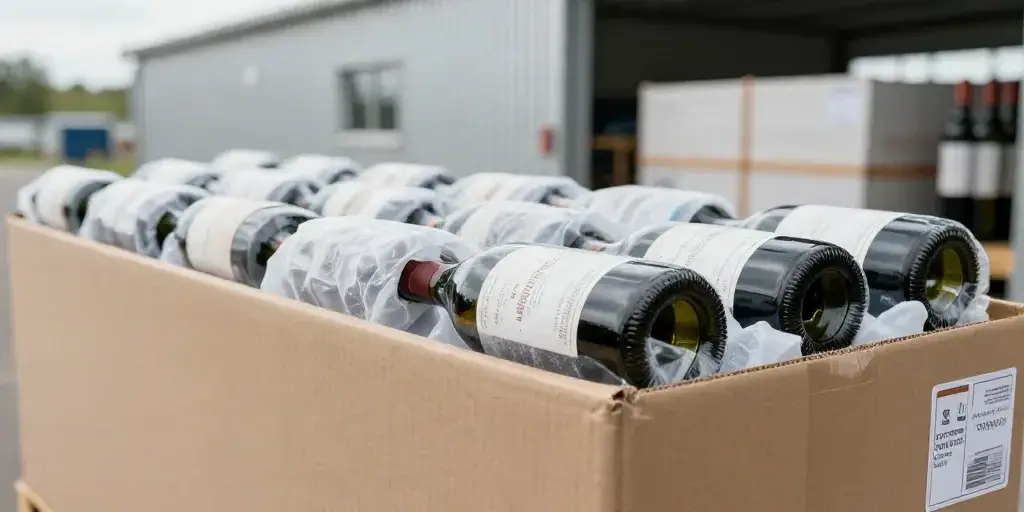
Shipping wine is not like sending an ordinary package. The weight of the glass and the incompressibility of the liquid make it a delicate process. A simple cardboard box filled with paper is not sufficient to protect the contents. To ensure safe transportation, a rigid packaging, individual cushioning, and a transporter that accepts alcohol are required. Temperature, destination, and signature upon delivery are also crucial factors to consider.
The choice of packaging is critical to preventing breakage. A cardboard box designed specifically for bottles provides better protection than a recycled cardboard box. For group shipments, a six-bottle box with individual compartments is recommended, while for single bottles, a dedicated double-walled cardboard box is the best option. The myth of an "unbreakable" bottle during transit is just that - a myth. A 75cl bottle can break if dropped from a height of one meter onto an edge.
When it comes to offering wine as a gift, the presentation is just as important as the contents. A damaged bottle can ruin the gesture. For gift boxes, it is recommended to place the bottle in its own box and then in an outer cardboard box with 5cm of cushioning on each side. Champagne and sparkling wines require extra care due to their internal pressure, which can exacerbate the fragility of the glass.
The orientation of the bottle during transportation is also crucial. For short journeys, a vertical position is recommended to protect the cork from lateral shocks and limit leakage. For longer journeys, a horizontal position is better suited for red wines that require aging, as it keeps the cork moist. However, no transporter can guarantee the orientation of the package once it is in transit.
Before shipping, it is essential to check the regulations and formalities required. In France, there are no particular formalities for sending wine between Paris and the Ile-de-France region. However, beyond these regions, regulations change, and documents may be required depending on the destination. For shipments within the European Union, excise duties apply if the wine is sold. For exports outside the EU, a declaration of exportation is required, and the country of arrival has its own limits.
Specific restrictions apply to champagne and sparkling wines. Some transporters, such as Chronopost, treat champagne as a sensitive item that requires special handling. The packaging must be able to withstand the pressure, which can reach 6 bars. It is essential to verify the conditions of the transporter before making a shipment.
Finally, shipping wine safely to Paris requires attention to detail and a thorough understanding of the regulations and requirements. By choosing the right packaging, transporter, and taking into account the specific needs of the wine, senders can ensure that their shipment arrives safely and in good condition. This includes considering factors such as temperature, destination, and signature upon delivery, as well as verifying the conditions of the transporter and complying with regulations.
Key points
- Specialized packaging is required to prevent breakage during wine shipments.
- Regulations and formalities vary depending on the destination of the wine shipment.
- Champagne and sparkling wines require extra care due to their internal pressure and fragility.