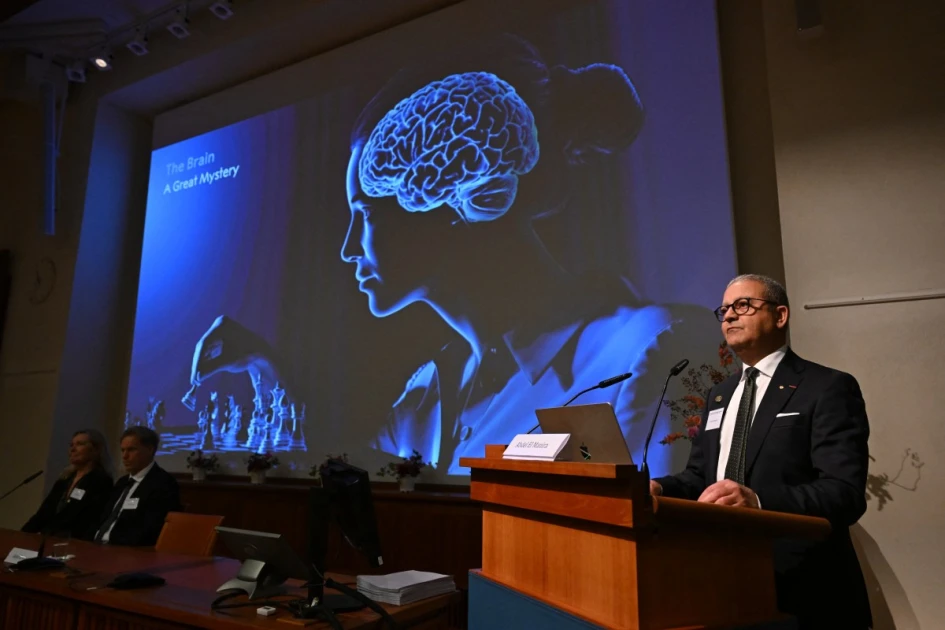
The 2026 Nobel Prize in Physiology or Medicine has been awarded to US neurologist Karl Deisseroth and German scientists Peter Hegemann and Georg Nagel for their pioneering work in optogenetics. This innovative technique allows scientists to control neurons by stimulating them with light, potentially leading to breakthroughs in treating conditions such as dementia, depression, and blindness. Optogenetics has been hailed as a transformational tool across the biological sciences.
The discovery of optogenetics began with the identification of a light-sensitive protein called channelrhodopsin in green algae by Hegemann and Nagel. Deisseroth then introduced this protein into cells and stimulated it with light, triggering a nerve signal in rats and mice. By controlling the light, scientists can switch a neuron's signal on and off with minute precision, allowing them to track which areas affect certain functions.
Optogenetics has shed light on various physiological and behavioral functions, including parental behavior, aggression, anxiety, and fear. The technique has also been used to study fundamental physiological drives such as thirst and water intake. According to Abdel El Manira, a neuroscientist and Nobel medicine committee member, the discovery has opened up new avenues for understanding complex brain functions.
Researchers are exploring the therapeutic potential of optogenetics in treating various conditions, including memory disorders, blindness, and nerve illnesses. For instance, scientists have used optogenetics as a closed-loop treatment for memory disorders by lengthening the pulses that help the brain store memories. Additionally, promising trials have been conducted using optogenetics to treat degenerative eye diseases.
Optogenetics could also serve as a discovery tool to reveal new therapeutic targets for neurological and psychiatric diseases. The technique may be valuable in understanding and treating conditions such as epilepsy, Parkinson's disease, Alzheimer's disease, depression, and anxiety disorders. Researchers believe that optogenetics could lead to the development of novel treatments for these conditions.
Several scientists are working on using optogenetics to address mental health issues, including post-traumatic stress disorder and addiction. While the technique holds promise, researchers acknowledge that it is still in its early stages, and further studies are needed to fully realize its potential. The Nobel Prize in Medicine recognizes the groundbreaking work of Deisseroth, Hegemann, and Nagel in developing optogenetics.
The award ceremony in Stockholm sparked discussions about the potential applications of optogenetics, including its possible connections to artificial intelligence and the study of subjective consciousness. However, according to El Manira, the current state of optogenetics does not provide insights into consciousness, which may be the subject of future Nobel Prizes.
Key points
- Optogenetics allows scientists to control neurons with light, potentially leading to breakthroughs in treating conditions such as dementia, depression, and blindness.
- The technique has been used to study various physiological and behavioral functions, including parental behavior, aggression, anxiety, and fear.
- Optogenetics holds promise for developing novel treatments for neurological and psychiatric diseases, including epilepsy, Parkinson's disease, Alzheimer's disease, depression, and anxiety disorders.