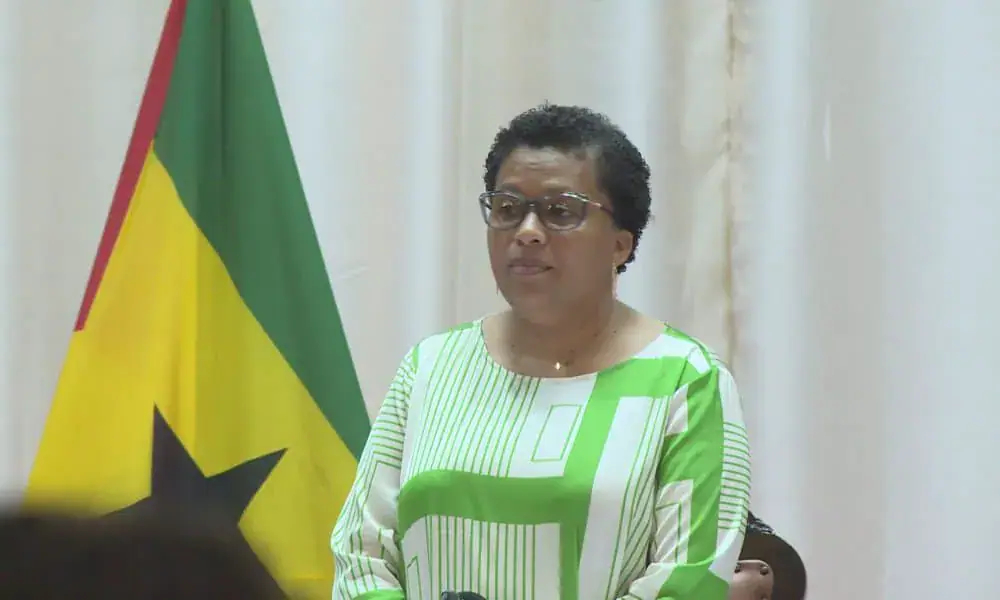
Nilda da Mata has assumed the presidency of São Tomé and Principe's National Assembly, marking a significant milestone in the country's politics. At 50 years old, da Mata, a former minister of environment, youth, and sustainable development, was elected by unanimity by the 55 deputies during the constitutive session of the XIII legislature. She becomes the third woman to hold the position, succeeding Alda do Espírito Santo, a renowned poet and politician.
Da Mata expressed her honor in occupying the same chair as Espírito Santo, promising to live up to the legacy left by her predecessor. She emphasized the importance of a shared and inclusive presidency, announcing her intention to cultivate exemplary institutional relationships. According to da Mata, the semi-presidential regime in São Tomé and Principe requires harmony between the organs of sovereignty, which is a constitutional imperative and a guarantee of stability for the people.
The National Assembly plays a crucial role in São Tomé and Principe's politics, as the country operates under a semi-presidential regime with a parliamentary tendency. The parliament is the main center of political power, with the executive branch being an emanation of the parliament. The deputies have a direct influence on the three powers of the democratic state: executive, judicial, and legislative. As the second figure of the state, da Mata presides over the organ of sovereignty that is the center of political power.
During the constitutive session, President Carlos Vila Nova addressed the parliament, expressing his expectations for the new legislature. He called for stability and urged the legislators to undertake a profound reform of the country's legislation, including a review of the political constitution. Vila Nova emphasized that the constitutional review cannot be postponed further, citing numerous episodes of instability and imperfections in the current constitution.
The President also highlighted the need for reform in the justice sector, which has worsened despite successive changes in the parliament. He stressed that the laws approved by the parliament must have a tangible impact on the lives of citizens, warning that otherwise, they would be mere "dead letters." Vila Nova's address set the tone for the challenges that the deputies will face in the next four years.
Da Mata's presidency has been seen as a positive development, with many expecting her to bring a fresh perspective to the role. Her experience as a minister and deputy is expected to serve her well in navigating the complexities of São Tomé and Principe's politics. The country's future will depend on the ability of its leaders to address the challenges and implement meaningful reforms.
As da Mata begins her tenure, she faces significant challenges, including the need to reform the country's legislation and address the worsening justice sector. With the support of the parliament and the President, she may be able to drive meaningful change in São Tomé and Principe. The coming years will be crucial in determining the country's trajectory and the success of da Mata's presidency.
Key points
- Nilda da Mata becomes third female president of São Tomé and Principe's parliament.