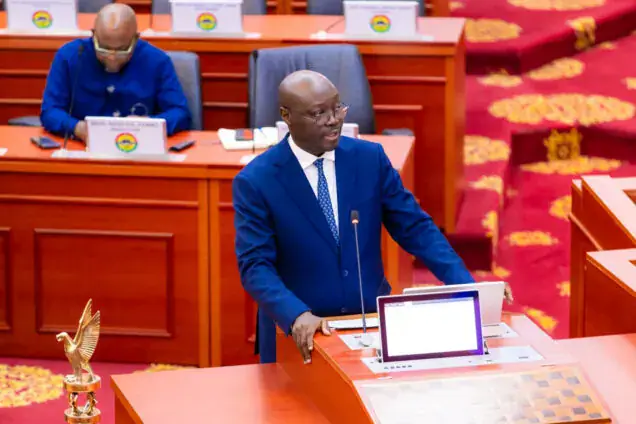
The government of Ghana plans to spend GH¢389.2 billion in the 2027 fiscal year, equivalent to 21.6 per cent of GDP. This represents a decisive shift towards productive expenditure and early debt repayment. Finance Minister Dr Cassiel Ato Forson announced this during the presentation of the 2027 Budget Statement and Economic Policy to Parliament. The budget outlines a strategic shift away from consumption-centred spending.
The total expenditure on a cash basis includes GH¢100.4 billion allocated for capital expenditure, representing 5.6 per cent of GDP. When capital expenditure financed through transfers to other government units is included, total capital expenditure rises to GH¢120.5 billion, equivalent to 6.7 per cent of GDP. This marks a significant increase in productive spending.
The 2027 capital expenditure is over GH¢37 billion or 61 per cent more than the GH¢61 billion allocated for interest payments. It is also over GH¢5.6 billion or 6 per cent more than the GH¢92.7 billion allocated for wages and salaries. Total compensation for employees is estimated at GH¢104.1 billion, while interest payments stand at GH¢61 billion.
The government has allocated GH¢76.5 billion for transfers to statutory and earmarked funds. Additionally, GH¢13.9 billion has been provided for the clearance of arrears, including GH¢4.3 billion for legacy arrears owed to independent power producers. These allocations demonstrate a focus on settling outstanding obligations.
To finance the GH¢389.2 billion expenditure, the government projects total revenue and grants at GH¢323.4 billion, equivalent to 17.9 per cent of GDP. This will result in an overall deficit on a cash basis of GH¢65.8 billion, equivalent to 3.6 per cent of GDP. The overall budget deficit on a commitment basis is projected at GH¢51.9 billion.
A major highlight of the budget is the early redemption of debt. The government will pay off GH¢29 billion of DDEP bonds falling due in February 2027, effective November 12, 2026. The Cedi Sinking Fund Account holds enough to cover the full principal repayment. This move is expected to reduce Ghana's debt burden.
Key allocations under the 2027 expenditure framework include GH¢30.0 billion for the New Economy programme and GH¢29.8 billion for the Big Push programme. The Ministry of Education will receive GH¢48 billion, while the Ministry of Health will receive GH¢40.3 billion. These allocations reflect the government's priorities in economic development and social services.
Key points
- The 2027 budget plan prioritizes productive expenditure and early debt repayment.
- The government has allocated GH¢100.4 billion for capital expenditure.
- Ghana aims to pay off GH¢29 billion of DDEP bonds ahead of schedule.
Reporting sources
- GH¢389.2billion budget: Ato Forson unveils 2027 spending plan · Daily Graphic