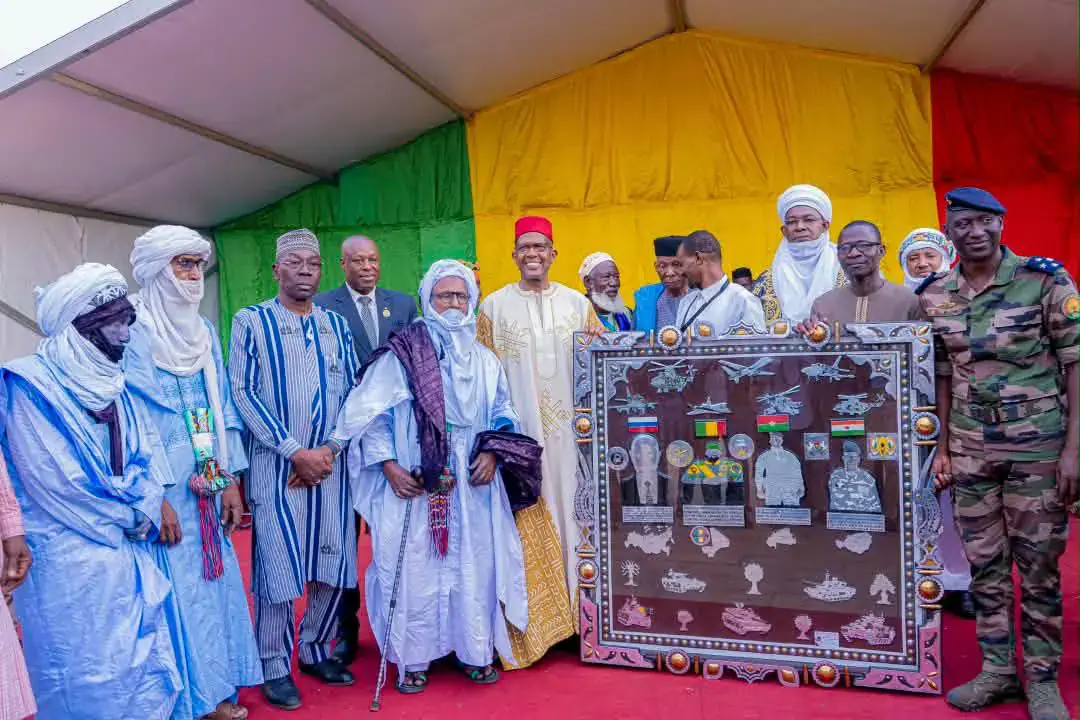
The Malian government recently celebrated the National Day of Traditional Authorities and Legitimacies, a significant event aimed at recognizing the essential role of traditional leaders in preserving the country's sociocultural heritage and promoting social cohesion. The ceremony, presided over by General Ismaël Wagué, Minister of Reconciliation, Peace, and National Cohesion, took place on November 11, 2026. The event was attended by several high-ranking officials, including government members, representatives of the National Transitional Council, traditional authorities, and delegations from Niger and Burkina Faso.
This year's celebration was held under the theme "Role and Responsibility of Traditional Authorities and Legitimacies in the Transmission of Danbé and Maaya Values." Danbé and Maaya are fundamental values in Malian culture, symbolizing dignity, honor, respect, humanism, solidarity, and consideration for others. The event provided an opportunity for the authorities to emphasize the importance of intergenerational transmission of ancestral values and the involvement of traditional legitimacies in consolidating peace and national cohesion.
The National Day of Traditional Authorities and Legitimacies is an annual event that highlights the crucial role of traditional leaders in maintaining social harmony and promoting cultural heritage. In a context where strengthening social fabric remains a major challenge, traditional authorities have emerged as key players in mediation, conflict prevention, and promotion of social cohesion. The celebration also provided a platform for discussing the challenges facing traditional authorities and exploring ways to support their efforts in preserving cultural heritage.
The event was marked by the presence of several high-ranking officials, including General Ismaël Wagué, who emphasized the importance of traditional authorities in preserving Malian culture and promoting social cohesion. The Minister of Reconciliation, Peace, and National Cohesion also highlighted the need for collaboration between traditional authorities and government agencies to address the challenges facing the country.
The National Day of Traditional Authorities and Legitimacies also provided an opportunity for the government to reaffirm its commitment to preserving Malian culture and promoting social cohesion. The event was seen as a platform for promoting dialogue and understanding between traditional authorities, government agencies, and other stakeholders. The celebration also featured discussions on the role of traditional authorities in promoting peace and stability in the region.
The Malian government has been working to strengthen its relationship with traditional authorities and legitimacies, recognizing their essential role in preserving cultural heritage and promoting social cohesion. The celebration of the National Day of Traditional Authorities and Legitimacies is part of these efforts, aimed at promoting collaboration and dialogue between traditional leaders and government agencies.
The National Day of Traditional Authorities and Legitimacies is an important event in Mali's cultural calendar, highlighting the significance of traditional leaders in preserving cultural heritage and promoting social cohesion. The event has become an essential platform for promoting dialogue and understanding between traditional authorities, government agencies, and other stakeholders, and for reaffirming the importance of preserving Malian culture and promoting social cohesion.
Key points
- The National Day of Traditional Authorities and Legitimacies highlights the crucial role of traditional leaders in preserving Malian culture and promoting social cohesion.