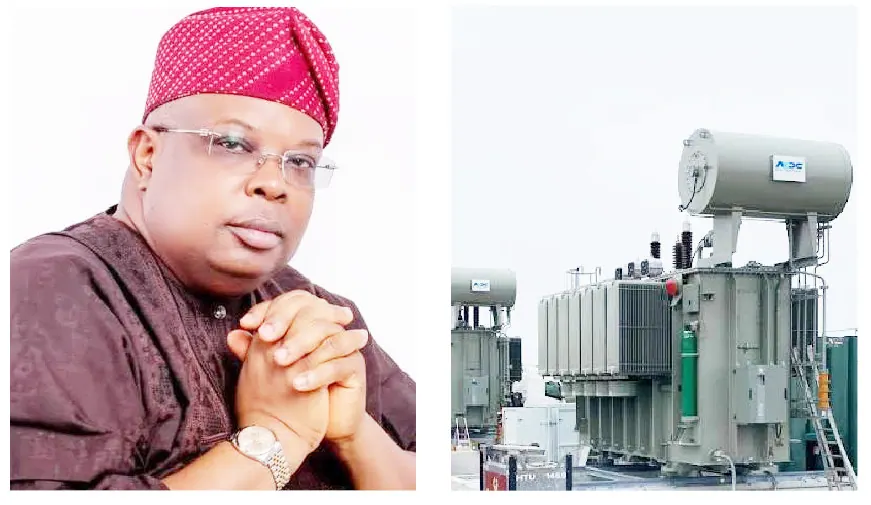
Nigerians across several states have disputed recent claims by the Minister of Power, Chief Joseph Olasunkanmi Tegbe, that electricity supply has improved significantly. Findings by correspondents across the country show that electricity supply remains uneven, with some communities receiving between 18 and 22 hours of electricity daily, while others endure prolonged outages. Many areas get only a few hours of electricity a day or remain without public electricity for months or even years.
In Taraba State, residents have rejected the minister's claim, insisting that many communities still experience prolonged power outages. While some areas connected to Band A feeders, such as FGGC, Lassandi, and GRA, experience relatively regular electricity supply, others do not. A resident of Mayo-Gwoi in Jalingo, Mrs Josephine Maiso, dismissed the minister's claim, saying her area receives only two to three hours of electricity daily.
Similarly, residents of Cross River State are experiencing prolonged blackouts. In Bokomo Community, Four Corners, in Ikom Local Government Area, residents have experienced a total blackout since the beginning of the year. Mrs Stella Edim said the prolonged outage had forced residents to turn to solar energy. The community has electricity poles and cables, but the officials at the power holding company have not resolved the issue.
In Jalingo, businesswoman Mrs Zulie Ibrahim described the minister's comment as "the joke of the century," saying she depends mainly on solar power to operate her deep freezers and preserve drinks due to unreliable public electricity supply. Many Nigerians, like Ibrahim, rely on generators and solar power to meet their electricity needs.
The situation is similar in other parts of the country. In some areas, residents reported a relatively stable supply, while others experience frequent outages. The uneven electricity supply has become a significant challenge for many Nigerians, who are forced to rely on alternative sources of power.
The Minister of Power's claim has sparked widespread criticism, with many Nigerians expressing frustration on social media. They argue that the minister's comment does not reflect the reality on the ground. The criticism highlights the need for the government to address the country's persistent electricity challenges.
The issue of electricity supply is critical in Nigeria, where many businesses and households rely on power to function. The government's efforts to improve electricity supply have been hampered by various challenges, including inadequate infrastructure and funding. The situation remains a significant concern for many Nigerians, who are calling for the government to do more to address the issue.
Key points
- Nigerians dispute Minister of Power's claim of improved electricity supply.
- Many areas still experience prolonged outages.
- Residents rely on generators and solar power due to unreliable public electricity supply.