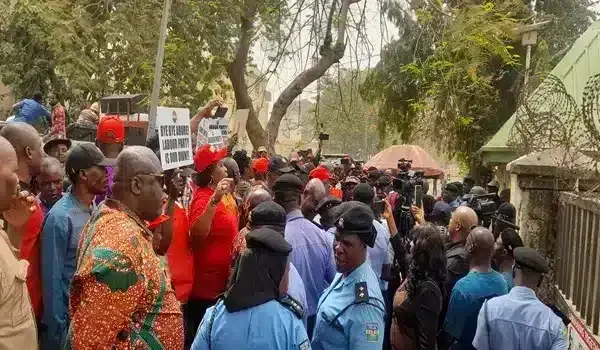
Workers across Nigeria have commenced a three-day warning strike, directed by public sector unions under the Joint National Public Service Negotiating Council (JNPSNC). The strike began at midnight and involves all federal, state, and local government employees, including staff of ministries, departments, and agencies (MDAs). The council cited worsening economic and mental hardship experienced by workers and other Nigerians as the reason for the industrial action.
The JNPSNC, comprising various unions such as the Nigerian Civil Service Union (NCSU) and the Medical and Health Workers Union (M&HWU), directed union officials to ensure total compliance with the strike. Members of the council, including the Association of Senior Civil Servants of Nigeria (ASCSN) and the National Association of Nigerian Nurses and Midwives (NANNM), are participating in the strike. The action follows the government's failure to address demands contained in a letter dated September 21, 2026.
The demands, submitted to President Bola Tinubu, include a reduction in petrol price to N500 a litre, a wage award, and other measures to cushion the hardship in the country. The council had threatened a three-day warning strike if its demands were not met or addressed by President Tinubu during his Independence Anniversary Address to the nation on October 1. The strike affects employees of federal and state government MDAs nationwide.
The JNPSNC explained that the strike is necessary to press home its concerns over the hardship confronting workers and vulnerable Nigerians. The council's decision to embark on industrial action was made after the government failed to address the pressing issues. The strike is expected to have significant impacts on government operations and services across the country.
The warning strike is a precursor to a potential indefinite strike if the government's response is not satisfactory. The JNPSNC has been advocating for improved welfare and working conditions for Nigerian workers. The current strike is a demonstration of the council's resolve to push for meaningful change.
The strike comes at a time when Nigerians are experiencing high levels of economic hardship. The country's inflation rate and cost of living have been on the rise, affecting the livelihoods of many citizens. The JNPSNC's demands are aimed at mitigating the effects of the economic challenges faced by workers and other Nigerians.
The outcome of the strike and the government's response will be crucial in determining the next steps for Nigerian workers. The JNPSNC's actions are being closely monitored by various stakeholders, including government officials and the general public. The strike's impact on government operations and services will be significant, and a resolution is expected soon.
Key points
- The strike affects all federal, state, and local government employees, including staff of ministries, departments, and agencies (MDAs) nationwide.
- The JNPSNC's demands include a reduction in petrol price to N500 a litre, a wage award, and other measures to cushion the hardship in the country.
- The strike is a precursor to a potential indefinite strike if the government's response is not satisfactory.