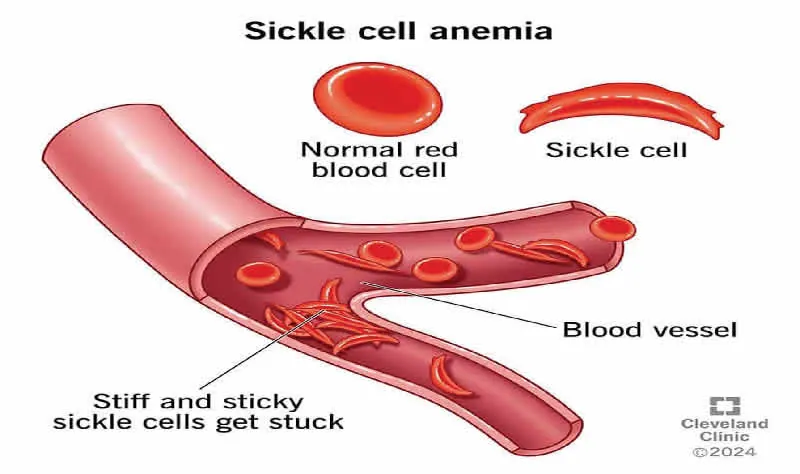
The Sickle Cell Foundation Nigeria has urged the country to take a leading role in developing and implementing solutions to combat sickle cell disease. According to the National Director and Chief Executive Officer of the foundation, Dr Annette Akinsete, Nigeria has the experience, institutions, and expertise to shape the global response to the disease. Akinsete made this call at the launch of OneSCD, a global partnership to advance equity and transform sickle cell care, held at the United Nations Headquarters in New York.
Nigeria has a significant burden of sickle cell disease, with over 25 per cent of Nigerians carrying the sickle cell trait, translating to more than 40 million Nigerians being healthy carriers of the sickle cell gene. The Sickle Cell Foundation Nigeria has been actively involved in the fight against the disease, providing services such as genetic counselling, early detection, and prenatal diagnosis. The foundation has supported over 32,000 Transcranial Doppler screenings, 259,000 haemoglobin investigations, and 70,000 medication interventions.
Akinsete emphasized that Nigeria should not be regarded merely as a recipient of interventions designed elsewhere, but rather as a co-creator and partner in the global sickle cell response. She noted that the country has developed solutions in its own context and should be considered an early demonstration country for transformative sickle care. The OneSCD partnership, launched by the Federal Government of Nigeria in collaboration with global health partners, seeks to strengthen global coordination, resource mobilisation, and shared learning around sickle cell disease.
The OneSCD partnership aims to improve equity and access to quality care for sickle cell disease. Akinsete stressed that country-level ownership would be critical to the success of the initiative, adding that OneSCD could provide a platform for countries to coordinate efforts and share experiences. The partnership was launched in collaboration with global health partners, including the World Health Organisation, UNICEF, and St Jude Children’s Research Hospital.
The Sickle Cell Foundation Nigeria has been working to address the challenges of sickle cell disease in the country. The foundation’s work has included genetic counselling, early detection, prenatal diagnosis, Transcranial Doppler screening, access to treatment, health-worker training, community mobilisation, research, and advocacy. Akinsete noted that the ultimate goal should be to ensure that access to quality sickle cell care is not determined by where a child is born.
Akinsete emphasized that Nigeria brings far more to OneSCD than its disease burden, citing the country’s experience, institutions, technical expertise, civil society, lived experience, and solutions developed in its own context. She noted that countries, particularly those in sub-Saharan Africa, should be recognised as co-creators and partners in the global sickle cell response, rather than simply recipients of solutions developed in other parts of the world.
The Sickle Cell Foundation Nigeria has welcomed the launch of OneSCD and the opportunity it presents for stronger collaboration among governments, health institutions, civil society organisations, patients, and global health partners. Akinsete concluded that the goal should be to ensure that access to quality sickle cell care is not determined by where a child is born, adding that “where a child is born should not determine whether that child survives and thrives with sickle cell disease.”
Key points
- Nigeria has over 40 million people carrying the sickle cell gene
- The Sickle Cell Foundation Nigeria has supported over 32,000 Transcranial Doppler screenings
- OneSCD aims to strengthen global coordination, resource mobilisation, and shared learning around sickle cell disease