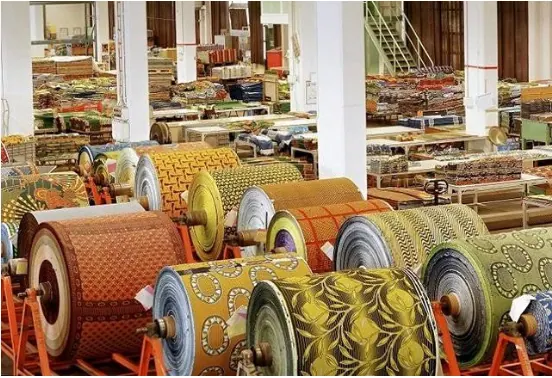
The Nigerian government has reaffirmed its commitment to supporting the growth of the country's cotton, textile, and garment sector. In April 2025, the Managing Director of the Bank of Industry, Olasupo Olusi, stated that the government aims to domesticate the estimated $4 billion Nigerians spend annually on imported textiles. This move is expected to boost the local textile industry, which has been struggling for years.
Despite previous efforts to revive the industry, successive administrations in Nigeria have primarily focused on the agricultural perspective of cotton production. The government has also assumed that access to loans is the major problem of the textile industry. However, this approach has not yielded the desired results, as seen in the Anchor Borrowers loans given to farmers and the soft intervention loans advanced to textile manufacturers.
The textile industry's decline can be attributed to various factors, including the lack of infrastructure, such as roads, waterways, and railway networks. Additionally, the industry relies heavily on imported industrial machines, spare parts, and raw materials, which are not manufactured in Nigeria. The high-capacity machines used in the industry also require continuous feeding to reduce overhead costs.
A modular manufacturing system could be a potential solution to the industry's problems. This system would allow for scalable production, reducing overhead costs and increasing efficiency. The textile industry's decline began after the annulment of the June 12, 1993 presidential election, which led to a significant reduction in demand and orders.
The impact of the industry's decline has been severe, with many factories shutting down or reducing production. At its peak, the textile industry contributed about 6.2 per cent to Nigeria's Gross Domestic Product and employed around 250,000 workers. However, according to the National Bureau of Statistics, the sector now contributes only about 1.6 per cent to GDP.
The Ministry of Industry, Trade and Investment is now tasked with finding a more informed approach to reviving the textile sub-sector. The ministry plans to conduct a census of current players in the industry and identify the issues that hinder optimal performance. It will also seek to help factories that have shut down to revamp their businesses.
The ministry's efforts to revive the textile industry will need to align with the government's macroeconomic reform policies. The Central Bank of Nigeria is working to align interest rates, inflation, and foreign exchange rates. With a more comprehensive approach, the government hopes to restore the textile industry to its former glory and create jobs for Nigerians.
Key points
- The Nigerian government aims to domesticate the estimated $4 billion spent annually on imported textiles.
- The textile industry's decline began after the annulment of the June 12, 1993 presidential election.
- A modular manufacturing system could be a potential solution to the industry's problems.