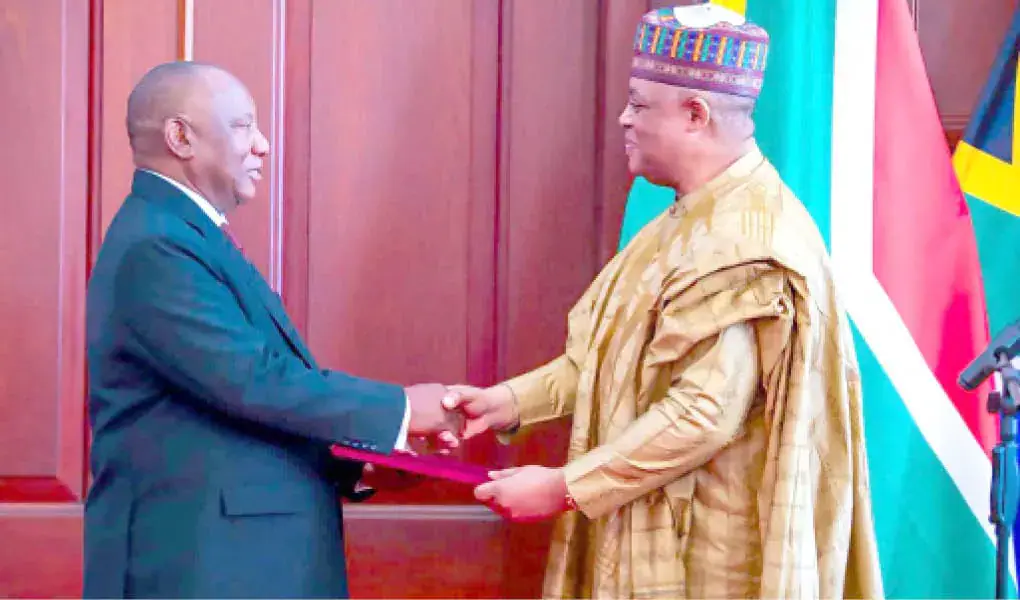
A controversy surrounding the presentation of Nigeria's High Commissioner to South Africa, Femi Fani-Kayode's, letters of credence has sparked a diplomatic row between Nigeria and South Africa. The incident occurred when Fani-Kayode alleged that the live broadcast of the ceremony was interrupted while he was delivering his speech. He claimed that South African authorities deliberately excluded his address from the transmission.
However, Vincent Magwenya, spokesperson to the South African president, disputed Fani-Kayode's account, stating that President Cyril Ramaphosa did not interfere with the operations of the South African Broadcasting Corporation (SABC). Magwenya said Ramaphosa merely directed Fani-Kayode to the appropriate official to lodge his complaint. The South African Presidency later released a separate video containing Fani-Kayode's full address.
The Nigerian High Commission criticised Magwenya's response, accusing him of disrespectful conduct and insisting that Ramaphosa intervened in the matter. The disagreement has raised concerns among Nigerian diplomats, particularly given the recurring tensions over xenophobic attacks and the safety of Nigerians living in South Africa. They warned that the controversy should be handled through established diplomatic channels to prevent it from escalating into a broader dispute.
Former Deputy Permanent Representative of Nigeria to the United Nations, Ambassador Usman Sarki, said the incident could understandably raise suspicion due to the history of strained relations between both countries. However, he cautioned against assuming that the omission was deliberately intended to undermine Nigeria or its representative. Sarki added that diplomacy did not require silence in the face of perceived injustice but warned that justified firmness should not degenerate into unnecessary public confrontation.
Another diplomat, Ambassador Suleiman Dahiru, described the face-off as unfortunate and unnecessary, saying the matter could have been handled through established diplomatic channels. Dahiru said Fani-Kayode should have formally communicated his concerns to the South African government in a respectful manner rather than engaging in a public exchange. He warned that the incident could further strain relations between Nigeria and South Africa, which he described as already delicate.
Ambassador Mohammed Ibrahim Kawu also criticised Fani-Kayode's approach, saying he should respect the authorities of his host country and channel his grievances through appropriate diplomatic means. Kawu described Fani-Kayode's actions as wrong and unfortunate, especially coming from a diplomat. He questioned the propriety of exchanging views on social media, saying it was an undiplomatic approach.
Diplomats have urged restraint and warned against actions that could further strain relations between Nigeria and South Africa. They emphasised the need for a tactful diplomat capable of managing sensitive bilateral relations, saying an ambassador must demonstrate restraint and avoid being easily provoked. The incident has highlighted the need for both countries to conduct their relations with maturity, respect, and a sense of responsibility commensurate with their standing on the continent.
Key points
- The controversy between Nigeria and South Africa was sparked by a disagreement over the broadcast of Fani-Kayode's speech during the presentation of his letters of credence.
- Diplomats have urged restraint and warned against actions that could further strain relations between the two countries.
- The incident has highlighted the need for both countries to conduct their relations with maturity, respect, and a sense of responsibility.